
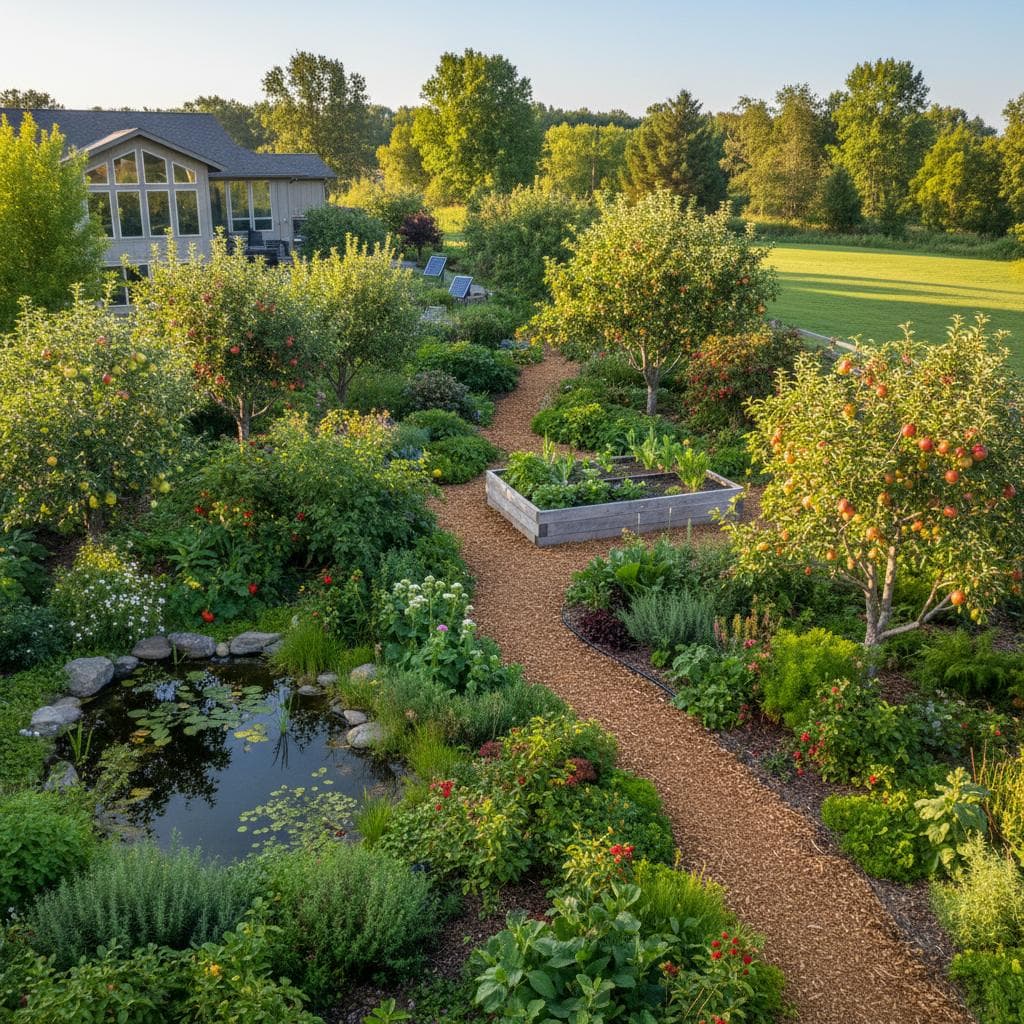
Replacing Lawns with Edible Forest Gardens: Achieve $8,000 Annual Returns
Traditional lawns demand ongoing expenses for mowing, watering, and fertilizing. In contrast, an edible forest garden converts unused yard space into a productive system that supplies fruits, nuts, herbs, and vegetables. Homeowners often realize up to $8,000 in yearly value from such gardens, derived from reduced grocery bills and income from excess harvests.
This guide details the planning, installation, and maintenance of an edible forest garden. The result offers visual appeal, ecological benefits, and financial returns through a design that integrates seamlessly with natural surroundings.
Installation Costs for Edible Forest Gardens
National Average Costs
Establishing an edible forest garden costs between $5,000 and $15,000 for a typical suburban yard. Factors influencing the total include design intricacy, chosen plants, and professional involvement. This initial outlay recovers quickly as perennials and fruit trees begin yielding, often within three to five years.
Costs Based on Project Scale
- Small Urban Yards (up to 1,000 square feet): $3,000 to $7,000, suitable for container-integrated designs or compact layers.
- Medium Suburban Yards (1,000 to 3,000 square feet): $7,000 to $12,000, allowing for diverse plant guilds and pathways.
- Large Properties (over 3,000 square feet): $12,000 to $20,000 or higher, incorporating extensive tree canopies and habitat features.
Property owners who initiate with modest areas can distribute expenses across multiple seasons while enjoying preliminary yields from fast-growing elements like berries.
Primary Cost Influences
- Plant Choices: Prices fluctuate for fruit trees such as apples at $30 to $100 each, berry bushes from $15 to $50, and perennial herbs around $5 to $20 per plant.
- Design Intricacy: Layered systems demand precise zoning for sunlight, moisture, and nutrient cycles to optimize interactions.
- Soil Enhancement: Adding compost at $50 per cubic yard, mulch layers, and pH adjustments ensures enduring productivity.
- Labor Expenses: Professional services may increase totals by 50 to 100 percent over self-installation efforts.
- Support Systems: Drip irrigation kits cost $200 to $1,000, while rainwater harvesting setups range from $500 to $2,000, minimizing long-term water bills.
Design Options for Edible Forest Gardens
The Seven Layers of a Food Forest
An edible forest replicates woodland structures through seven interdependent plant layers, fostering mutual support and year-round productivity.
- Canopy Layer: Tall fruit and nut trees, including apples, persimmons, or chestnuts, provide shade and primary yields.
- Sub-Canopy Layer: Understory trees like dwarf pears or serviceberries fill mid-level spaces with additional fruits.
- Shrub Layer: Berry producers such as blueberries, currants, or elderberries offer accessible harvests.
- Herbaceous Layer: Edible greens, culinary herbs like basil or oregano, and pollinator-attracting flowers sustain ground-level diversity.
- Groundcover Layer: Low-growing options including strawberries, creeping thyme, or clover prevent erosion and suppress weeds.
- Root Layer: Underground edibles like Jerusalem artichokes, potatoes, or garlic utilize soil depths efficiently.
- Vine Layer: Climbers such as grapes, kiwi, or pole beans exploit vertical surfaces for expanded output.
These layers ensure sequential harvests, improved soil quality, and enhanced wildlife habitats.
Style Variations for Form and Function
Permaculture Food Forest
This approach prioritizes self-regulating plant guilds that mimic wild ecosystems.
Advantages: Minimal ongoing care, broad crop variety, superior soil regeneration.
Challenges: Informal aesthetics require time to mature, typically two to four years.
Edible Ornamental Garden
Food plants integrate with ornamental elements for a polished landscape.
Advantages: Visually striking throughout seasons, compatible with neighborhood guidelines, straightforward incorporation into current setups.
Challenges: Demands regular shaping and targeted watering to preserve appearance.
Agroforestry-Inspired Layout
Edible elements combine with native species to restore local ecology.
Advantages: Boosts pollinator populations, conserves water through deep roots, elevates real estate appeal.
Challenges: Necessitates ample space and extended timelines for full benefits, often five years or more.
Self-Installation Versus Professional Assistance
Individuals with basic horticultural knowledge can establish an edible forest garden through personal effort. This method provides customization opportunities and substantial savings, enabling phased growth and trials with regional varieties. However, errors in plant placement or soil management might postpone yields by years.
Engaging a certified permaculture expert or landscape architect guarantees an optimized blueprint. Specialists evaluate site-specific elements like sunlight patterns, soil drainage, and climate zones to recommend resilient species. For modest projects, self-installation suffices; complex or expansive designs benefit from expert input to accelerate establishment and lower upkeep demands.
Step-by-Step Guide to Building an Edible Forest Garden
1. Evaluate Your Site Conditions
Document daily sunlight hours, terrain slopes, prevailing winds, and water flow patterns. Note any established vegetation suitable for retention, such as mature shade trees that complement the canopy.
2. Develop the Layout Plan
Draw a scaled diagram organizing plants by stature, light requirements, and ecological roles. Incorporate accessible trails at least three feet wide for routine inspections and collection.
3. Amend the Soil Base
Apply sheet mulching by layering cardboard over grass, topped with six inches of compost and wood chips. This technique eliminates turf without tillage, preserving microbial networks essential for nutrient cycling.
4. Select Appropriate Plants
Choose climate-adapted varieties, such as USDA zone-compatible apples or heat-tolerant figs. Incorporate nitrogen-fixing allies like goumi shrubs or clover to naturally enrich the ground without synthetic inputs.
5. Set Up Water Delivery Systems
Install low-flow drip lines or soaker hoses connected to timers for precise hydration. Apply four to six inches of organic mulch around plant bases to lock in moisture and inhibit weed growth.
6. Plant in Sequential Layers
Position tallest elements like trees first, securing roots firmly. Follow with shrubs and understory plants in subsequent weeks, allowing space for root expansion and reducing early competition.
7. Monitor and Adjust the System
Provide consistent irrigation for the initial year, trim branches to promote circulation, and observe interspecies dynamics. Modify arrangements based on performance, such as relocating shade-sensitive herbs.
Strategies for Effective Implementation and Ongoing Care
- Initiate Modestly: Test a 200-square-foot zone to build skills before scaling up.
- Emphasize Perennials: Prioritize species like asparagus or rhubarb that yield repeatedly with little replanting.
- Recycle Organic Waste: Compost yard debris directly into beds to sustain fertility cycles.
- Support Beneficial Insects: Integrate nectar-rich plants such as bee balm to enhance pollination rates.
- Harvest Promptly: Remove ripe produce weekly to encourage continuous fruiting and minimize spoilage.
Common Questions About Edible Forest Gardens
What Yield Can Expect from an Edible Forest?
A established system produces 200 to 500 pounds of assorted foods annually, varying by cultivar choices, nutrient levels, and care routines.
Does an Edible Forest Require Ongoing Watering?
New installations need regular supplementation in the first two years. Mature setups with deep-rooted plants and heavy mulching rely primarily on natural rainfall.
When Does Financial Return Begin?
Initial outputs appear in one to three years from quick-establishing plants. Full productivity emerges by year five, with perennials delivering for 20 to 50 years.
Do Edible Forests Draw Excessive Pests?
Diverse plantings foster predator-prey balances, deterring outbreaks. Organic practices and companion planting further minimize issues without pesticides.
Is a Small Yard Suitable for an Edible Forest?
Absolutely. Compact designs using dwarf varieties and trellises fit 400 square feet, maximizing output through vertical and guild arrangements.
Which Plants Suit Novice Gardeners?
Begin with resilient options like strawberries for groundcover, raspberries for shrubs, comfrey for soil building, mint and chives for herbs, and dwarf apples for canopy starts.
Launch Your Edible Forest Initiative
Transitioning from lawn to edible forest elevates your property as a regenerative asset that bolsters soil vitality, conserves resources, and delivers tangible economic gains. Grocery reductions, surplus sales at farmers markets, and boosted home equity combine to surpass $8,000 in yearly benefits for mature installations.
Assess your site specifics, select a design aligning with your goals, and weigh professional guidance for optimal results. Local experts in permaculture can tailor selections to your region, ensuring a garden that nourishes your family and finances across seasons.