
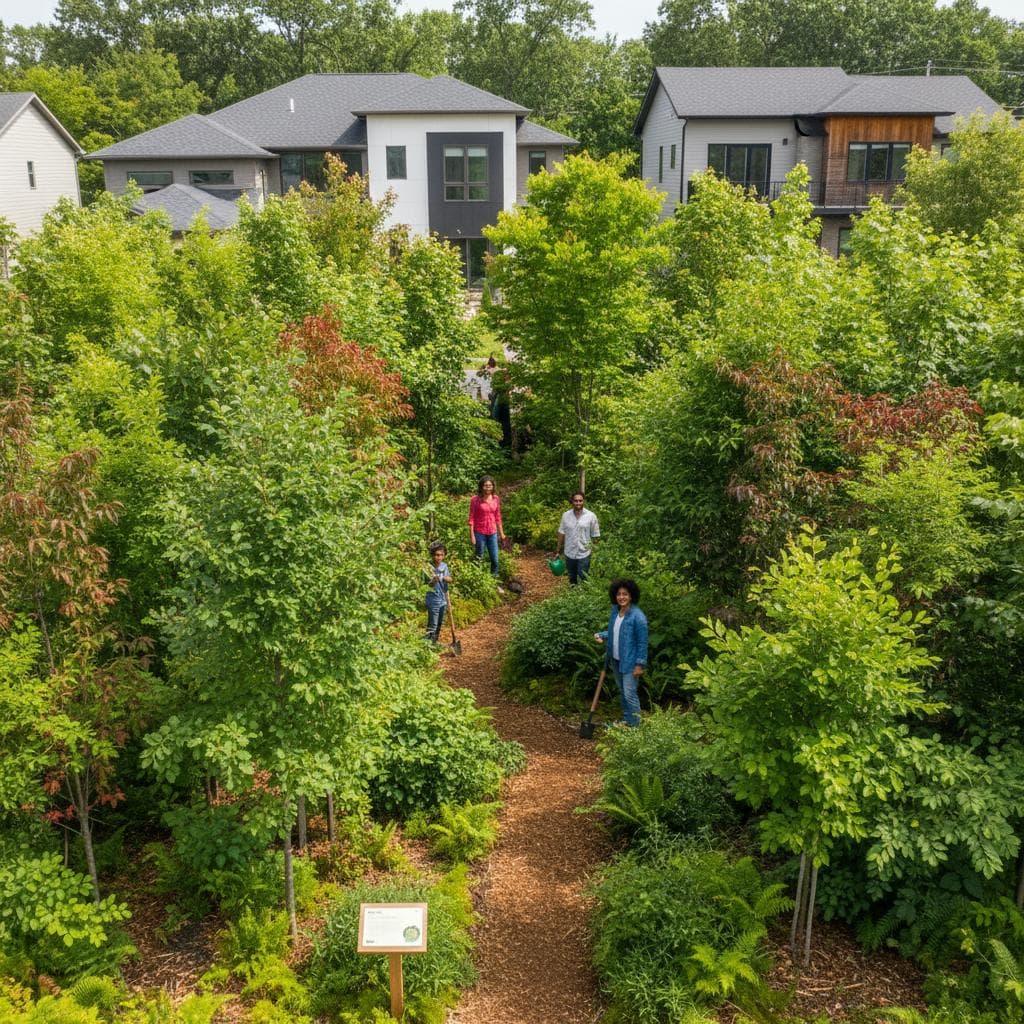
Suburbs Flourish with 1000-Tree Micro-Forests
In suburban landscapes nationwide, an understated transformation unfolds as residents, educational institutions, and civic organizations convert modest vacant lots into robust micro-forests composed of indigenous trees and understory plants. These intensive green installations, frequently implemented via the Miyawaki method, redefine approaches to urban greenery, water management, and ecological restoration. This resource details the mechanics of micro-forests, their efficacy, and practical strategies for initiating one in your locale.
Defining the Micro-Forest
A micro-forest constitutes a compact, densely populated expanse of indigenous trees and vegetation engineered to replicate the stratified structure of a mature woodland. Developed through the Miyawaki method, pioneered by Japanese ecologist Akira Miyawaki, such systems achieve growth rates up to ten times those of standard landscaping efforts. The outcome yields a resilient, autonomous ecosystem suitable for confined areas like residential lots or utility strips, delivering essential services such as shading, wildlife refuge, and atmospheric purification.
Mechanics of the Miyawaki Method
The Miyawaki method prioritizes the establishment of a thick, vertically diverse woodland that reinstates regional biodiversity at an expedited pace. Practitioners follow these four essential phases:
- Site Preparation: Excavate and aerate the ground, then incorporate organic amendments like mulch and compost to foster extensive root development.
- Species Selection: Select exclusively local flora to represent woodland strata, including tall canopy trees, mid-level understory, shrub layers, and ground-level herbaceous plants.
- Dense Planting: Position seedlings and cuttings at high density, typically three to five individuals per square meter, to promote upward elongation and interplant rivalry.
- Initial Nurturing: Provide irrigation and weed control for the initial two to three years until the system stabilizes and requires no further intervention.
Through this protocol, micro-forests attain maturity swiftly, often achieving ecological independence within several growing cycles.
Rationale for Suburban Adoption of Micro-Forests
Suburban environments suit micro-forests exceptionally well due to the prevalence of underutilized parcels that lend themselves to communal enhancement. The following factors drive their widespread implementation:
1. Elevating Regional Biodiversity
Micro-forests draw in essential pollinators, avian species, and predatory insects. Reliance on native varieties supports the reestablishment of indigenous food webs and offers refuge for city-dwelling fauna.
2. Advancing Air and Soil Health
Thick vegetation arrays sequester carbon, mitigate airborne contaminants, and anchor topsoil. Numerous initiatives document diminished flood risks from runoff and moderated ambient heat following micro-forest deployment.
3. Augmenting Residential Attractiveness
A verdant enclave elevates real estate worth and cultivates an inviting ambiance. Inhabitants value the aesthetic enhancement and seclusion afforded by these natural features.
4. Fostering Social Bonds and Learning
The act of assembling a micro-forest promotes collaboration among participants. Educational settings integrate them as living laboratories, while local collectives unite for seeding, mulching, and observing development.
Estimating Expenses for Micro-Forest Development
Establishment expenditures vary based on parcel dimensions, substrate characteristics, and botanical choices. The table below offers a general cost outline:
| Plot Size | Average Cost Range |
|---|---|
| Small (100–300 sq ft) | $800–$1,500 |
| Medium (300–600 sq ft) | $1,500–$3,000 |
| Large (600–1,000 sq ft) | $3,000–$5,000 |
Influences on Micro-Forest Expenses
Soil Composition
Degraded or densely packed earth demands extensive remediation and nutrient supplementation, elevating preparatory outlays.
Botanical Choices
Indigenous specimens differ in affordability; mature starters or uncommon locals command higher prices yet may integrate more readily.
Site Accessibility and Configuration
Locations with restricted machinery entry or irregular topography necessitate additional manual effort. Flat, approachable terrains simplify and economize setup.
Community Participation
Organized volunteer sessions substantially lower workforce expenses while amplifying stakeholder investment.
Step-by-Step Micro-Forest Implementation
- Site Evaluation and Design: Analyze substrate pH, hydrology, and light exposure. Research regionally appropriate native assemblages.
- Substrate Conditioning: Till hardened ground and blend in humus-rich materials to optimize rhizosphere vitality.
- Arrangement Planning: Delineate placement grids to accommodate stratified layering.
- Seeding and Covering: Install juveniles in tight clusters and apply a protective mulch layer to conserve hydration.
- Irrigation and Establishment Support: Sustain regular moisture provision across the nascent phases until roots anchor firmly.
- Observation and Utilization: Post-stabilization, intervene sparingly as the woodland evolves into a dynamic habitat.
Choosing Between Self-Directed and Expert-Led Projects
Opt for Self-Directed Efforts When
- Addressing compact private gardens below 300 square feet.
- Benefiting from fertile ground and proximity to sourced natives.
- Securing committed helpers for installation and oversight.
Engage Specialists For
- Expansive or communal ventures.
- Challenging substrates needing mechanical tilling.
- Intricate topographies or hydrological concerns.
- Precision in floral curation or sustained stewardship.
Launching a Micro-Forest Initiative Locally
- Review Regulatory Frameworks: Verify municipal codes permitting clustered plantings or green installations on shared properties.
- Source Indigenous Varieties: Collaborate with regional growers or dendrologists to identify resilient, climate-adapted options.
- Mobilize Collective Backing: Ally with academic bodies, resident councils, or conservation networks to distribute financial and physical burdens.
- Establish Upkeep Protocols: Coordinate irrigation and clearance routines for the foundational years.
- Document Advancement: Capture visual records and metrics to demonstrate achievements and inspire adjacent endeavors.
Frequently Asked Questions on Micro-Forests
How Quickly Does a Micro-Forest Reach Full Development?
Most installations achieve structural completeness within three years, contrasting sharply with conventional efforts that span a decade or longer.
Is a Micro-Forest Viable in a Compact Garden?
Affirmative. A mere 100 square feet accommodates scores of layered natives, forming a functional micro-ecosystem.
What Level of Upkeep Do Micro-Forests Require Long-Term?
Beyond initial hydration and clearance, the system self-regulates as overhead foliage interlocks and organic litter accumulates.
Do Established Micro-Forests Incur High Ongoing Costs?
Subsequent expenses remain negligible, with primary investments concentrated in preparatory and planting stages.
Cultivate Lasting Suburban Ecosystems
Micro-forests via the Miyawaki method empower communities to reclaim space for nature's benefit, yielding enduring ecological and social returns. By integrating these principles, suburbs evolve into resilient, biodiverse havens that sustain both people and planet.