
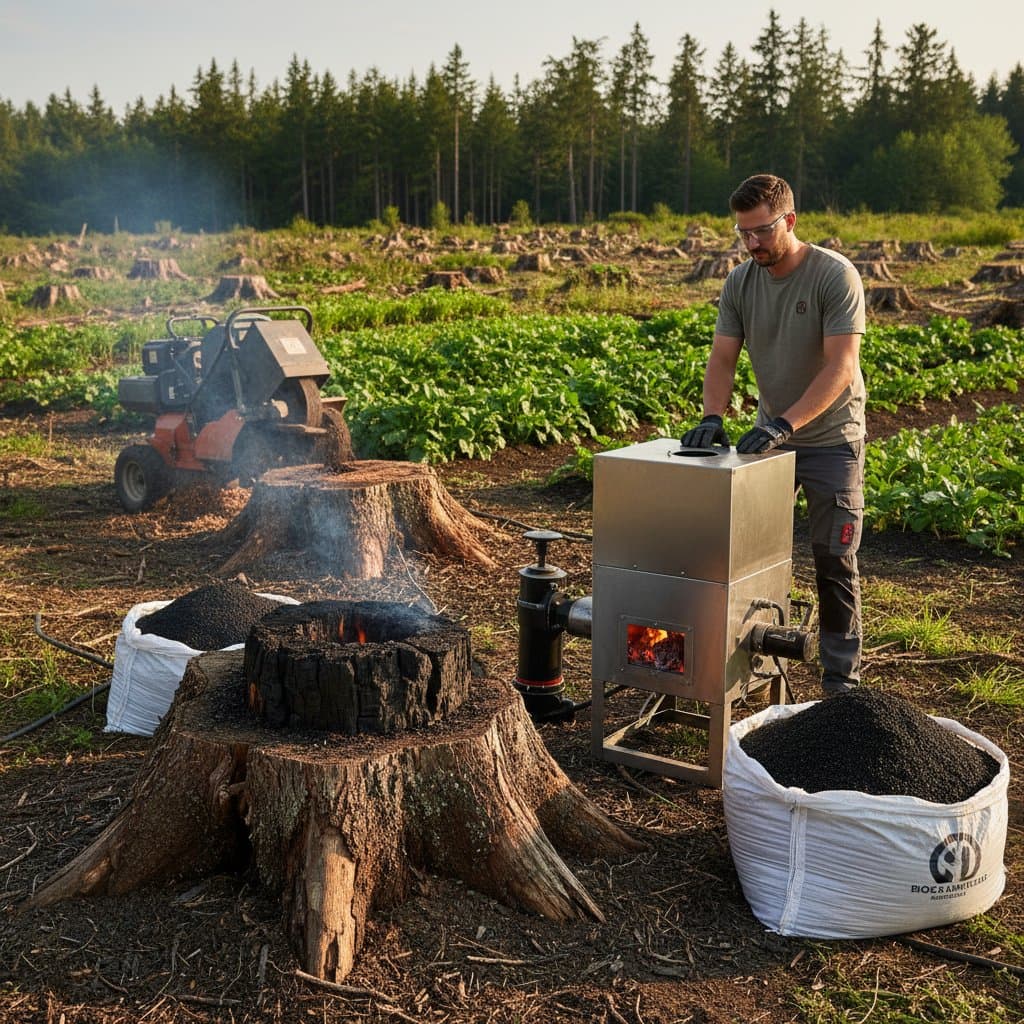
Transform Stumps to Biochar: Profit from Tree Waste
Turning tree stumps and wood waste into biochar represents a practical approach to recycling that yields profit and environmental benefits. This method suits homeowners, landscapers, and tree service professionals who manage leftover materials from tree removal or land clearing. By converting stumps into biochar, individuals reduce waste, lower disposal expenses, and produce a valuable soil amendment for personal use or sale. The following sections detail the process, associated costs, production systems, and strategies for profitability.
Biochar Production Cost
Grasping the cost structure proves vital before committing to equipment or services. Expenses vary based on production scale, equipment type, and wood feedstock source.
National Average Cost
Biochar production spans from modest backyard operations to large commercial facilities. Small-scale efforts with basic kilns incur low ongoing costs after initial setup. Commercial systems demand substantial upfront investment yet handle higher volumes for reliable output.
Cost by Project Size or Type
- Small-Scale Backyard Systems: Suitable for homeowners with on-site wood waste. Primary expenses involve building or buying a simple kiln, often from recycled metal barrels. Operational costs remain low, limited to labor and ignition fuel.
- Medium-Scale Farm or Landscaping Operations: These employ advanced retorts or continuous-feed kilns. Costs encompass equipment purchase and energy for sustaining carbonization temperatures.
- Commercial-Scale Production: Geared toward bulk sales, these setups feature high efficiency and quality control. Initial costs rise considerably, but they enable substantial profits through large-scale processing.
Key Cost Factors
- Equipment Type: Batch kilns offer affordability but operate slowly. Continuous systems demand more capital yet deliver greater efficiency.
- Feedstock Source: On-site tree waste minimizes expenses; external purchases increase them.
- Labor: Tasks like loading, monitoring, and packaging elevate total costs in manual processes.
- Energy Use: Heat-recovery designs reduce fuel needs; others rely on additional sources.
- Permits and Compliance: Local regulations may require environmental approvals for combustion equipment.
- Transportation: Hauling stumps to the site adds logistical expenses.
Types of Biochar Production Systems
Various systems exist, each with distinct advantages suited to specific scales and objectives. Selecting the right one aligns with available resources and production goals.
Flame Cap Kilns
These open-top designs employ pyrolysis, heating wood in limited oxygen to preserve carbon. The flame cap technique controls oxygen to favor char formation over full burning.
Pros:
- Low construction costs using basic materials
- Effective for small batches
- Relies on little external fuel
Cons:
- Generates more smoke
- Yields variable quality across batches
- Demands constant manual oversight
Retort Kilns
Retort systems seal wood in a chamber, venting and burning gases to generate heat. This setup ensures a controlled, cleaner pyrolysis process.
Pros:
- Delivers uniform, high-quality biochar
- Optimizes fuel efficiency
- Minimizes emissions
Cons:
- Requires greater initial funding
- Involves intricate setup and management
- Processes large stumps more slowly
Continuous Feed Systems
Industrial operations favor these automated systems that feed wood steadily for ongoing conversion.
Pros:
- Supports high-volume output
- Maintains product consistency
- Cuts long-term labor requirements
Cons:
- Involves high startup expenses
- Necessitates skilled operation
- Depends on reliable feedstock supply
DIY vs. Hiring a Professional
The decision between self-managed production and professional services hinges on objectives, available resources, and expertise levels.
DIY Approach:
Small operators or homeowners construct kilns from scavenged items, achieving cost savings and self-reliance. Challenges include safely handling high heat, regulating airflow, and avoiding errors like excess smoke or poor carbonization.
Hiring a Professional:
Experts provide streamlined processing, regulatory adherence, and equipment for rapid handling of large volumes. This option appeals to those seeking results without technical involvement.
Recommendation:
Opt for DIY with limited quantities for garden applications. For marketable output, invest in professional partnerships or advanced systems.
How to Transform Stumps into Biochar
The conversion process prepares stumps, regulates pyrolysis, and yields stable biochar. Adapt these steps for backyard or commercial scales.
1. Prepare the Site and Materials
Select a clear, safe location distant from buildings and combustibles. Chop stumps into manageable chunks for better airflow and even heating. Season fresh wood to dryness, as moist material hampers efficiency.
2. Build or Set Up the Kiln
Place homemade kilns on fireproof bases. Drill ventilation holes in metal barrels near the bottom. For retorts, verify seals and vents to sustain oxygen restriction.
3. Load the Wood
Stack pieces loosely inside the kiln to permit heat circulation. Prevent overcrowding, which impedes uniform carbonization.
4. Ignite the Top Layer
Start the fire at the surface to propagate a controlled downward burn. This technique shields lower wood from excess oxygen, promoting char over ash.
5. Monitor the Burn
Observe flame color and smoke volume. A steady yellow flame with scant smoke signals effective pyrolysis. Fine-tune vents to sustain the process without complete combustion.
6. Quench and Cool
Halt the reaction by dousing with water or sealing the kiln once material blackens and flames subside. Let the biochar cool fully to avoid handling risks.
7. Crush and Store
Grind cooled chunks into granules for soil integration. Keep in a dry area until application or distribution.
Tips for Successful Biochar Production
- Select dry wood to boost efficiency and curb smoke.
- Process only untreated natural wood to avoid contaminants.
- Regulate oxygen intake precisely to achieve carbonization, not burning.
- Analyze pH and carbon levels to verify quality.
- Combine biochar with compost prior to soil use for microbial activation.
Frequently Asked Questions
What is biochar made from?
Biochar derives from organic matter like wood or crop residues heated in low-oxygen conditions. This pyrolysis locks carbon stably, enhancing soil while curbing emissions.
Can I make biochar from tree stumps?
Yes, stumps serve as ideal feedstock due to their density and carbon content. Segmenting them ensures thorough, even conversion.
How long does it take to turn wood into biochar?
Processing lasts hours, influenced by kiln size and wood dimensions. Smaller fragments finish quicker than intact large stumps.
Is biochar profitable to sell?
Efficient production and targeted marketing yield profits. Demand from gardeners and farmers stems from its soil benefits, amplified by low-cost waste inputs.
Does making biochar harm the environment?
Proper methods benefit the environment by sequestering carbon and limiting emissions through efficient designs.
What are the main uses of biochar?
Applications include boosting soil fertility, retaining moisture, fostering microbes, aiding composting, bedding livestock, filtering water, and preventing erosion.
Turning Biochar Production into a Profitable Venture
Biochar from stumps extends beyond disposal to viable business opportunities for tree services, landscaping firms, and farms. Assess waste volumes to gauge feedstock availability. Offset hauling fees while projecting sales to local markets like gardens or nurseries valuing sustainable amendments.
Acquire efficient equipment or collaborate with facilities for optimized output. Pursue certifications to enhance market appeal. Track operations to position products as eco-friendly and regional.
Moving Forward with Sustainable Tree Waste Recycling
Biochar production from stumps delivers waste reduction, income generation, and ecological gains. This cycle repurposes removal byproducts into assets. Begin by reviewing regulations, assembling a kiln, and trialing batches. Refine methods to build production, secure buyers, and establish steady revenue from tree waste.