
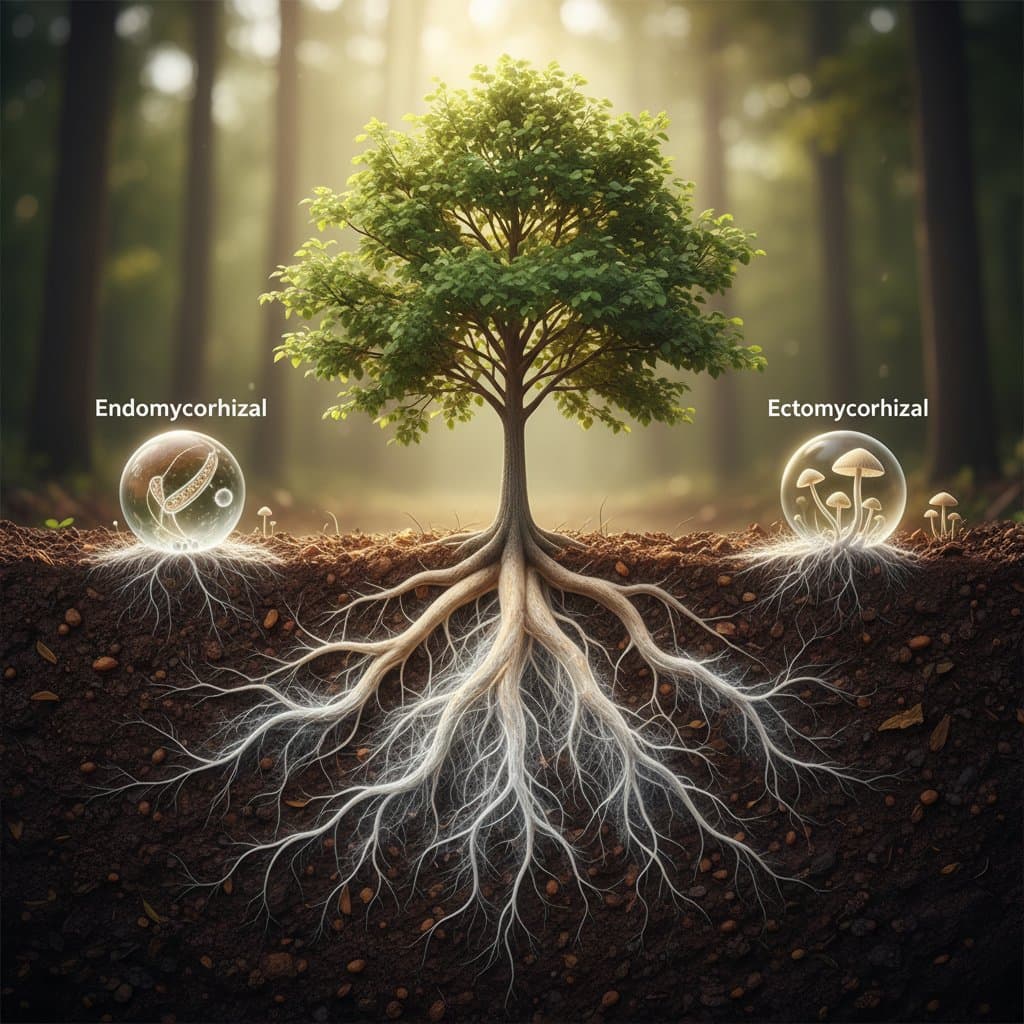
Enhance Tree Health by 60 Percent with Mycorrhizal Fungi
Healthy trees rely on robust root systems nourished by beneficial soil organisms. These alliances below the ground profoundly influence growth, stress resistance, and recovery from injury. Mycorrhizal fungi stand out as particularly potent partners. Studies indicate they elevate tree health by up to 60 percent, positioning them as essential natural resources for landscapes.
This guide explores the nature of mycorrhizal fungi, their mechanisms, and methods for homeowners to integrate them via soil inoculation and ongoing care.
Understanding Mycorrhizal Fungi
Mycorrhizal fungi establish symbiotic bonds with plant roots. The fungi adhere to the roots and extend delicate filaments throughout the soil. These structures function as extensions of the root system, capturing water and nutrients from distant areas.
The tree supplies the fungi with carbohydrates generated via photosynthesis. This exchange boosts nutrient access, refines soil composition, and elevates tree vigor overall.
The Science Behind the 60 Percent Boost
Strong mycorrhizal associations yield tangible advantages for trees:
- Superior nutrient absorption: Elements such as phosphorus, nitrogen, and micronutrients reach the roots more readily.
- Increased drought endurance: The fungi enhance water retention in the soil adjacent to roots.
- Protection against root diseases: Mycorrhizal fungi compete effectively with detrimental microbes, lowering infection chances.
- Improved soil architecture: Filaments aggregate soil particles, promoting better airflow and structural integrity.
These combined effects lead to a potential 60 percent gain in growth speed, foliage thickness, and enduring viability.
Types of Mycorrhizal Fungi
Two main categories of mycorrhizal fungi support trees. Interactions vary by tree variety and soil conditions.
Ectomycorrhizal Fungi
Ectomycorrhizal fungi create a protective layer encasing the roots of numerous hardwoods and conifers. They remain external to root cells, forming a mantle around them.
Benefits:
- Excel with species like pines, oaks, and birches.
- Offer robust defense against diseases.
- Aid adaptation to compacted or nutrient-deficient soils.
Drawbacks:
- Perform less optimally on fruit trees or decorative shrubs.
- Establish more gradually in altered or disrupted soils.
Endomycorrhizal (Arbuscular) Fungi
Endomycorrhizal fungi enter the root cells and associate with a wide array of landscape trees, including fruits and ornamentals.
Benefits:
- Compatible with diverse tree types.
- Colonize swiftly in saplings or relocated trees.
- Optimize nutrient extraction in low-fertility environments.
Drawbacks:
- Vulnerable to synthetic fertilizers and soil disruptions.
- Necessitate inoculation in city settings or treated soils.
DIY Application Versus Professional Services
Homeowners may opt for self-application of mycorrhizal inoculants or enlist experts for soil enhancements. Both methods suit specific scenarios.
DIY Inoculation
- Strengths: Economical and straightforward using granular or fluid formulations available at nurseries.
- Limitations: Demands knowledge of soil profiles and optimal timing. Incorrect dosing or positioning diminishes results.
Professional Application
- Strengths: Soil analyses inform exact product choices and quantities. Experts deliver inoculants via root-zone injections for superior depth.
- Limitations: Involves greater expense, appointment coordination, and reduced oversight of substances.
Professionals prove ideal for established or stressed trees. DIY efforts suit young or fresh plantings as proactive, budget-friendly steps.
Steps to Inoculate Trees with Mycorrhizal Fungi
-
Assess the Soil: Measure nutrient concentrations, pH balance, and organic content. Such data guides selection of suitable fungal strains.
-
Select Appropriate Products: Choose inoculants specified for your tree species. Multi-strain options often include both endomycorrhizal and ectomycorrhizal varieties.
-
Ready the Root Area: Incorporate inoculant into planting holes during new installations. For existing trees, distribute around the drip line or inject into the earth.
-
Irrigate Adequately: Apply water right after to facilitate fungal contact with fine roots.
-
Foster Supportive Environments: Refrain from chemical fertilizers or fungicides for weeks, preventing interference with fungal settling.
Strategies for Sustained Tree Vitality
- Apply Mulch Consistently: Spread 2 to 3 inches of organic material to retain moisture and nourish soil life.
- Restrain Fertilization: Surplus nutrients hinder fungal development; opt for moderation.
- Minimize Soil Disruption: Divert machinery or heavy passage from root vicinities.
- Incorporate Compost Teas: These enrich microbial variety in tandem with mycorrhizae.
- Observe Progress Indicators: Note richer leaf color, vigorous branches, and better water stress handling as evidence of efficacy.
Frequently Asked Questions
Is inoculation suitable for established trees?
Yes, older trees gain from this treatment, particularly amid compaction or depletion. Targeted deep injections connect fungi to vital roots.
Do chemical fertilizers damage mycorrhizal fungi?
Fertilizers rich in phosphorus suppress fungal function. Organic or gradual-release alternatives preserve the root-fungi alliance.
When do results become evident?
Noticeable changes emerge in a single season, with complete integration varying by soil factors.
Are mycorrhizal fungi appropriate for fruit trees?
Yes, they particularly aid fruit producers by boosting output and easing relocation stress.
Can inoculation pair with compost?
Certainly, compost supplies organics that nurture fungal expansion, fostering equilibrium in the soil community.
Integrate Mycorrhizal Fungi for Resilient Landscapes
Incorporate these practices to fortify trees against challenges. Homeowners witness enhanced growth and durability through deliberate soil stewardship. Strong roots translate to vibrant canopies, yielding lasting environmental and aesthetic rewards.