
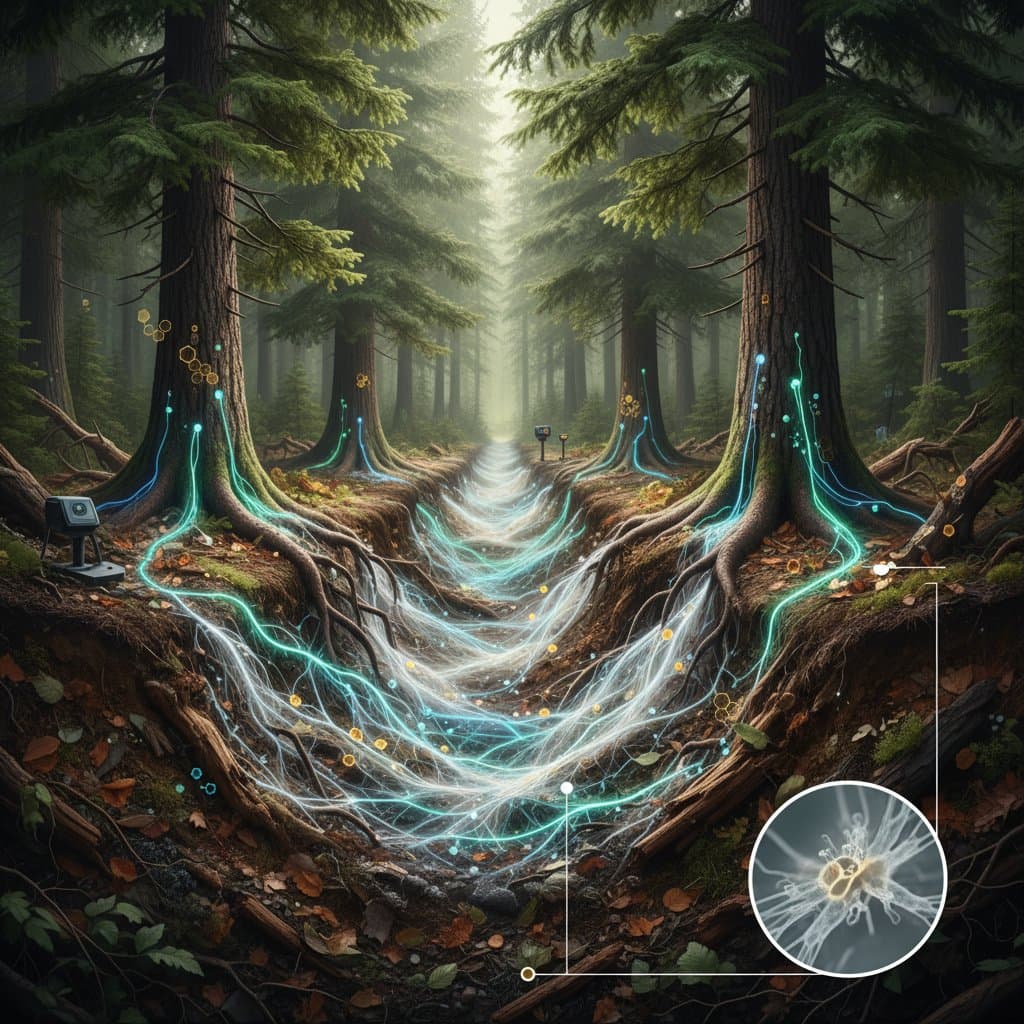
Trees Talking: Mycelium Networks Revolutionize Tree Care
Trees are not silent witnesses to the natural world. Beneath the soil, they are part of a living, communicating network powered by mycelium, the threadlike structures of fungi. This underground connection is transforming how experts understand and care for trees. The discovery and application of mycelium networks in modern tree care are changing soil management, disease detection, and forest restoration in remarkable ways.
Understanding how these fungal systems work reveals a new layer of intelligence in nature. For homeowners, arborists, and landscape professionals, tapping into this hidden network means healthier, more resilient trees and a more balanced ecosystem.
The Science Behind Mycelium Networks
Mycelium is the vegetative part of fungi. It grows in intricate webs through soil, wrapping around or even penetrating tree roots. This creates what scientists call a mycorrhizal network, a natural internet that allows trees to share nutrients, water, and chemical signals.
These fungal fibers connect trees of different species, allowing them to send warning messages about pests or drought stress. A large, older tree can even transfer nutrients to smaller, younger trees nearby. This exchange makes forests and landscapes more stable and cooperative, rather than competitive.
The relationship benefits both partners. Fungi gain sugars from the tree’s photosynthesis, while trees receive minerals and moisture collected by the extensive fungal threads. The result is a thriving underground partnership that supports plant health in ways traditional care methods often miss.
Mycelium Networks and Tree Health Monitoring
Recent advances in soil science and environmental technology now allow arborists to measure the activity and density of mycelial growth. By mapping these underground systems, professionals can assess the health of entire tree communities rather than individual specimens.
Sensors and soil probes detect nutrient flow, moisture levels, and fungal activity. When used together with visual tree assessments, this information helps identify stress long before leaves show damage. Mycelium-based monitoring gives a clearer picture of root vitality, soil fertility, and the subtle signals trees use to communicate distress.
For urban landscapes, where soil compaction and pollution can disrupt natural connections, understanding mycelial networks is especially valuable. It helps guide soil restoration and irrigation strategies that encourage fungal recovery, which in turn strengthens trees.
Types of Mycorrhizal Relationships
Not all mycelium networks behave the same way. Trees interact with fungi through different types of mycorrhizal relationships, each offering unique advantages.
Ectomycorrhizae
These fungi form a sheath around tree roots without penetrating them deeply. They are common in oaks, pines, and birches.
Pros:
- Enhance drought resistance
- Improve nutrient absorption
- Offer strong protection from root pathogens
Cons:
- Require specific soil conditions
- May not thrive in heavily disturbed urban soils
Endomycorrhizae
Also known as arbuscular mycorrhizae, these fungi penetrate root cells, forming tiny structures inside them.
Pros:
- Work well with most shrubs and grasses
- Improve phosphorus uptake
- Adapt to diverse soil types
Cons:
- More sensitive to chemical fertilizers
- Harder to detect and monitor directly
Ericoid Mycorrhizae
Found mainly in heathers and rhododendrons, these fungi tolerate acidic soil.
Pros:
- Support acid-loving plants
- Help plants survive in nutrient-poor conditions
Cons:
- Limited to specific plant families
- Less effective in neutral or alkaline soils
Understanding which type of mycorrhiza supports a given tree species helps arborists and landscapers choose the right soil treatments and fungal inoculants.
DIY vs. Professional Mycelium Network Care
Homeowners can encourage mycelium growth by reducing soil disturbance, avoiding chemical fertilizers, and adding organic mulch. Compost and natural leaf litter feed fungal life and restore balance. However, diagnosing fungal health or interpreting soil data requires specialized equipment and expertise.
DIY Care Advantages:
- Low cost and minimal equipment
- Supports soil life naturally
- Easy to maintain through organic practices
DIY Risks:
- Misidentification of fungal species
- Overuse of compost leading to poor drainage
- No access to precise soil analysis tools
Professional Care Benefits:
- Advanced monitoring and lab testing
- Correct identification of beneficial fungi
- Tailored restoration strategies for specific soil conditions
For complex landscapes or valuable specimen trees, hiring a certified arborist familiar with mycorrhizal systems is the best approach. They can integrate fungal management with pruning, irrigation, and pest control plans for long-term health.
How to Support Mycelium Networks in Your Landscape
-
Minimize Soil Disturbance
Avoid deep digging or heavy machinery near tree roots. Mycelium threads are delicate and easily broken. -
Use Organic Mulch
Apply a layer of wood chips or shredded leaves around trees to feed fungi and preserve moisture. -
Reduce Chemical Inputs
Limit synthetic fertilizers and herbicides that kill or inhibit fungal growth. Choose slow-release organic alternatives. -
Encourage Plant Diversity
Mix tree species and understory plants to support a wider range of mycorrhizal fungi.
Tips for Long-Term Success
- Keep mulch away from the tree trunk to prevent rot.
- Water deeply but infrequently to promote fungal development.
- Leave fallen leaves in place where possible to sustain soil life.
- Avoid compacting soil with vehicles or foot traffic.
- Schedule periodic soil health tests to track fungal activity.
Frequently Asked Questions
How can I tell if my soil has active mycelium?
Healthy soil often shows white, threadlike strands under mulch or compost layers. These are signs of active mycelium. A professional soil test can confirm fungal diversity and vitality.
Do all trees need mycorrhizal fungi?
Most tree species depend on mycorrhizal fungi for nutrient exchange and resilience. Some ornamental or tropical trees may form weaker associations, but nearly all benefit from fungal connections.
Can I buy mycorrhizal inoculants for existing trees?
Yes, inoculants are available for both new and mature trees. They can be mixed into soil, applied with water, or injected near root zones to enhance fungal colonization.
What damages mycelium networks?
Excessive tilling, chemical fertilizers, soil compaction, and drought disrupt fungal threads. Maintaining organic matter and moisture helps preserve these networks.
Are mycelium networks visible above ground?
Usually not. The visible mushrooms or toadstools are fruiting bodies of fungi, while the main network remains underground, binding soil and connecting roots.
Nurturing Tree Intelligence in Your Landscape
Recognizing trees as part of an intelligent, communicating system changes how we care for them. By supporting mycelium networks, homeowners and professionals can create healthier soils, stronger roots, and more resilient landscapes. The key is to treat the underground world with the same respect as the branches above.