
Introduction
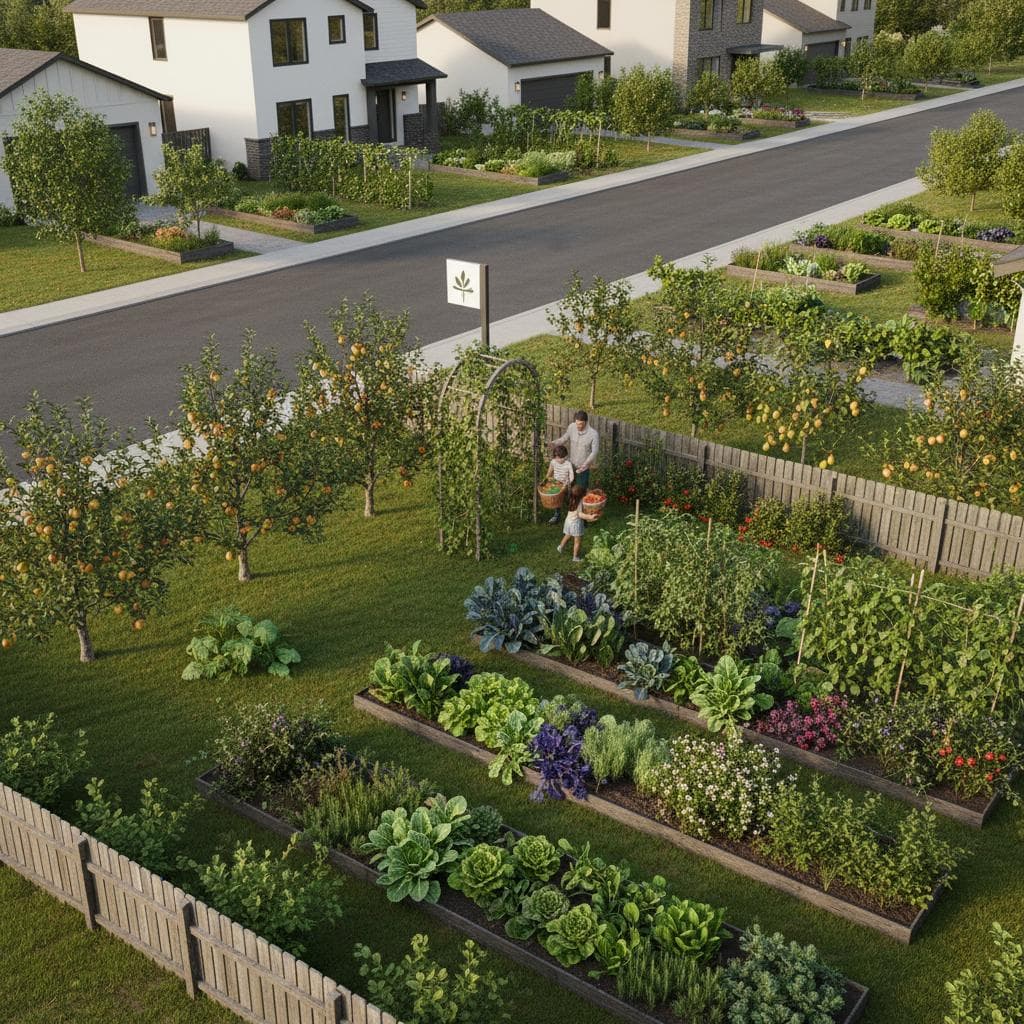
Zoning reforms across 40 states now permit homeowners to replace traditional lawns with productive edible landscapes. These changes remove many prior restrictions on front yard plantings of fruit trees, herbs, and vegetables. The result is greater freedom to create yards that supply fresh food while supporting local ecosystems.
Homeowners gain options to lower grocery expenses and increase property appeal through thoughtful design. Success depends on understanding local rules, selecting appropriate plants, and following sound maintenance practices.
Types of Edible Landscaping
Edible landscaping merges ornamental structure with food production. Designs range from formal arrangements to natural woodland edges. Four primary approaches suit different lot sizes and goals.
Kitchen Gardens
These compact areas focus on herbs, leafy greens, and vegetables in raised beds or defined plots.
- Advantages: Simple upkeep suits small properties and adds visual interest near outdoor living spaces.
- Limitations: Production remains modest and often requires seasonal replanting.
Food Forests
Layered plantings of trees, shrubs, vines, and ground covers replicate forest systems for sustained output.
- Advantages: Long term yields increase while pollinator habitat and soil quality improve.
- Limitations: Initial planning takes time and early costs can run higher than simpler designs.
Mixed Ornamental Gardens
Fruit trees and berry bushes integrate with conventional flowers and shrubs to preserve curb appeal.
- Advantages: Compliance with urban codes proves easier and overall appearance stays tidy.
- Limitations: Some species need regular pruning or pest monitoring to maintain neat form.
Container and Vertical Gardens
Portable systems using pots, trellises, or wall mounted planters work well for limited space or rental situations.
- Advantages: Soil quality stays controllable and relocation remains straightforward.
- Limitations: Watering and nutrient replenishment occur more often than in ground plantings.
DIY Approach Versus Professional Installation
Homeowners who enjoy hands on work can complete many projects themselves. This route lowers expenses and builds personal knowledge. Poor planning, however, may lead to drainage problems, plant overcrowding, or code violations.
Professional designers bring expertise in permit requirements, irrigation layout, and long term plant health. Their involvement benefits large properties, sites with grading challenges, or situations where public visibility demands refined results.
Steps to Create an Edible Landscape
- Review municipal codes for allowed plant types, height limits, and required setbacks from sidewalks or property lines.
- Evaluate sunlight exposure across the yard and test soil drainage plus nutrient levels, then amend with compost where needed.
- Sketch a layered layout that combines canopy trees, mid height shrubs, and low ground covers for continuous visual and harvest interest.
- Select climate appropriate varieties such as perennial blueberries alongside annual vegetables that fit available space.
- Install drip irrigation to conserve water and apply mulch to retain moisture while suppressing weeds.
- Set plants at correct spacing, water thoroughly at planting, and prune regularly to encourage healthy growth and shape.
Practices for Sustained Results
Focus first on one manageable section before expanding further. Native species typically demand less irrigation and show stronger resistance to local pests. Combine early season and late season producers to extend the harvest window. Rely on organic soil amendments and integrated pest strategies to protect beneficial organisms. Coordinated efforts with neighbors can distribute surplus produce and share maintenance tasks.
Common Questions
Is a permit required for an edible landscape?
Most residential gardens proceed without permits. Certain cities request review when trees are placed near sidewalks or shared boundaries. Confirm requirements with the local planning office prior to installation.
Does edible landscaping raise property value?
Well executed designs increase buyer interest by adding functional outdoor areas that supply food and demonstrate sustainable practices.
Which plants suit first time growers?
Rosemary, thyme, kale, and raspberries establish readily across many regions. These options integrate smoothly with existing ornamental beds.
How do recent zoning updates change options for homeowners?
Updated ordinances treat food producing plants as standard landscaping elements, even in front yards, thereby reducing risk of fines or required removal.
What rules apply to composting and rainwater collection?
Local health and building codes govern both practices. Some jurisdictions limit bin placement or require permits for larger cisterns. Check ordinances before proceeding.
Next Actions for Homeowners
Begin with a code review and site assessment, then develop a phased planting plan matched to local conditions. Professional consultation provides additional assurance for complex sites. The updated regulations now support landscapes that deliver ongoing harvests while enhancing neighborhood biodiversity.