
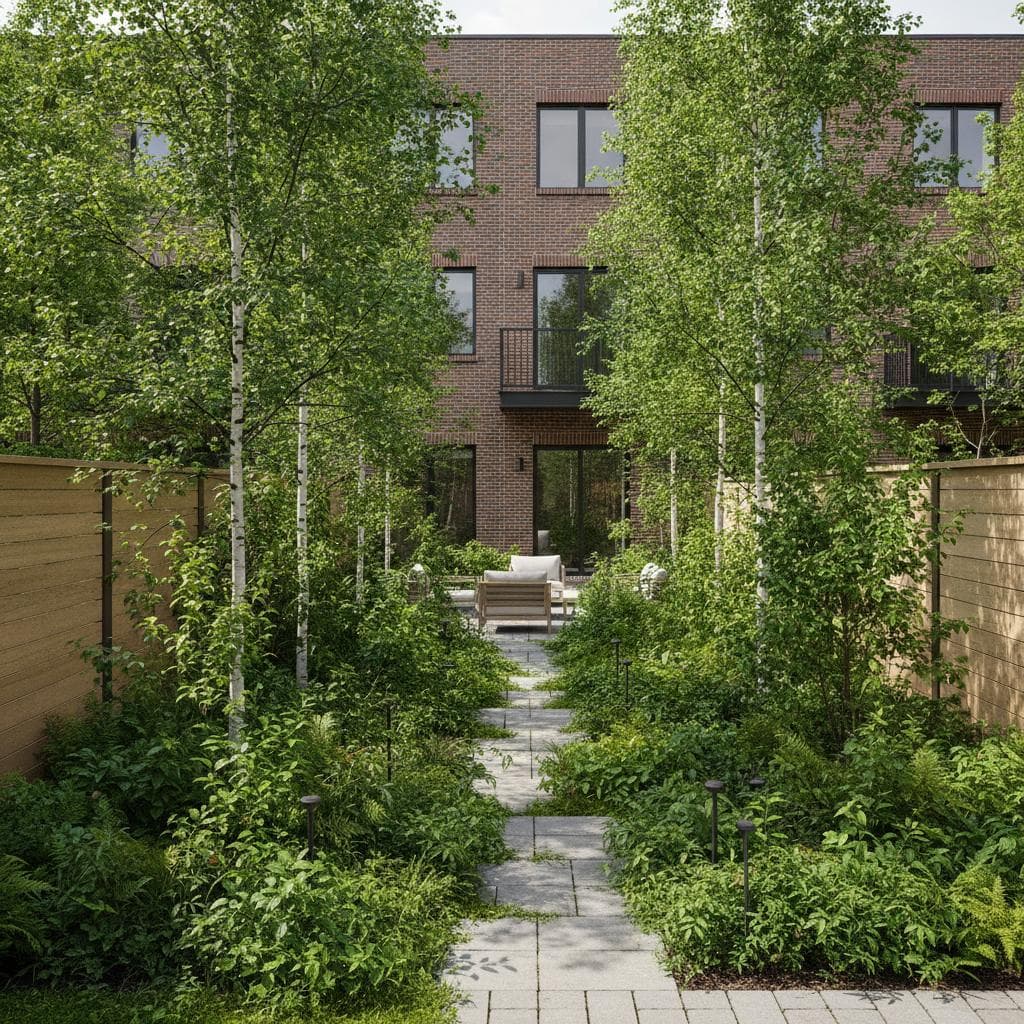
Micro-Forests Transform Compact Urban Yards
Micro-forests convert limited urban spaces into thriving ecosystems that mature rapidly while supporting local wildlife. These dense plantings follow the Miyawaki method and reach functional maturity up to ten times faster than standard tree rows. Homeowners gain shade, privacy, and improved air quality without needing large plots.
Defining a Micro-Forest
A micro-forest consists of multiple vegetation layers packed into a small area to imitate the structure of a mature woodland. The approach relies on native species selected for the specific soil and climate. Tight spacing drives competition that strengthens roots and speeds vertical growth. After three to five years the planting becomes self-sustaining and needs little outside care.
Advantages for City Properties
Limited space, compacted soil, and summer heat are common urban constraints. A micro-forest addresses each issue through natural processes.
- Plots as small as 100 square feet support three to five plant layers.
- Dense foliage captures airborne pollutants and stores carbon in roots and trunks.
- The canopy lowers nearby air temperatures by several degrees during peak heat.
- Native trees create year-round screens that also feed birds and pollinators.
The layered canopy adds visual depth and turns a narrow side yard into a quiet retreat.
Steps of the Miyawaki Method
Successful installation follows four sequential actions.
- Loosen the top 12 inches of soil and blend in equal parts compost and aged wood chips to restore drainage and nutrients.
- Assemble four height classes of native plants: canopy trees, understory trees, shrubs, and ground-layer herbs.
- Place two to three plants per square meter so foliage will touch within two seasons.
- Spread four inches of mulch across the entire bed and water weekly for the first 18 months.
Choosing Between DIY and Professional Help
Small sites under 200 square feet suit experienced gardeners who enjoy research. Larger areas or heavy clay soils benefit from an arborist visit to test pH and select compatible species. Budgets range from 300 dollars for a basic DIY bed to several thousand dollars when soil amendment and irrigation are added.
Ongoing Care Requirements
Established micro-forests need only light attention.
- Provide deep watering every two weeks during the first two summers.
- Remove invasive seedlings by hand each spring.
- Replenish mulch annually to maintain moisture and suppress weeds.
- Prune only dead or rubbing branches during dormancy.
Answers to Frequent Questions
How long until the planting looks mature?
Most micro-forests reach 80 percent of their expected height within ten years because competition accelerates growth.
Will heavy clay prevent success?
Clay responds well when amended with one-third sand and one-third compost before planting; drainage improves and roots expand quickly.
Are permits required?
Residential plantings inside property lines rarely need permits, yet owners should confirm setbacks from sidewalks or utilities with the local planning office.
Which species perform best?
Select trees and shrubs already common in nearby natural areas. Oaks, maples, serviceberries, and dogwoods combine well with native sedges and ferns.
Does the planting attract animals?
Diverse foliage draws songbirds, butterflies, and predatory insects that reduce garden pests naturally.
Preparing the Site for Planting
Measure the chosen area, test soil drainage with a simple percolation test, and order plants in the correct height ratios. Begin soil work in early spring or fall when temperatures favor root establishment.