
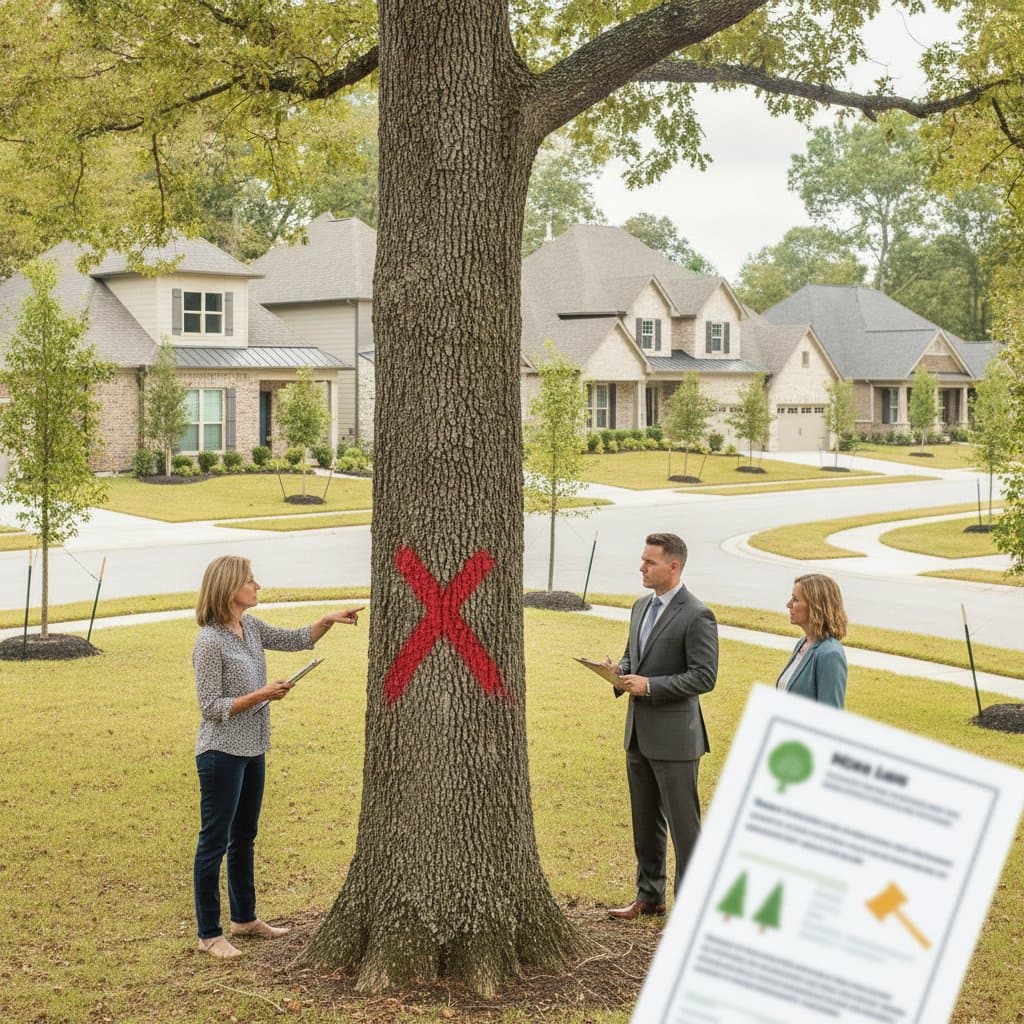
HOA Tree Removal Rules and Property Rights Conflicts
Homeowners associations that restrict tree removal often create tension between private property rights and community standards. Many owners discover that a simple yard decision can escalate into legal and financial challenges. These rules typically aim to preserve neighborhood aesthetics yet they can hinder safety measures or landscaping improvements.
Disputes frequently involve local ordinances, environmental protections, and homeowner control. Understanding HOA procedures, legal protections, and approval steps helps prevent costly conflicts.
Reasons for HOA Tree Regulations
Associations regulate tree removal to maintain visual consistency across the community. Mature trees support property values, provide shade, and enhance curb appeal. Removal of one tree can alter the shared character that neighbors expect.
Rules appear in the covenants, conditions, and restrictions. They specify permitted species, maintenance standards, and removal conditions. The intent is uniformity, though the same rules can block necessary work.
Common motivations include preservation of aesthetics, retention of shade benefits, control of erosion, support for canopy goals, and avoidance of boundary disputes.
Factors That Shape Removal Decisions
Each association follows its own review process. Outcomes depend on tree condition, location, and additional requirements.
Tree Health and Safety
Dead, diseased, or hazardous trees usually receive approval after an arborist inspection. The report must confirm risk rather than cosmetic preference.
Location and Ownership
Common area trees belong to the association. Private lot trees remain the owner responsibility. Overlapping roots or branches can create ownership questions.
Local Ordinances
City or county rules may require separate permits. These regulations operate independently of association guidelines and must be satisfied even after association approval.
Replacement Requirements
Many associations mandate new plantings of specific size or species. Costs for compliance can reach several thousand dollars.
Aesthetic Review
Boards may deny removal when a tree contributes to street appearance. Some retain landscape architects to enforce design consistency.
Limits of HOA Authority
Associations cannot override safety obligations or public codes. When a tree threatens structures or occupants, denial of removal can expose the association to liability.
Courts have ruled that boards must act reasonably. Owners facing denial after an arborist declares a hazard can pursue mediation or legal review.
Tree Service Categories
- Tree trimming removes dead wood and shapes growth while preserving appearance.
- Full removal cuts the tree to ground level and requires prior approval.
- Stump grinding eliminates the remaining base to prevent regrowth.
- Emergency removal allows immediate action when danger is present, followed by documentation.
- Replacement planting restores canopy according to association specifications.
Approval Process Steps
- Review the covenants and landscaping guidelines for relevant sections.
- Obtain an arborist inspection to document condition and risk.
- Compile photographs, the inspection report, and a written justification.
- Submit the complete request to the board or review committee.
- Respond promptly to any board inspection or additional requests.
- Follow all conditions listed in an approval, including replacement plantings.
- Secure any required municipal permit before work begins.
- Engage a licensed and insured service provider experienced with association projects.
Professional Services Compared with DIY
Tree work involves unpredictable risks and specialized equipment. Homeowners who attempt removal may void insurance coverage or incur fines. Licensed professionals carry liability protection and understand both association and local requirements.
Communication Practices That Improve Outcomes
- Notify the association at the first sign of concern.
- Submit third party arborist reports rather than personal assessments.
- Attend meetings with photographs and factual summaries.
- Offer compromises such as alternative species or screening methods.
- Retain written records of every exchange.
Questions for Prospective Tree Services
- Are you licensed and insured for residential work?
- Will you supply a written estimate that details scope and timeline?
- Do you have prior experience with association properties?
- Can you manage permit applications when needed?
- How will you protect adjacent landscaping and structures?
- What is the final cleanup procedure?
- Can you provide recent client references?
Frequently Asked Questions
Can an association require retention of a hazardous tree?
No. A certified arborist determination of safety risk takes precedence over aesthetic rules.
What are the consequences of unauthorized removal?
Fines, mandatory replanting orders, or legal proceedings may follow. Emergency situations require prompt documentation after the fact.
Do municipal rules supersede association guidelines?
Yes. City and county ordinances hold priority. Compliance with both sets of rules remains necessary.
Who bears the cost for common area trees?
The association maintains trees on shared property using association funds. Owners handle only trees inside their lot boundaries.
How does one appeal a denial?
Submit a written appeal that includes the arborist report and any new evidence. Further denial may justify mediation or legal consultation.
Are certain species more likely to receive protection?
Native or heritage trees such as oaks often face stricter review and replacement conditions.
Can the association require replacement planting?
Yes. Many approvals specify species, size, and location to maintain canopy targets.
Resolving Disputes Through Documentation and Dialogue
Clear records and early professional input reduce escalation. Owners who demonstrate safety priorities alongside community standards achieve faster resolutions while protecting both property and compliance.