
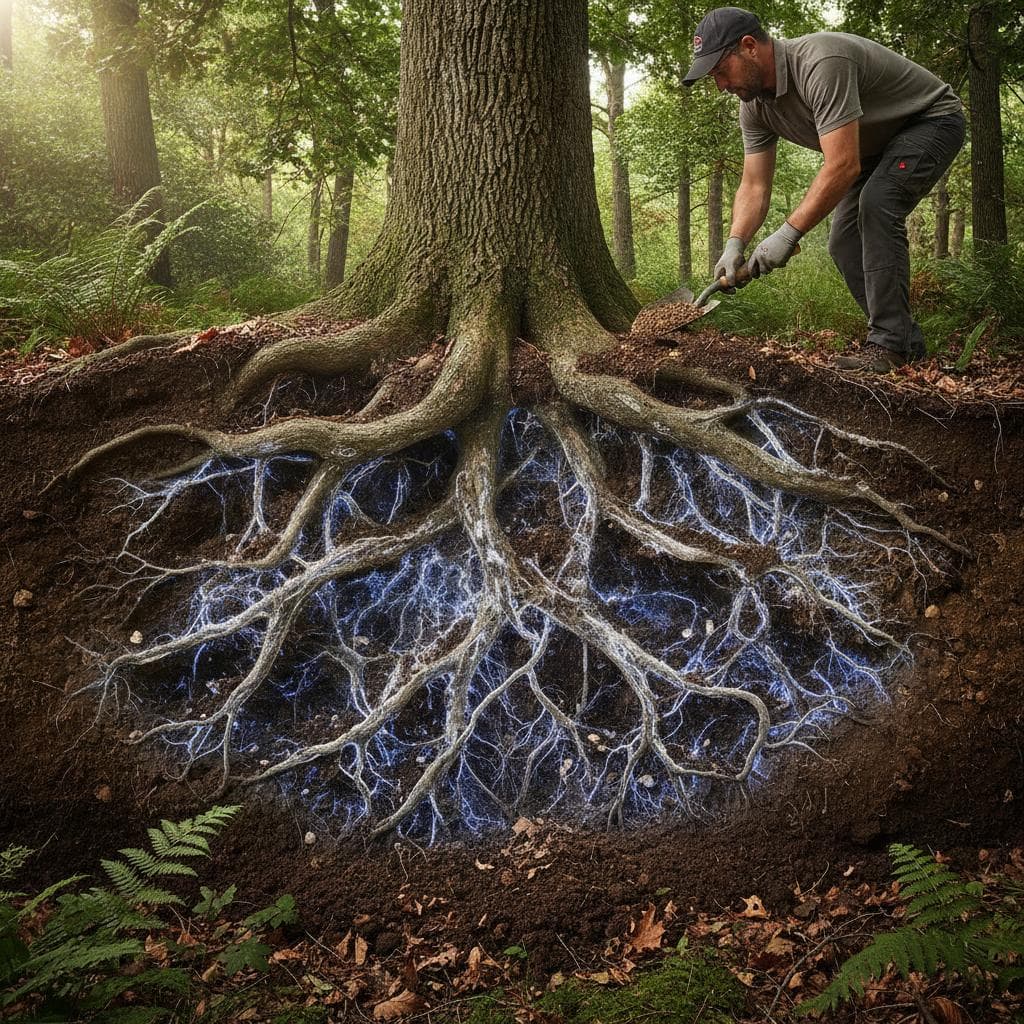
Arborists Now Use Mycelium for Stronger Tree Roots
Healthy trees start with healthy roots. Arborists are turning to a surprising ally hidden beneath the soil surface. Mycelium forms the vast fungal network that connects plant life underground. By partnering with this natural system, tree care professionals find safer and more sustainable ways to strengthen roots, improve soil stability, and boost long-term tree health.
This guide explains how arborists use mycelium to improve tree root systems. It covers benefits for soil and property. Homeowners learn what to know before requesting this service. Whether the property holds a struggling oak, a newly planted maple, or requires enhanced landscape resilience, understanding the connection between mycelium and roots supports better choices.
What Is Mycelium in Tree Care
Mycelium is the underground portion of fungi. It forms a network of tiny filaments called hyphae. These filaments weave through the soil and connect with tree roots in a mutually beneficial relationship known as mycorrhizae. The fungi help roots absorb water and nutrients more efficiently. The tree provides carbohydrates the fungi need to survive.
In tree care, arborists use mycelium-based treatments to mimic or boost this natural process. The result includes stronger root growth, greater disease resistance, and improved soil structure that supports healthier trees from the ground up.
Average Cost of Mycelium Tree Root Treatments
The cost of mycelium-based root enhancement services varies. Factors include the size and condition of the tree, soil health, and the complexity of the treatment.
| Factor | Average Cost Range |
|---|---|
| Small Tree (under 20 ft) | $150 - $300 |
| Medium Tree (20-50 ft) | $300 - $700 |
| Large Tree (over 50 ft) | $700 - $1,200 |
| Full Soil Inoculation (per yard of soil) | $40 - $80 |
These figures include professional evaluation, application of mycelium inoculants, and follow-up soil health monitoring. The investment often reduces the need for costly future interventions such as root repair or premature tree removal.
Factors Affecting the Cost of Mycelium Treatments
Tree Size
Larger trees have broader root zones. These zones require more inoculant and labor to treat effectively. Arborists often map the entire root spread before applying mycelium cultures to ensure full coverage.
Tree Condition
Trees showing signs of stress, such as yellowing leaves or dieback, may need additional soil amendments or root pruning before mycelium treatment. This extra preparation can increase the total cost.
Tree Species
Species like oak and pine naturally form strong mycorrhizal relationships. They respond quickly to mycelium inoculation. Others, such as birch or maple, may need multiple applications or supplemental organic materials for best results.
Soil Quality and Microbiome Health
Degraded or compacted soils often lack organic matter and microbial life. Arborists may recommend compost topdressing or aeration before adding mycelium products. These steps help the fungi colonize successfully and connect with existing roots.
Location and Accessibility
Trees in tight spaces, near structures, or along slopes can be harder to treat. Limited access may require specialized equipment or manual application, which can add to labor costs.
Urgency of Treatment
Emergency treatments for storm-damaged or diseased trees may cost more than scheduled maintenance. Mycelium inoculation works best as a preventive measure rather than a crisis fix. Proactive homeowners often save money by planning ahead.
The Mycelium Treatment Process
Professional mycelium-based tree care involves several carefully coordinated steps. Each stage supports root development while protecting surrounding soil life.
- Initial Assessment and Soil Testing. An arborist begins with a visual inspection and soil sampling. They check pH levels, organic matter, compaction, and microbial activity to ensure the environment can support fungal colonization.
- Root Zone Mapping. Using tools like air spades or ground-penetrating radar, professionals identify the root spread and critical root zone. This helps determine where and how much mycelium inoculant should be applied.
- Inoculant Selection. Arborists choose a blend of mycorrhizal fungi suited to the tree species and local soil conditions. Common genera include Glomus, Rhizophagus, and Pisolithus.
- Soil Preparation. The top layer of soil may be loosened or aerated to allow oxygen and moisture to reach the roots. In some cases, organic compost or biochar is added to provide a stable habitat for the fungi.
- Mycelium Application. The inoculant is mixed with water or compost and applied directly to the root zone through injection, drenching, or incorporation into the soil. The fungi quickly begin forming networks that attach to root tips.
- Monitoring and Aftercare. Arborists revisit the site after several weeks or months to evaluate progress. They may test soil moisture, root growth, and leaf color to confirm the treatment success. Repeat applications may be suggested for poor soils or high-stress environments.
DIY vs. Hiring a Professional Arborist
When You Can Try It Yourself
Homeowners can safely experiment with small-scale mycelium inoculants for young or newly planted trees. Many garden centers sell ready-to-use mycorrhizal powders or liquid mixes that can be added during planting. These products promote early root establishment and are simple to apply.
When to Hire a Professional
For mature trees, large properties, or soil with known contamination or compaction, professional help is essential. Arborists have the equipment, training, and biological understanding to evaluate soil composition, select the right fungal strains, and apply them safely. They also ensure treatments do not interfere with existing landscaping or underground utilities.
Hiring a certified arborist also provides peace of mind. They can identify deeper issues like root girdling, nutrient deficiencies, or pest infestations that may be limiting growth.
How to Choose the Right Tree Service for Mycelium Treatments
Choosing the right professional makes a lasting difference in how well trees respond. Here are key steps to take when hiring a tree service for mycelium applications.
- Check Credentials and Certification. Look for arborists certified by recognized organizations. They follow strict safety and environmental standards and stay updated on new soil biology techniques.
- Ask About Experience with Mycorrhizal Treatments. Not all tree services specialize in fungal inoculants. Ask how many treatments they have completed and what tree species they have worked with.
- Request Soil Testing. A reputable arborist will always test soil before applying any biological amendments. This ensures the treatment fits specific conditions.
- Get Multiple Estimates. Compare quotes from at least two or three providers. Make sure each includes the cost of materials, labor, and any follow-up visits.
- Confirm Insurance and Safety Procedures. Tree work often involves heavy equipment and soil excavation. Verify that the company carries liability and worker compensation coverage.
- Review References or Case Studies. Ask for examples of similar projects or follow-up photos showing improved tree health. Reliable companies are proud to share their results.
- Request a Written Plan. A detailed proposal should outline the species of fungi to be used, the method of application, and the expected timeline for visible results.
Frequently Asked Questions
How much does it cost to treat a large oak with mycelium
Treating a mature oak generally ranges between $700 and $1,200 depending on soil quality and site access. Oaks respond well to mycorrhizal inoculation since they naturally form strong fungal partnerships in the wild.
Is it better to use mycelium than fertilizer
Mycelium treatments focus on long-term soil and root health rather than short-term nutrient boosts. Fertilizers feed the tree directly. Fungi improve the soil ability to support root growth and nutrient cycling. Many arborists recommend combining both approaches for best results.
Can mycelium repair damaged roots
While it cannot reverse severe root damage, mycelium can help trees recover from moderate stress. By improving nutrient absorption and soil structure, it encourages new root growth and reduces further decline.
How long before I see results
Visible improvements like fuller canopies or greener leaves may take one growing season to appear. Underground changes begin much sooner as the fungal network establishes itself within the root zone.
Does mycelium treatment work for all soil types
It works best in soils with moderate organic content and good drainage. Very compacted or sandy soils may need conditioning before inoculation. An arborist can test and adjust the treatment plan accordingly.
Is mycelium safe for pets and the environment
Yes. Mycelium is entirely natural and non-toxic. It actually improves soil biodiversity and helps reduce chemical runoff by lowering the need for synthetic fertilizers.
Can I combine mycelium treatment with stump grinding or tree removal
Yes. Many arborists apply mycelium inoculants after stump grinding to restore soil life in disturbed areas. This prepares the ground for new plantings and prevents fungal imbalances.
What time of year is best for mycelium treatments
The best times are during mild weather when soil moisture is stable and root growth is active. Avoid mid-summer heat or frozen conditions that limit fungal activity.
How does mycelium benefit the soil microbiome
Mycelium acts as a communication network linking roots, bacteria, and other soil organisms. It helps balance moisture, breaks down organic material, and enhances nutrient exchange. This fosters a thriving soil microbiome that supports long-term ecosystem stability.
Can I use mycelium to help newly planted trees
Absolutely. Adding mycorrhizal fungi during planting gives young trees a strong start.
Integrating Mycelium into Tree Care Plans
The use of mycelium in arboriculture is transforming how professionals think about soil management and tree care. Instead of treating symptoms like poor growth or leaf discoloration with quick fixes, arborists now focus on the living network beneath the surface.
For homeowners, investing in mycelium treatments means more than healthier trees. It means reduced maintenance costs, improved soil structure, and a more resilient landscape that can withstand drought, disease, and environmental stress.
If trees appear weak or new plantings are planned, talk to a certified arborist about integrating mycelium-based care into the maintenance plan. With the right guidance and soil support, trees can thrive naturally while contributing to a healthier and more sustainable environment around the home.