
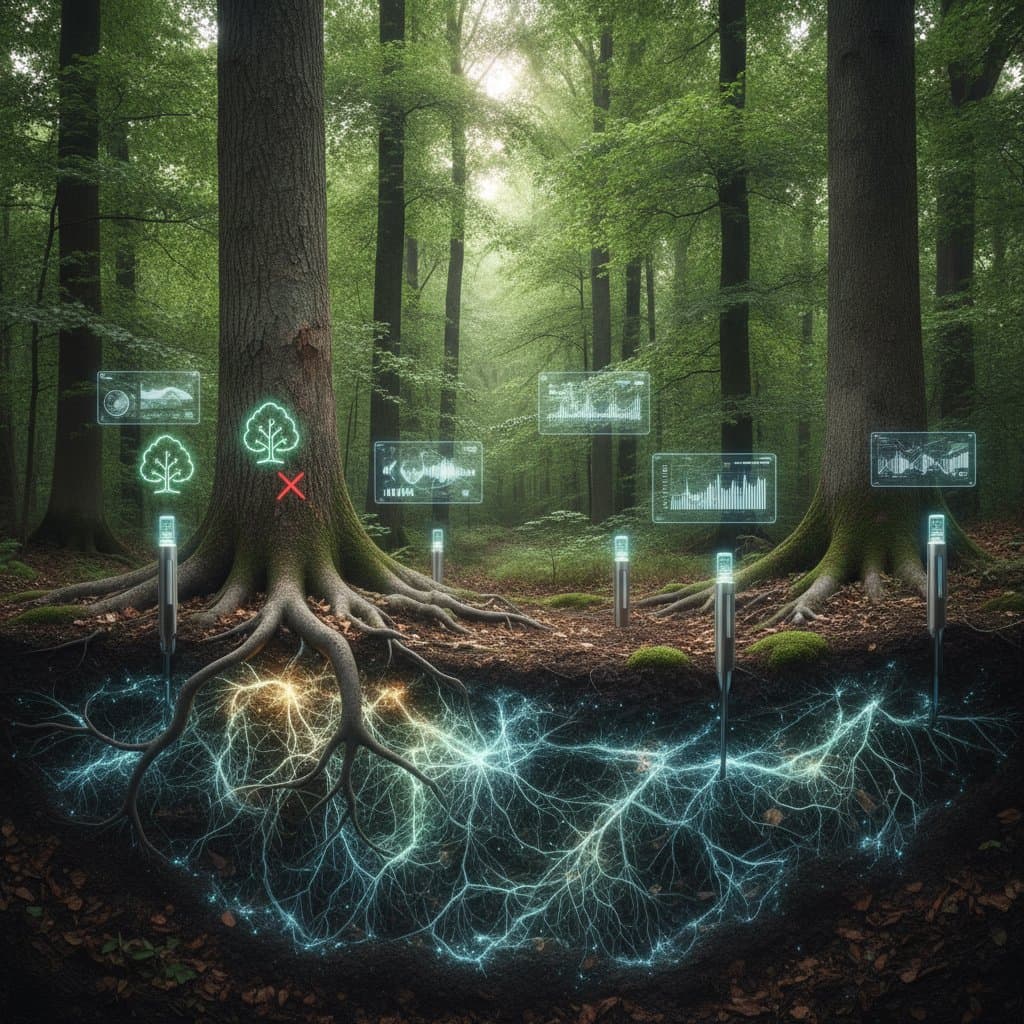
Fungal Networks Offer New Tree Health Monitoring Insights
Healthy forests rely on complex systems beneath the soil surface. Fungal networks formed by microscopic threads connect tree roots and facilitate nutrient exchange. New technologies now allow monitoring of these networks to detect tree stress early.
What Fungal Networks Are and Why They Matter
Mycorrhizal associations link tree roots with fungi. These connections create extensive mycelial networks that transport water, minerals, and carbon compounds. They also transmit signals about environmental threats between trees.
Such interactions provide early indicators of health issues in managed landscapes.
How Technology Is Making Fungal Monitoring Possible
Advances in measurement tools now permit tracking of biological activity inside fungal networks. Sensors and soil analysis detect shifts in respiration, nutrient movement, and chemical signals. These changes act as reliable markers of overall tree condition.
Emerging Tools and Techniques
- Soil bio-sensors placed near root zones record carbon dioxide release, moisture levels, and nutrient transfer rates.
- DNA soil tests identify dominant fungal species and reveal whether beneficial strains outnumber harmful ones.
- Electrical impedance mapping measures current flow through soil to assess network density and connectivity.
- Machine learning models process combined soil and climate data to forecast stress events.
Benefits of Fungal Network Monitoring
Regular monitoring supplies a fuller view of soil conditions and supports timely intervention. Root problems such as rot or drought effects become visible through network data before any canopy change occurs.
Key benefits include early detection of stress, irrigation schedules adjusted to actual fungal demand, selection of tree species matched to existing soil biology, and reduced reliance on synthetic soil amendments.
Challenges and Considerations
Current equipment remains expensive for widespread use. Data interpretation requires training in both soil science and arboriculture. Professionals therefore combine sensor output with standard visual checks and leaf tissue analysis.
Applying Fungal Insights to Home Landscapes
- Limit soil disturbance around established roots to preserve existing fungal threads.
- Apply organic mulch layers that supply carbon sources for beneficial fungi.
- Avoid broad-spectrum fungicides that reduce native mycorrhizal populations.
- Choose native tree species already adapted to local fungal communities.
- Provide deep, infrequent watering that reaches the full root zone.
Practical Steps for Land Managers
Begin with baseline soil sampling on representative sites. Install a small number of bio-sensors in high-value areas and record readings monthly. Review results alongside weather records to identify patterns. Adjust maintenance plans only after confirming trends through multiple data sources.
Frequently Asked Questions
How do fungal networks improve tree health?
They increase the surface area for water and nutrient uptake and speed recovery after disturbance.
Can fungal activity be assessed without instruments?
Texture, earthworm presence, and occasional mushroom formation offer basic signs of active networks.
Do networks link every tree in a stand?
Connections form only between compatible species and depend on soil texture and moisture continuity.
Are all soil fungi helpful?
Many species support growth while others cause decay. Species identification clarifies net soil function.
Does monitoring apply in cities?
Yes. Compacted or contaminated urban soils respond well to targeted fungal assessments that guide remediation.
Next Steps for Stronger Landscapes
Integrating fungal data into routine inspections helps maintain resilient root systems and reduces long-term replacement costs. Consistent observation paired with simple cultural practices yields measurable gains in tree stability and site sustainability.