
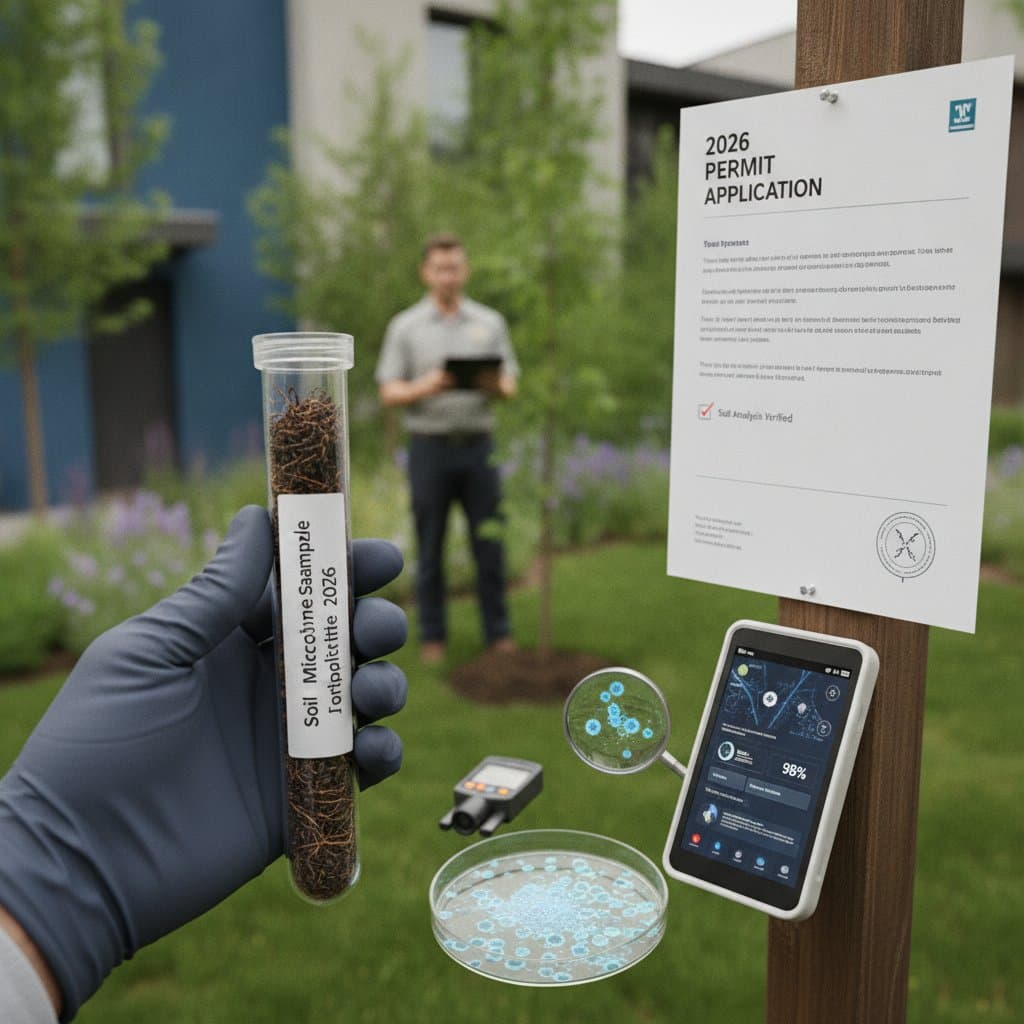
2026 Tree Permits Require Soil Microbiome Testing | What Homeowners Need to Know
When you apply for a tree removal or planting permit, you expect to provide details about the tree species, height, and location. Starting in 2026, you will also need to provide a soil microbiome test. This requirement supports urban tree health and ecological balance. Understanding the testing process helps you prepare applications, avoid delays, and maintain a healthy landscape.
This guide covers what soil microbiome testing involves, why it applies to permits, typical costs, and steps for compliance.
What Is Soil Microbiome Testing?
Soil microbiome testing examines the microorganisms in soil, such as bacteria, fungi, and mycorrhizae. These organisms affect nutrient availability, root development, and tree growth. The analysis reveals whether soil supports a balanced ecosystem or shows depletion and contamination. For permits, the test confirms that planting or removal activities will not harm soil life or spread pathogens.
Average Cost of Soil Microbiome Testing for Tree Permits
Costs depend on property size, sampling depth, and analysis detail. Homeowners typically pay between $150 and $450, with most tests averaging $300.
| Property Area or Project Type | Average Cost Range |
|---|---|
| Small yard or single tree area | $150 - $200 |
| Multiple trees or large lot | $250 - $350 |
| Comprehensive microbial and nutrient analysis | $400 - $450 |
Local rules determine whether these costs form part of the permit fee or appear as separate charges. Some areas require samples from certified labs or approved arborists.
Factors Affecting Soil Microbiome Testing Costs
Several elements shape the total expense and timeline.
Property Size and Sampling Scope
Larger lots need multiple sample points for accurate results. Each extra sample adds laboratory fees and collection time.
Tree Species and Root Zone
Species such as oak and pine form specific ties with mycorrhizal fungi. Testing these soils may require targeted screening. Root depth also determines how far samples must reach.
Soil Condition and History
Compacted, chemically treated, or previously disturbed soil often needs broader analysis. Degraded sites require checks for missing microbial groups or toxic imbalances.
Local Regulations
Standards differ by city or county. Some accept basic diversity tests while others require full DNA sequencing. Confirm requirements before selecting a provider.
Permit Urgency
Expedited processing or same-day results increase fees. Time-sensitive applications should budget for rush charges.
The Soil Testing and Tree Permit Process
Follow these steps to meet requirements without delays.
-
Initial Site Assessment
A certified arborist or soil specialist reviews the tree, surrounding vegetation, and site conditions. They select sampling locations and note signs of disease or poor structure. -
Soil Sample Collection
Technicians gather samples from the active root zone at several depths. Sterile tools prevent cross-contamination. -
Laboratory Analysis
A certified lab measures microbial composition, nutrient levels, and presence of beneficial or harmful organisms. -
Report and Interpretation
The lab delivers a report on biological diversity, nutrient content, and overall health. An arborist reviews findings and suggests corrective actions if needed. -
Permit Submission
Attach the report to the permit application. Officials verify that the project will not damage the local soil ecosystem. -
Remediation or Replanting
Deficient results may require soil improvement before approval. Options include adding compost, beneficial microbes, or mycorrhizal inoculants.
DIY vs. Hiring a Professional for Soil Microbiome Testing
Homeowners must decide between self-testing and professional services based on permit rules.
| Option | When to Use | Pros | Cons |
|---|---|---|---|
| DIY Soil Test Kits | Personal knowledge or non-permit projects | Low cost, fast results, simple use | Not accepted for permits, limited microbial data, risk of sampling errors |
| Professional Soil Microbiome Testing | Most tree permits and major projects | Certified results, detailed analysis, compliance guarantee | Higher cost, longer processing time |
Professional testing is required for removal, planting, or construction near trees. Certified providers follow methods accepted by local governments.
How to Hire a Qualified Soil Testing or Tree Service Professional
Select experts who meet permit standards and deliver useful data.
-
Verify Credentials
Choose professionals certified by arboriculture or soil science organizations. Confirm the lab meets local permit criteria. -
Ask for Sample Reports
Review past reports for clarity and depth. Strong reports list microbial diversity indices, nutrient profiles, and remediation steps. -
Get Multiple Quotes
Compare prices and turnaround times. Each quote should cover collection, analysis, and reporting. -
Check Insurance and Permits
Confirm insurance coverage and compliance with environmental and tree regulations. -
Confirm Data Handling
Ask about record retention and digital file delivery for future use. -
Request a Consultation
Many arborists provide follow-up meetings to explain results and plan next actions.
Frequently Asked Questions
How much does soil microbiome testing cost for a tree permit?
Most homeowners pay between $150 and $450. Some municipalities include basic testing in the permit fee.
Why is soil microbiome testing now required for tree permits?
Local governments introduced the rule to protect urban soil ecosystems. Healthy microbiomes support stronger trees and limit soil-borne disease spread.
Can I use an at-home soil test for a tree permit?
No. Permits require tests from certified laboratories or qualified arborists.
What if my soil test shows poor microbial health?
You may need to restore soil balance before approval. Typical steps include adding organic compost, biochar, or mycorrhizal inoculants.
Does this requirement apply to both tree removal and planting?
Yes. The rule covers both activities to protect soil during removal and support new plantings.
How long do soil microbiome test results remain valid?
Results usually stay valid for several months. Delayed projects may require retesting.
Will homeowners insurance cover any part of this testing?
Coverage is rare unless the test relates to a larger insurance claim. Contact your insurer for details.
Schedule Professional Testing Before Submitting Your Permit
The requirement adds a step but supports stronger trees and healthier urban environments. Book a certified soil test early, review results with an arborist, and complete any needed remediation. This approach satisfies regulations while improving long-term landscape resilience.