
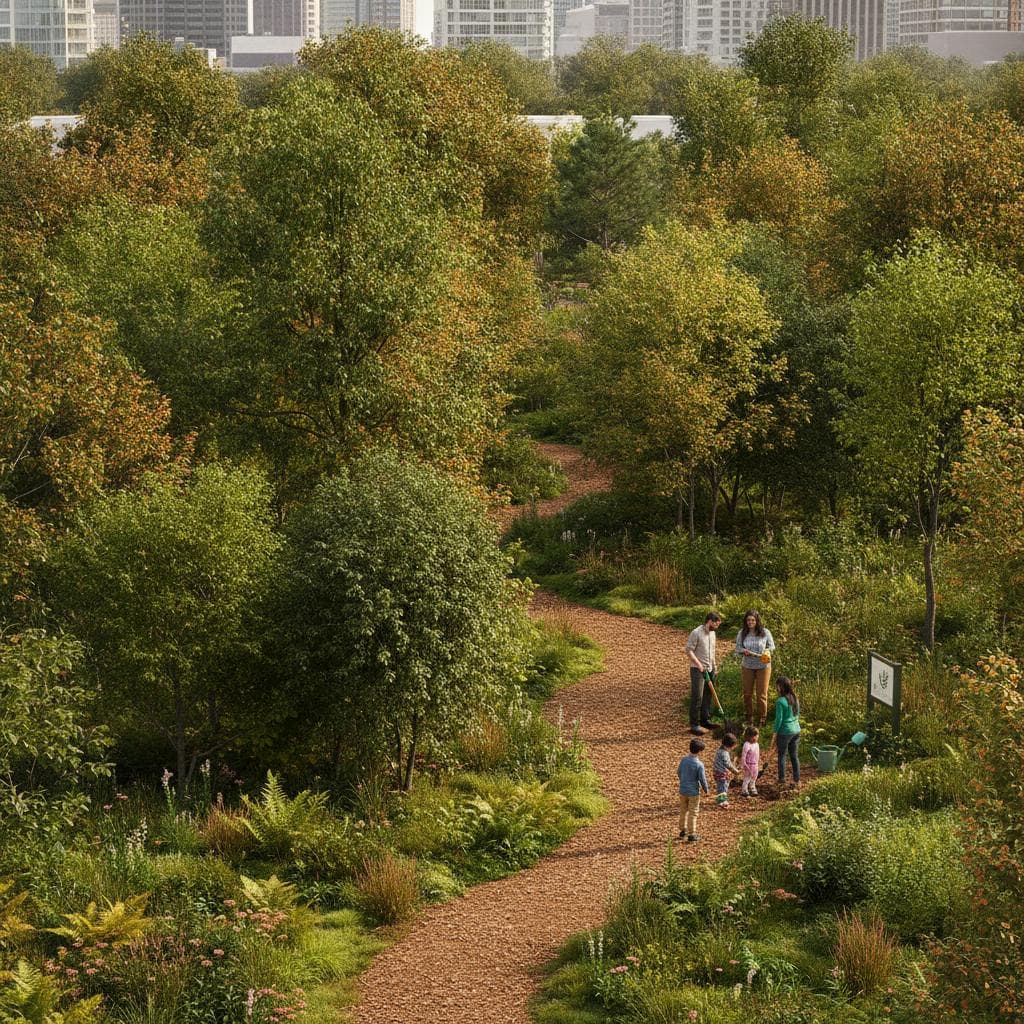
Micro-Forests: Fast Urban Greening via Miyawaki 2026
Urban areas across the globe seek faster, denser, and more resilient ways to restore nature within city limits. Traditional tree planting delivers value yet often proceeds slowly. Communities may wait decades before shade and biodiversity fully develop. Micro forestsMiyawaki method provide a compact and self sustaining alternative. These plantings grow up to ten times faster than conventional approaches and fit within small urban plots. This guide covers the definition of micro forests, the mechanics of the Miyawaki method, typical costs, and practical steps for homeowners, schools, and municipalities.
What Is a Micro Forest
A micro forest consists of a small, densely planted area of native trees and shrubs that replicates a natural forest ecosystem. The Miyawaki method accelerates maturity and reduces long term maintenance. Practitioners plant many species close together so roots and canopies compete and cooperate. Within a few years the plots support birds, insects, and small mammals. Vacant lots become active green spaces.
Average Micro Forest Costs
Costs range from eight to twenty five dollars per square foot when soil preparation, native plants, and initial care are included. Homeowners and community groups usually fall within this band. Municipal projects may secure lower rates through bulk purchasing.
| Project Size or Type | Average Cost Range |
|---|---|
| Small Yard (100 to 300 sq ft) | 800 to 7,500 |
| Community Plot (500 to 1,000 sq ft) | 5,000 to 25,000 |
| Large Public Site (over 2,000 sq ft) | 16,000 to 50,000+ |
Volunteer labor and donated seedlings from local nurseries can lower expenses further.
Factors Affecting Micro Forest Costs
Site Preparation and Soil Quality
Urban soils are frequently compacted or contaminated. Deep amendment with compost, mulch, and organic matter improves drainage and root growth. The Miyawaki method often requires loosening soil to a depth of three feet.
Tree and Shrub Species Selection
Diversity across canopy trees, sub canopy trees, shrubs, and ground covers creates the layered structure of a natural forest. Native species such as oak, maple, pine, and dogwood cost more than non native options yet provide greater resilience and wildlife value.
Location and Accessibility
Tight urban sites may require hand labor rather than machinery. Transporting materials through alleys or fenced yards increases time and expense. Open community plots allow faster preparation.
Irrigation and Maintenance
Micro forests need regular watering for the first two or three seasons. A simple drip system or thick mulch layer reduces water demand. After establishment the dense canopy shades weeds and retains moisture with minimal intervention.
Project Scale and Community Involvement
Larger sites benefit from economies of scale. Volunteer planting events further reduce labor costs while building local stewardship.
The Micro Forest Creation Process
- Site Assessment and Design: Evaluate soil, sunlight, and drainage. Map planting zones according to forest layers.
- Soil Restoration: Loosen topsoil and incorporate compost, mulch, and beneficial microbes.
- Species Selection: Choose twenty to forty native species that match local conditions.
- Dense Planting: Place seedlings at three to five per square meter to promote rapid upward growth.
- Mulching and Watering: Apply mulch to retain moisture and water consistently during the first year.
- Monitoring and Care: Remove invasive weeds and replace stressed plants. After roughly three years the forest becomes self sustaining.
DIY versus Professional Installation
When to DIY: The site is a small backyard or school garden. Native plant lists and soil testing resources are accessible. Volunteers can handle preparation and planting.
When to Hire a Professional: The site is large, compacted, or on public land. Soil remediation or irrigation systems are required. Long term monitoring forms part of project goals.
Professional arborists or urban forestry consultants can ensure compliance with local regulations.
How to Select a Micro Forest Specialist
- Review credentials in arboriculture, ecology, or landscape restoration.
- Request a proposal that details soil testing, species lists, planting density, and maintenance schedules.
- Visit completed projects and speak with previous clients.
- Confirm liability insurance and familiarity with local permits.
- Obtain multiple estimates to compare inclusions.
- Sign a written agreement that specifies responsibilities, costs, and timelines.
Frequently Asked Questions
How much does it cost to plant a Miyawaki micro forest?
Expect eight to twenty five dollars per square foot. Small residential projects may begin under one thousand dollars while larger community sites can exceed twenty thousand dollars.
How long does it take for a micro forest to mature?
Maturity arrives in ten to fifteen years. Visible growth starts within the first year and the canopy closes rapidly.
What size area do I need for a micro forest?
Plots as small as a few hundred square feet work when planting density is sufficient to create a functioning ecosystem.
Do micro forests attract wildlife?
Layered native plantings supply food, shelter, and nesting sites. Within a few years even modest plots function as wildlife corridors.
Can I use non native species in a micro forest?
The Miyawaki method relies on native species adapted to local climate and soil. Non native plants may reduce habitat value and disrupt ecological balance.
Are micro forests suitable for all climates?
Success depends on matching species to local conditions. Proper soil preparation and early watering support establishment even in challenging urban environments.
Do micro forests need ongoing maintenance?
After the establishment period occasional weeding and mulching suffice. Maintenance declines sharply once canopy closure occurs.
Practical Next Steps for Urban Greening
Micro forests demonstrate that limited space can deliver measurable cooling, cleaner air, and restored biodiversity. Homeowners can begin with a backyard corner while planners can apply the method to vacant lots. The Miyawaki approach supplies a tested route to resilient urban ecosystems that continue to improve with time.