
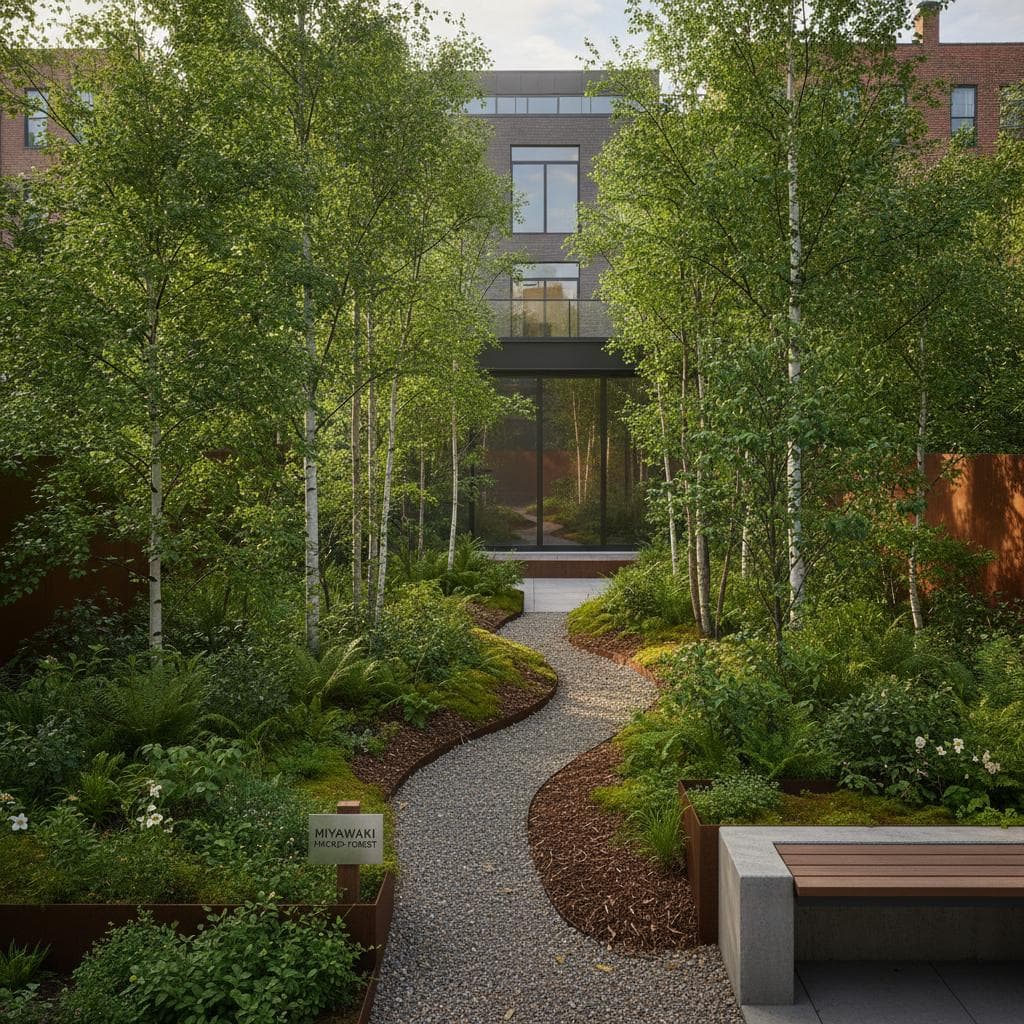
Micro-Forests Transform Small Urban Yards
Small-space gardening now includes micro-forests. These compact plantings replicate natural woodlands and deliver biodiversity along with shade in limited areas. The Miyawaki method supports rapid establishment through dense native plantings in prepared soil.
Homeowners gain an efficient option for creating sustainable outdoor spaces. This approach suits efforts to support wildlife or develop a private natural area.
Installation Costs
Average Project Expenses
Homeowners typically invest between $15 and $30 per square foot for a full micro-forest installation. This range covers soil amendment, initial irrigation, mulch application, and a diverse selection of native plants. Professional installation raises the total while improving establishment rates compared with do-it-yourself efforts.
Expenses by Site Size
- Small urban plots under 200 square feet require $3,000 to $6,000.
- Mid-size yards between 200 and 500 square feet cost $6,000 to $12,000.
- Larger community areas over 500 square feet start at $12,000 and can exceed $20,000.
Dense spacing of three to five plants per square meter increases early expenses yet speeds canopy closure and long-term self-sufficiency.
Primary Cost Drivers
Plant choice affects budget because regionally adapted native species vary in price. Soil enhancement with compost and organic matter forms another major line item. Labor for close planting, temporary irrigation systems, and site clearing also contribute to overall cost.
Landscape Variations
Native Woodland Style
This version relies on indigenous trees, shrubs, and ground covers. It supports local pollinators and reduces long-term resource needs.
Native selections blend with surrounding vegetation and attract birds along with beneficial insects. Some regions offer fewer suitable species, and bare-root stock may establish more slowly at first.
Tropical Approach
Fast-growing species suited to warm climates produce quick canopy cover and layered foliage. Frequent pruning controls spread, and establishment requires consistent moisture.
Edible Focus
Fruit trees combined with berry shrubs and herbs yield harvests while providing habitat. Regular maintenance includes pruning and protection of ripening crops from wildlife.
Ornamental Emphasis
Flowering and foliage plants prioritize visual interest and property appearance. This option may incorporate non-native varieties that demand additional care and deliver fewer ecological gains.
Implementation Choices
Independent Installation
Gardeners familiar with native plants can complete the project using published guides. Success depends on accurate species selection, proper layering, and consistent early maintenance.
Professional Assistance
Specialists in ecological restoration supply site-specific plant communities and quality stock. Their involvement suits larger sites or challenging soil conditions and shortens the time to a stable system.
Step-by-Step Creation Process
- Evaluate sunlight exposure, soil texture, and drainage patterns to guide plant selection.
- Clear all turf and competing weeds from the planting zone.
- Loosen compacted ground and incorporate compost to create a fertile, aerated base.
- Arrange four vegetation layers: canopy trees, sub-canopy trees, shrubs, and ground covers.
- Position plants at three to five per square meter and apply mulch immediately after watering.
- Install drip irrigation for the first two to three seasons to encourage deep rooting.
- Remove weeds and renew mulch during the initial years until canopy closure limits further intervention.
Practical Success Measures
Select species native to the immediate area for best adaptation. Include a broad mix of trees, shrubs, and ground covers to build resilience. Maintain a thick mulch layer and allow leaf litter to replenish soil nutrients naturally. Avoid routine fertilization once plants are established.
Common Questions
What defines the Miyawaki method?
The technique restores native woodland conditions by placing many species in close proximity within enriched soil. Rapid vertical growth results from competition among densely planted saplings.
How quickly does maturity occur?
Self-sustaining conditions typically develop within three years. A recognizable woodland structure appears between five and ten years after planting.
Do these plantings draw unwanted insects?
A diverse mix attracts beneficial predators that keep pest populations in balance without chemical controls.
Is the approach viable in confined city lots?
Plots as small as 100 square feet accommodate numerous native plants when spacing guidelines are followed and species are chosen for urban conditions.
Are permits required?
Most residential plantings proceed without permits. Local rules may apply when drainage changes or existing trees are removed.
What ongoing care is needed?
Mature micro-forests need only occasional pruning and removal of invasive species. Fallen leaves remain in place to support natural nutrient cycling.
Long-Term Site Benefits
A completed micro-forest improves air cooling, soil structure, and habitat value while increasing property appeal. Consultation with a specialist familiar with the Miyawaki method helps match species and layout to specific site conditions for sustained performance.