
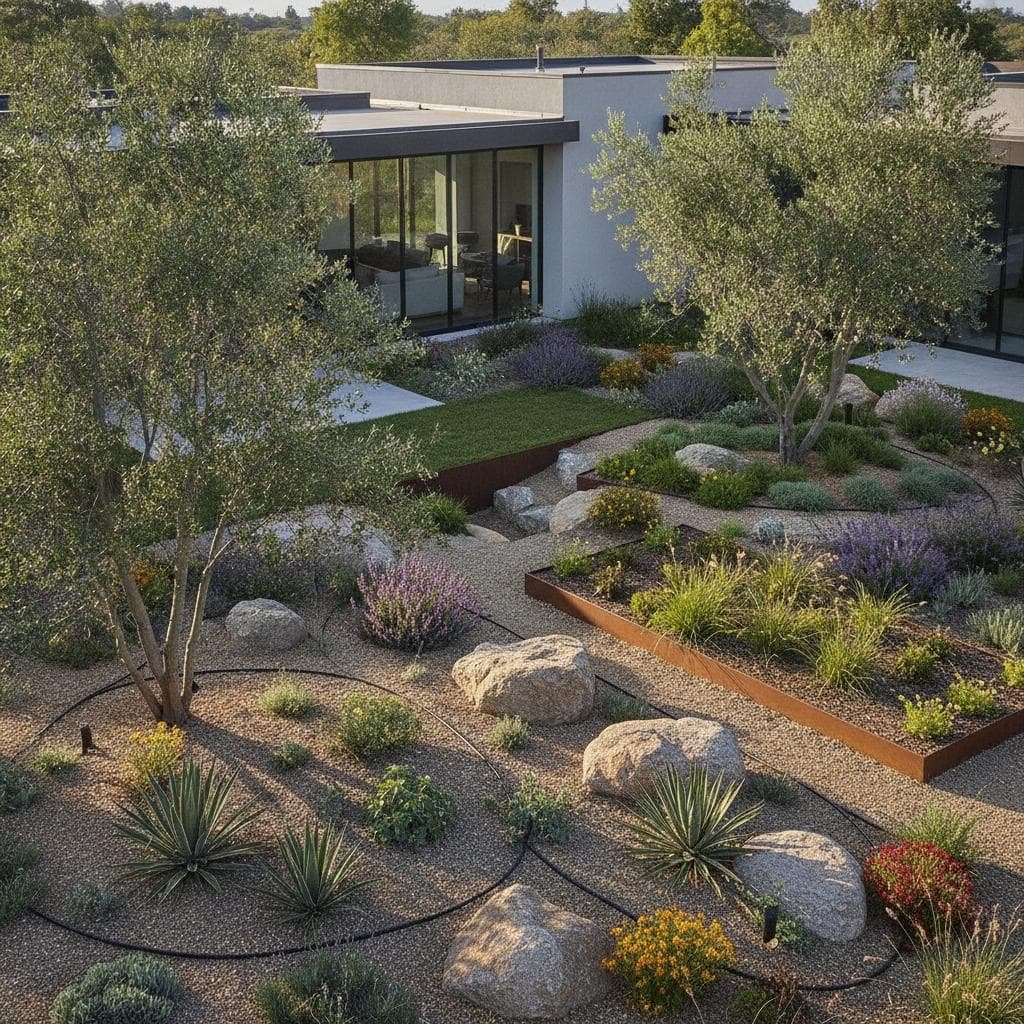
Microclimate Landscaping Cuts Water Bills in Half
A well designed yard can thrive without high water bills. Microclimate landscaping tailors plant selections and design elements to the specific conditions on a property. This method reduces outdoor water use by up to half and produces a resilient landscape.
The following sections explain how the approach functions, typical costs, recommended features, and steps for implementation.
Typical Project Costs
Average National Range
Project expenses depend on size and complexity. A modest front yard update that emphasizes native plants often falls between several thousand dollars. Larger efforts that involve grading, irrigation changes, and hardscaping reach higher amounts when a designer participates.
Costs by Scale
- Small projects focus on bed redesigns or plant swaps and remain at the lower end of the range.
- Medium projects replace turf, add drip irrigation, and incorporate mulch or shade elements.
- Large projects cover full yard redesigns and custom drainage work that deliver the strongest long term water savings.
Main Cost Influences
Plant quantities, soil preparation, irrigation upgrades, mulch materials, and regional labor rates determine final pricing. Initial outlays are offset over time by lower water and maintenance expenses.
Effective Microclimate Features
Native and Drought Resistant Plants
Native species adapt to local soils and weather patterns. They require little supplemental water after establishment and support pollinators.
Pros:
- Minimal water and fertilizer demands
- Strong survival rates in regional conditions
- Enhanced ecological value
Cons:
- Narrower color options in certain areas
- Slower initial growth
Shade Trees and Windbreaks
Strategic tree placement cools structures and lowers evaporation rates. Windbreaks such as shrub rows stabilize soil moisture levels.
Pros:
- Natural temperature moderation
- Reduced irrigation frequency
- Greater outdoor comfort
Cons:
- Extended time to reach maturity
- Need for ongoing pruning and space allocation
Mulch and Permeable Surfaces
Organic mulch or permeable pavers limit runoff and maintain cooler soil temperatures. These additions cut evaporation and control weeds.
Pros:
- Low cost and straightforward installation
- Strong moisture retention
- Improved soil structure
Cons:
- Periodic replenishment required
- Potential pest issues if layers are excessive
Professional Help or DIY Approach
Homeowners who enjoy gardening can complete many microclimate projects themselves. Accurate assessment of soil texture, moisture patterns, and sun exposure remains the primary challenge. Errors in these evaluations often result in poor plant performance.
Design Process
- Observe sunlight patterns, wind flow, and temperature variations across the property over several days.
- Test soil drainage and amend with compost or sand where needed to match plant requirements.
- Cluster plants according to similar water needs so drought tolerant species occupy sunny zones.
- Position trees or structures to shield sensitive areas from intense sun and drying winds.
- Install drip irrigation with smart controllers that target root zones directly.
- Apply mulch and inspect the system regularly to sustain plant health.
Water Saving Practices
- Substitute turf areas with drought tolerant ground covers or gravel.
- Collect roof runoff in rain barrels for later irrigation use.
- Schedule watering for early morning hours to minimize evaporation loss.
- Renew mulch layers each year to preserve moisture levels.
- Select species with staggered bloom times to maintain pollinator support.
How Microclimate Landscaping Reduces Water Use
Matching plants to specific yard conditions allows them to draw on natural moisture more effectively. This placement reduces the need for extra irrigation across the site.
Regional Adaptability
Every property contains variations in slope, exposure, and soil. The same design principles apply in any climate by adjusting plant lists and layout details accordingly.
Irrigation Modifications
Existing systems can often be updated with drip lines and zone adjustments. These changes align water delivery with new plant groupings and cut overall consumption.
Plant Appearance
Many drought tolerant species provide vibrant foliage, varied textures, and seasonal interest. Thoughtful arrangement ensures visual balance throughout the landscape.
Timeline for Savings
Reductions appear after plants establish and irrigation schedules are refined. Most households record measurable drops within the first full growing season.
Starting Your Project
Begin with a site observation walk and soil tests. Prioritize plant groupings and efficient irrigation upgrades to realize water reductions quickly.