
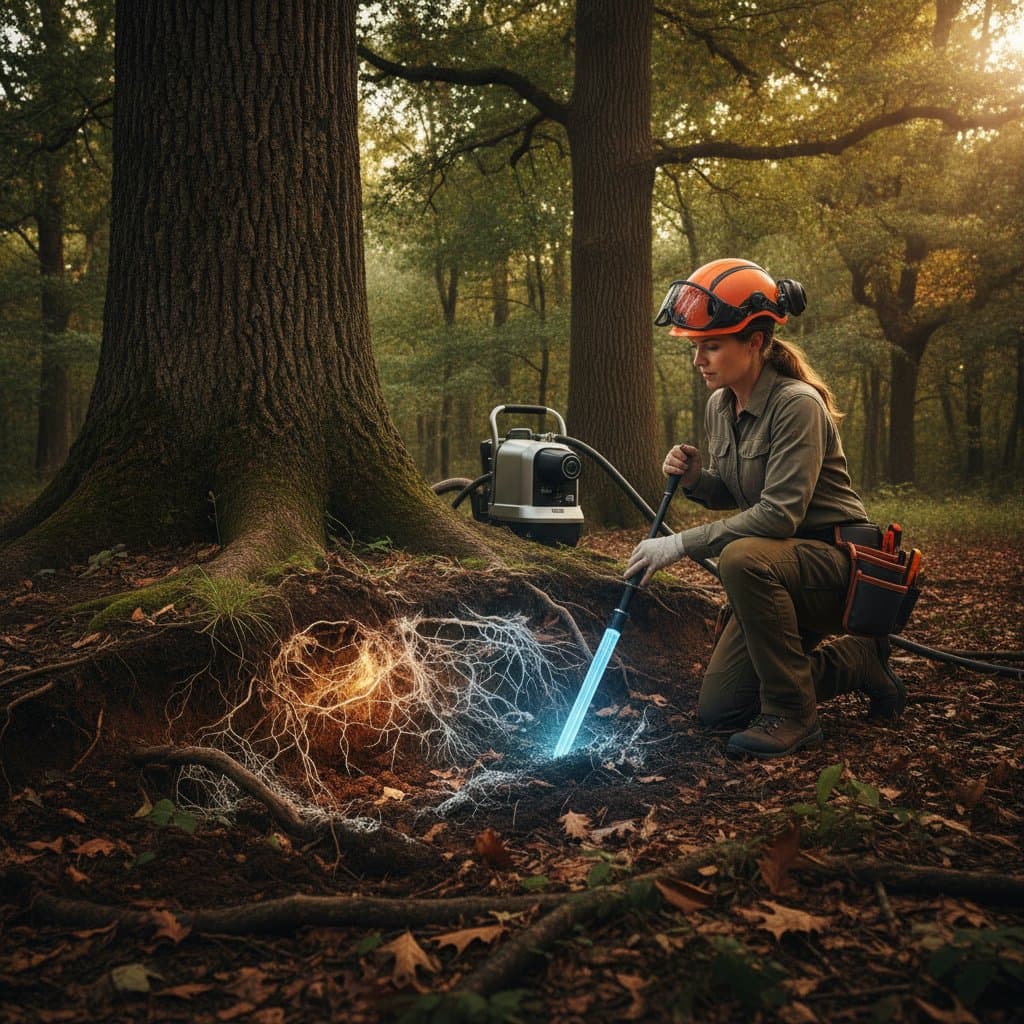
Why Arborists Now Treat Underground Fungal Networks
Healthy trees depend on more than sunlight and water. Beneath the surface lies an intricate web of life that connects roots, fungi, and soil microbes in a living network. Arborists are now paying closer attention to these underground fungal systems, known as mycorrhizal networks, because they play a vital role in tree health and the broader soil microbiome.
Understanding and caring for these hidden ecosystems can mean the difference between a struggling tree and a thriving one.
What Are Mycorrhizal Networks
Mycorrhizal networks form through symbiotic relationships between tree roots and specialized fungi. These fungi attach to or penetrate root cells, creating structures that extend deep into the soil. Through these connections, trees exchange nutrients, water, and chemical signals. The network functions as a communication and supply system that supports the entire community of plants and soil organisms.
Healthy mycorrhizal networks improve nutrient uptake, strengthen resistance to disease, and enhance drought tolerance. When soil is compacted, over-fertilized, or chemically treated, these networks can weaken or die, leaving trees more vulnerable.
Why Arborists Focus on the Soil Microbiome
Traditional tree care often addressed visible symptoms above ground, such as leaf discoloration or branch dieback. Modern arborists recognize that the real story often begins below the surface. By treating the soil microbiome as part of the tree health system, arborists create conditions where beneficial fungi and microbes flourish.
Key Advantages of a Balanced Soil Microbiome
- Improved nutrient cycling that reduces the need for synthetic fertilizers
- Enhanced root growth due to better soil structure and moisture retention
- Natural disease suppression through beneficial microbial competition
- Stronger stress tolerance during drought or root disturbance
How Arborists Treat Mycorrhizal Networks
Arborists integrate soil biology into their care programs. Treatments restore or encourage fungal growth and microbial diversity rather than simply applying nutrients.
Common Practices Include
- Soil testing and analysis to measure microbial activity and identify deficiencies.
- Application of mycorrhizal inoculants that introduce beneficial fungi directly to the root zone.
- Compost and organic mulch treatments to boost microbial life and maintain soil moisture.
- Reduced chemical use by limiting synthetic fertilizers and pesticides that disrupt fungal relationships.
- Aeration and root zone decompaction to allow oxygen and water to reach beneficial organisms.
The Science Behind Tree-to-Tree Connections
Research has shown that mycorrhizal networks can link multiple trees, even across species. Through these fungal threads, trees can share nutrients and send chemical warnings about pests or stress. Arborists use this knowledge to manage forests and landscapes more holistically. Removing or damaging one tree can affect the health of others nearby.
When to Seek Professional Care
Homeowners often notice poor growth or thinning canopies without realizing the problem originates underground. A certified arborist can evaluate soil conditions, identify stress factors, and recommend treatments that restore fungal balance. DIY efforts like applying fertilizer rarely address the root cause and can sometimes make conditions worse.
Tips for Supporting Underground Networks
- Avoid overfertilizing. Excess nitrogen can disrupt fungal activity.
- Use organic mulch. It feeds soil organisms and retains moisture.
- Limit soil compaction. Keep heavy equipment and foot traffic away from root zones.
- Water deeply but infrequently. Consistent moisture encourages deeper root and fungal growth.
- Plant native species. They often form stronger natural fungal partnerships.
Implementing Soil Focused Tree Care
Caring for underground fungal networks forms a cornerstone of sustainable landscape care. By focusing on the soil microbiome, arborists help trees grow stronger, resist disease, and live longer. Homeowners can support this approach by adopting soil-friendly practices and consulting professionals who understand the biological connections below the surface. Treating the unseen world beneath trees ensures the visible beauty above ground continues to thrive for years to come.