
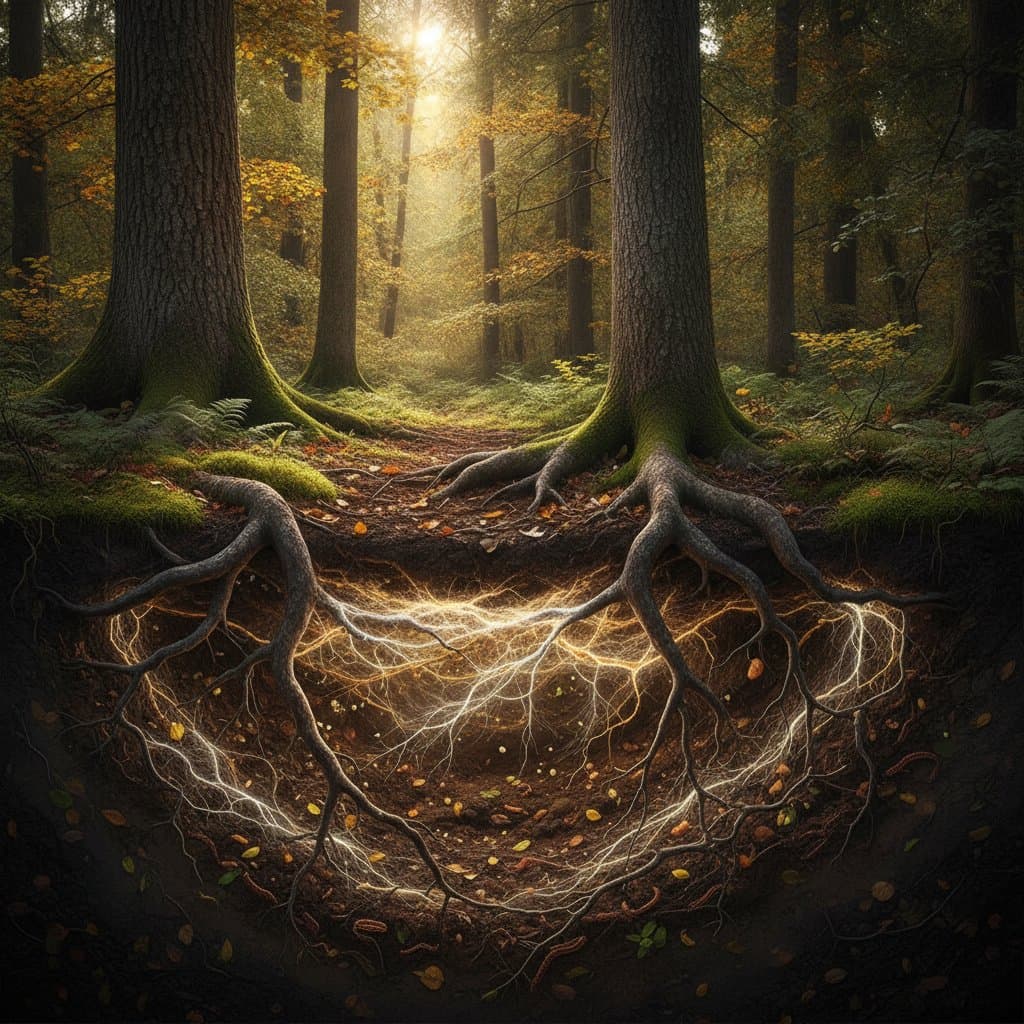
What Mycelium Networks Reveal About Tree Communication
Trees do not talk in words. They share information through a vast underground network of fungal threads called mycelium. This living web connects roots across entire forests. It allows trees to exchange nutrients, warn each other of stress, and maintain soil balance.
Mycelium networks act as the forest communication system. They manage vital exchanges among plants. Homeowners who understand these networks can improve tree care at home. The systems influence growth, disease resistance, and soil health. Supporting them creates stronger landscapes that last for generations.
What Is a Mycelium Network?
A mycelium network consists of countless microscopic filaments known as hyphae. These filaments spread through the soil and attach to tree roots. They form a structure called a mycorrhiza. This partnership benefits both sides. Trees supply carbohydrates from photosynthesis. Fungi deliver water and minerals that roots cannot reach alone.
Two main types of mycorrhizal associations exist. Ectomycorrhizal fungi wrap around root tips without entering the cells. They appear often with pines, oaks, and birches. Endomycorrhizal fungi penetrate root cells. They occur in most grasses, shrubs, and fruit trees. These relationships build a cooperative system that supports ecosystems.
How Trees Communicate Through Mycelium
Mycelium networks enable biochemical messaging. A tree facing drought, pests, or nutrient shortage releases chemical signals through its roots. The mycelium carries these signals to neighboring trees. Nearby trees then adjust their defenses or resource use.
A tree under insect attack may send warning compounds through the network. Nearby trees increase defensive chemicals before pests arrive. A shaded seedling can receive extra carbon from a mature tree. This transfer helps the seedling survive until it gains more light. Trees in a connected network often cooperate rather than compete. This cooperation shows the value of fungal systems for individual trees and whole forests.
Key Factors That Influence Mycelium Health
Several factors affect mycelium growth. Soil structure matters. Compacted soil reduces oxygen and limits fungal development. Loamy, aerated soil supports healthy networks. Moisture levels also count. Mycelium prefers consistent moisture and struggles in waterlogged or very dry conditions.
Chemical use affects outcomes. Synthetic fertilizers, herbicides, and fungicides disrupt fungal life. Organic matter and compost feed fungi without harmful residues. Tree diversity helps too. A mix of species supports varied and resilient networks. Mulching practices preserve moisture, add carbon, and stabilize soil temperature.
Benefits of Mycelium Networks
Healthy mycelium networks transport nutrients and support soil ecosystems. They extend fungal threads beyond root reach to access phosphorus, nitrogen, and trace minerals. The threads share these with trees for sugars. This exchange improves growth and plant immune systems.
Mycelium holds moisture like an underground sponge. It supplies water during dry periods and reduces drought stress for young trees. Fungi outcompete harmful pathogens by occupying root zones and producing protective compounds. A strong network defends against root rot and soil diseases.
Mycorrhizal fungi store carbon in the soil as they grow and break down. This improves soil structure and aids gas exchange. The network links plants of different ages and species. It balances resources and increases resilience to stress.
The Science Behind Tree Communication
Tree communication relies on chemical signaling. Trees release hormones, sugars, and enzymes into the soil. Mycelium detects, processes, and transmits these compounds to other roots. The outcome is a coordinated response that can change growth rates, leaf production, and flowering.
Older hub trees often serve as central nodes. These trees share nutrients with younger seedlings. Seedlings establish roots and survive with this help. Removal of a hub tree can slow growth or raise stress vulnerability in nearby trees. This reveals the depth of their connections.
Supporting Mycelium Networks in Your Landscape
Homeowners can use direct steps to encourage fungal networks. Limit soil disturbance by avoiding heavy tilling near tree roots. Apply organic amendments such as compost, leaf litter, and aged wood chips. These feed fungi and improve texture.
Avoid synthetic chemicals and choose natural pest and weed control. Plant compatible species that share similar mycorrhizal associations. Maintain natural mulch layers so fallen leaves and branches decompose and enrich the soil. These actions strengthen fungal communities and reduce fertilizer needs.
Mycelium and Modern Technology
Research on mycelium networks informs new soil tools. Sensors now mimic fungal communication to track nutrients and moisture in real time. Some systems use biological indicators to measure fungal activity as a sign of soil vitality.
Arborists apply mycorrhizal inoculants to newly planted trees. The mixtures help roots establish in areas disturbed by construction or chemicals. Observation of natural resource management guides smarter irrigation and nutrient delivery that follows nature patterns.
Frequently Asked Questions About Mycelium Networks
- How can I tell if my soil has a healthy mycelium network? Thin white threads under mulch or in rich soil indicate active growth. Healthy soils often carry an earthy smell and retain moisture after rain.
- Can I buy mycorrhizal fungi for my garden? Garden centers sell inoculants to mix into planting holes. These speed fungal partnerships in new or disturbed soil.
- Are all fungi in soil beneficial? Most soil fungi break down organic matter and support roots. Harmful species remain rare and usually appear only when balance is poor.
- Do potted plants benefit from mycelium networks? Container limits restrict spread. Organic potting mixes and avoidance of chemical fertilizers sustain small scale activity.
- What happens to mycelium during winter? Most fungi enter dormancy when temperatures drop. The network stays intact and reactivates with warmth and moisture.
- Can tree removal damage a mycelium network? Large tree removal can break connections that support neighbors. A certified arborist can protect remaining roots and limit disturbance.
- Is mycelium related to mushrooms? Mushrooms are fruiting bodies that release spores. Mycelium is the underground vegetative part that handles nutrient exchange.
Practical Steps for Healthier Soil and Trees
Nurturing mycelium networks changes how homeowners approach tree care. Soil processes matter as much as visible growth. Treating soil as a living system produces balanced, sustainable landscapes that require less outside input over time.