
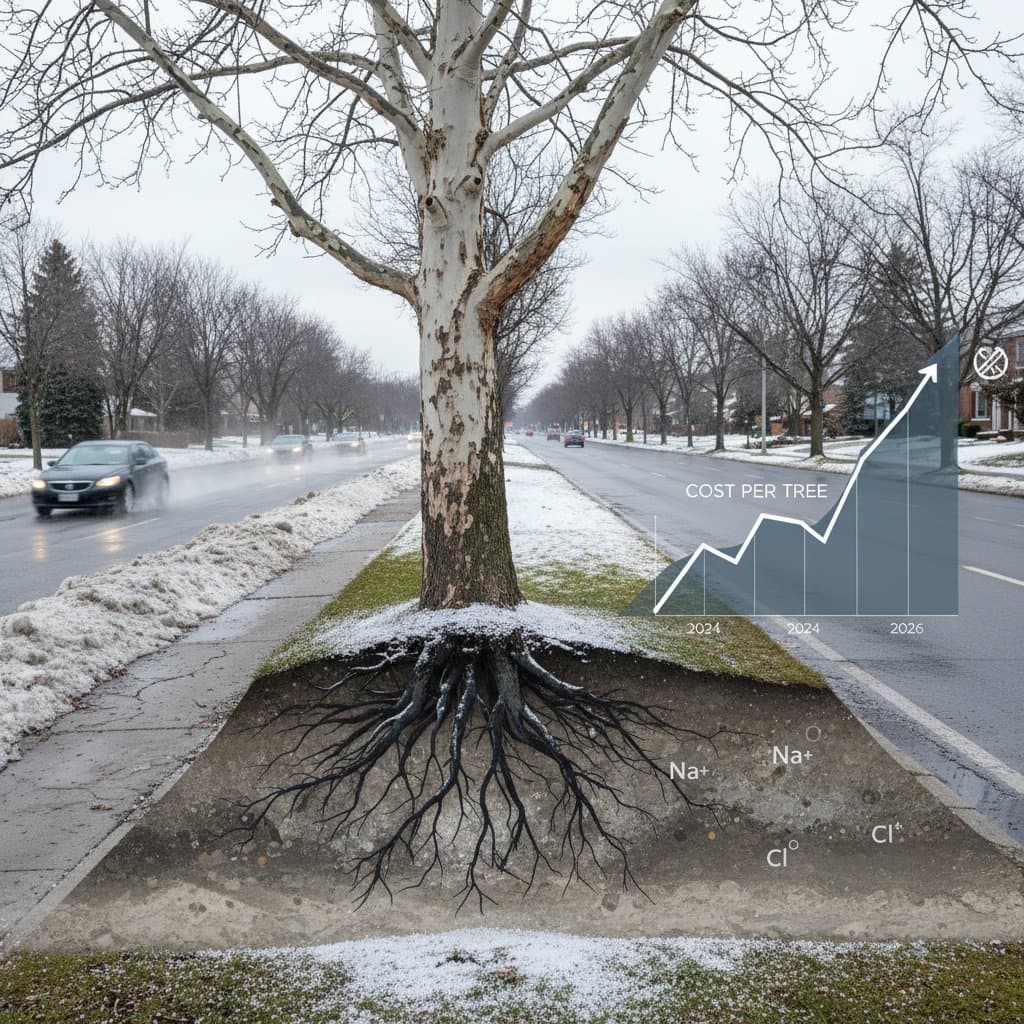
Road Salt's Toll on Trees: A 65 Percent Rise in Mortality Projected for 2026
Homeowners in regions with harsh winters confront an insidious danger to their landscapes. Road salt, essential for safe travel on icy roads, now contributes to extensive tree loss. Projections indicate a 65 percent increase in tree deaths by 2026, driven by escalating use of de-icing agents. Beyond visual decline, failing trees pose risks to structures, diminish property values, and generate substantial safety concerns. This article details the mechanisms of salt-induced damage, its financial implications, and strategies for safeguarding trees.
Understanding Road Salt Damage
Road salt damage occurs as sodium chloride and similar de-icing compounds build up in soil and nearby water sources. Trees take in these salts via roots or through spray that settles on foliage and bark. The salts block water absorption, cause cellular dehydration, and imbalance essential nutrients. Consequently, robust trees weaken progressively, leading to death. This issue impacts not only plants along roadways but also those up to 50 feet away, particularly where drainage remains inadequate.
Typical Expenses for Mitigating Road Salt Damage
Expenses for addressing road salt damage depend on tree dimensions, health status, and intervention methods. Standard professional services, including soil cleanup, mulching, and recovery protocols, span $150 to $1,200 per tree. When damage proves irreversible, removal expenses escalate considerably.
| Tree Size | Typical Treatment or Removal Expense |
|---|---|
| Small (under 30 feet) | $150 - $400 |
| Medium (30-60 feet) | $400 - $800 |
| Large (over 60 feet) | $800 - $1,200 or more |
These figures encompass soil leaching, root area revival, or complete extraction with stump removal. Proactive measures typically cost far less than full replacement.
Influences on Road Salt Damage Management Expenses
Tree Dimensions
Bigger trees demand greater quantities of water, soil enhancers, and workforce efforts for remediation. Pruning or extraction of large specimens often requires advanced tools, elevating total outlays.
Tree Health
Trees with minor symptoms respond well to thorough irrigation and soil adjustments. Those in advanced decline usually necessitate removal, a pricier option. Experts assess indicators like foliage browning, bud viability, and bark integrity to recommend suitable actions.
Species Sensitivity
Conifers such as pines and spruces, along with sugar maples, suffer acutely from salt. In contrast, honey locusts and oaks demonstrate greater resilience. Vulnerable varieties demand intensified oversight and interventions.
Site and Access Challenges
Proximity to roads, driveways, or lots heightens exposure to salt deposition. Restricted access raises labor demands, particularly when cranes or heavy gear prove necessary.
Soil Characteristics
Heavy clay retains salts longer than loose sand, prolonging recovery periods. Such conditions necessitate multiple leaching cycles and amendments, inflating costs.
Response Timing
Urgent extractions following storms or failures incur premiums over routine care. Early action, however, averts amplified future expenditures.
Steps for Recovering Salt-Affected Trees
-
Assessment and Soil Analysis
Certified arborists examine trees for salt injury signs and analyze soil for sodium and chloride concentrations. This evaluation shapes an effective recovery strategy. -
Preparation of the Site
Clear surrounding areas of obstacles and compacted earth. Incorporate mulch and compost to enhance soil composition and dilute salt levels. -
Leaching the Soil
Apply substantial fresh water volumes to flush salts from root zones. For intense buildup, introduce gypsum to displace sodium with calcium. -
Treating the Root Area
Deploy conditioners rich in nutrients and beneficial microbes to foster robust roots. These aids boost moisture holding and nutrient uptake. -
Pruning and Foliage Management
Remove compromised branches to halt disease progression and encourage regrowth. Employ crown thinning by excising select limbs to enhance light and airflow. -
Ongoing Observation and Care
Schedule follow-up inspections to gauge advancement. Sustain health through consistent irrigation, mulching, and targeted fertilization.
Choosing Between DIY and Professional Help for Salt-Damaged Trees
| Scenario | DIY Methods | Professional Interventions |
|---|---|---|
| Mild Exposure on Small Plants | Rinse affected trees or shrubs with clean water immediately after exposure. Add mulch or compost at the base to limit salt accumulation. | N/A |
| Moderate to Severe Damage or Multiple Trees | N/A | Engage certified arborists for soil analysis, deep irrigation systems, and safe handling of hazards. They manage risks near utilities or buildings. |
While DIY suits basic prevention, it falls short for entrenched issues. Professionals deliver precise diagnostics, thorough treatments, and enduring results.
Selecting a Tree Service for Salt Damage Remediation
-
Verify Qualifications and Coverage
Ensure the firm employs certified arborists and carries insurance. This safeguards against potential incidents. -
Inquire on Relevant Expertise
Seek providers experienced in salt contamination recovery, including soil restoration and resilient planting options. -
Obtain Comprehensive Quotes
Request itemized proposals covering assessments, remedies, site cleanup, and monitoring. Evaluate several bids. -
Confirm Regional Proficiency
Opt for locals versed in area soils, prevalent species, and regulatory requirements for tree work. -
Seek Guidance on Upkeep
Reputable services offer advice on irrigation routines, preventive tactics, and recovery indicators. -
Examine Feedback
Review online ratings or client references, focusing on salt damage cases.
Common Questions on Road Salt and Tree Care
What is the expense for extracting a salt-compromised tree?
Extraction fees range from $400 to $1,500, influenced by size and site constraints. Proximity to overhead lines or edifices demands extra equipment, raising prices.
Does remediation cost less than removal?
Early-stage treatments prove more economical than extraction and replanting, which can multiply expenses several times over.
When should salt damage treatments occur?
Initiate in early spring after soil thaw to enable leaching and nourishment before growth resumes. Autumn deep watering counters accumulating salts.
Will homeowners insurance address road salt effects?
Policies generally exclude progressive environmental harms like salt. Coverage applies only to removal if falling trees damage property directly; review specifics.
Is replanting feasible in salt-affected zones?
Affirmative, following soil cleansing and enrichment. Select resilient types like red maples, ginkgos, or honey locusts, supported by organics and drainage.
What measures prevent future road salt harm?
Install barriers such as burlap wraps or fences to deflect spray. Shun snow piles laced with salt near trunks. Springtime heavy watering and mulching aid dilution.
Safeguarding Landscapes Against Ongoing Salt Threats
Winter de-icing remains vital for safety, yet proactive tree care mitigates its impacts. Monitor for symptoms like leaf yellowing, early shedding, or twig dieback near traffic areas, and respond swiftly.
Alternatives to sodium chloride, including calcium magnesium acetate or abrasive sands, lessen environmental strain. Integrate salt-resistant plants as buffers to sustain aesthetic and functional benefits.
Vigorous trees elevate property allure, purify air, and bolster security. Through insight into salt dynamics and decisive steps, homeowners secure resilient, vibrant landscapes enduring seasons ahead.