
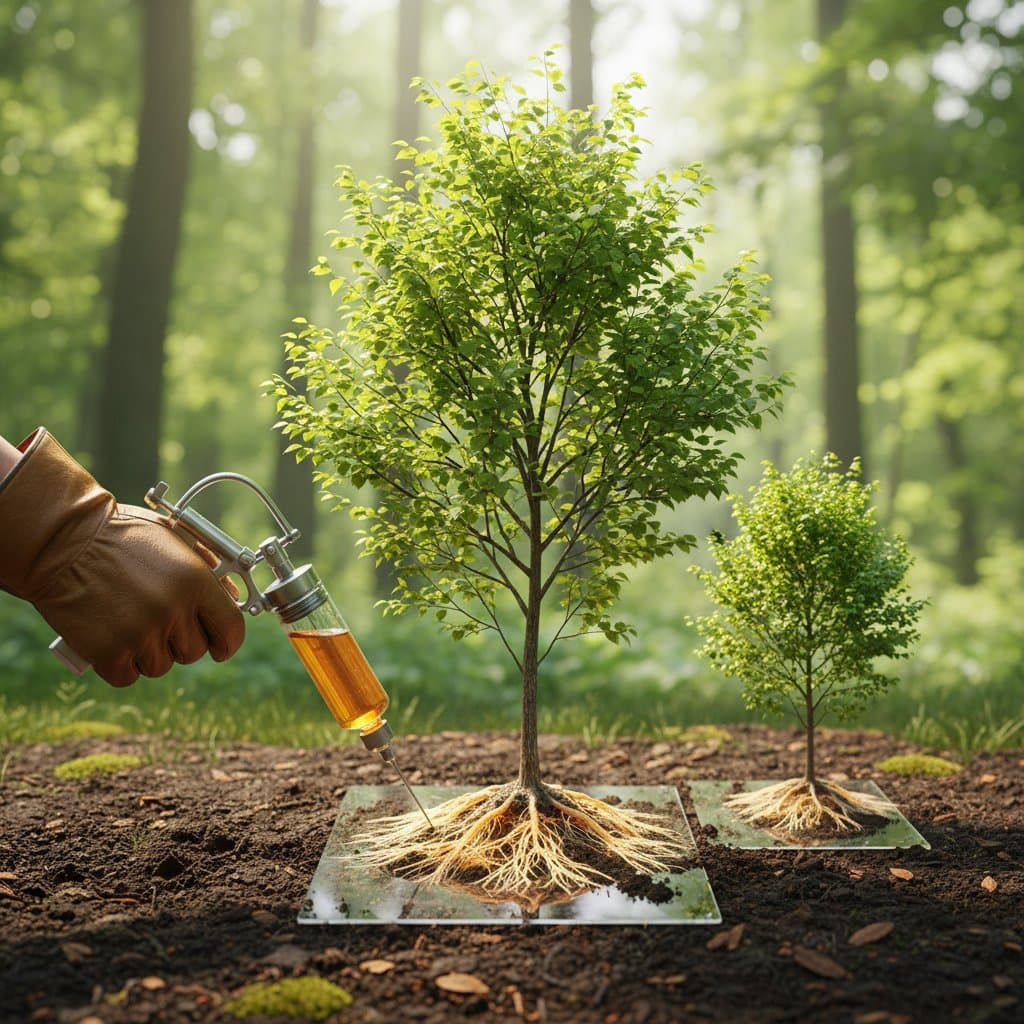
Mycorrhizal Injections: Accelerate Tree Growth by Threefold
Healthy trees depend on robust root systems. When trees exhibit slow growth or nutrient deficiencies, soil quality often serves as the underlying issue. Mycorrhizal injections introduce beneficial fungi that enhance root development and nutrient uptake, enabling trees to grow up to three times faster while bolstering overall resilience.
This guide details the nature of mycorrhizal injections, their mechanisms, associated costs, and strategies for application, whether through personal effort or professional assistance.
Mycorrhizal Injection Costs
National Average Costs
Professional mycorrhizal injections typically range from moderate to elevated expenses, influenced by factors such as tree dimensions, soil quality, and the quantity of trees involved. For a single mature tree, homeowners generally incur costs of several hundred dollars. Treatments for smaller trees or multiple specimens often yield reduced rates per tree.
Costs by Project Scope
- Single Tree Treatment: This option suits prominent or valuable trees, where higher costs arise from the need for precise application and greater product volumes.
- Multiple Trees or Full Landscape Treatment: Arborists frequently provide discounts for comprehensive projects, thereby lowering the cost per tree.
- DIY Inoculant Kits: Suitable for smaller ornamental trees or shrubs, these kits offer a budget-friendly alternative. Users mix the contents with water and apply them directly to the root area.
Primary Cost Influences
- Tree dimensions and species
- Soil quality and degree of compaction
- Scope of root zone treatment
- Labor and specialized equipment requirements
- Variety and potency of the mycorrhizal fungi
- Number of required applications
Categories of Mycorrhizal Fungi
Two principal categories of mycorrhizal fungi serve tree treatments. Each establishes a distinct symbiotic bond with roots, delivering unique advantages.
Ectomycorrhizal Fungi
These fungi create a protective sheath around tree roots and extend hyphae into the surrounding soil to gather nutrients. They prove particularly effective for coniferous trees and numerous hardwood species.
Advantages:
- Superior nutrient acquisition in nutrient-poor soils
- Enhanced tolerance to drought conditions
- Mitigation of transplant stress
Disadvantages:
- Incompatibility with certain plant varieties
- Delayed colonization in densely compacted soils
Endomycorrhizal Fungi (Arbuscular)
These fungi enter root cells to form intricate internal networks for nutrient exchange. They integrate well with a broad array of landscape plants and fruit-bearing trees.
Advantages:
- Improved phosphorus absorption
- Promotion of extensive root branching and density
- Compatibility across diverse plant types
Disadvantages:
- Vulnerability to synthetic fertilizers and fungicides
- Dependence on adequate soil moisture for initial establishment
Personal Application Versus Professional Services
While applying mycorrhizal fungi appears straightforward, optimal outcomes demand precise dosing, targeted placement, and appropriate timing.
Personal Application:
Homeowners acquire inoculant kits from garden centers. These products blend with water and distribute via pouring or injection into the soil proximate to roots. This method proves economical for young, compact trees, though efficacy diminishes if delivery lacks depth or encounters severe soil compaction.
Professional Services:
Trained arborists employ pressurized injection tools to deposit fungi precisely within the active root zone, guaranteeing uniform distribution and profound penetration. Such experts often integrate the treatment with soil aeration, targeted nutrition, or pest control measures to formulate a holistic tree care regimen.
Guidance:
Kits suffice for modest ornamental trees. Professionals deliver superior, enduring results for established shade trees or scenarios involving soil compaction challenges.
Step-by-Step Application of Mycorrhizal Injections
A methodical process ensures the fungi integrate effectively and support tree vitality.
-
Assess Tree Condition and Soil Profile: Examine the tree for signs of distress, evaluate soil density, and verify drainage. Mycorrhizal fungi require access to oxygen and organic materials for viability.
-
Select Appropriate Fungi Variety: Align the inoculant with the tree species. Ectomycorrhizal types benefit conifers and hardwoods, whereas endomycorrhizal variants excel with fruit and ornamental trees.
-
Prepare the Inoculant Mixture: Combine the product with water per manufacturer guidelines. Refrain from incorporating synthetic fertilizers, which may damage the fungi.
-
Administer to the Root Zone: Employ a soil probe or injection device to introduce the solution circumferentially around the roots. Position applications at regular intervals to encompass the essential root expanse.
-
Irrigate Adequately Post-Application: Sufficient watering facilitates fungal dispersal and root adhesion. Maintain consistent soil moisture over the ensuing weeks.
-
Observe Tree Response and Soil Dynamics: Track enhancements in foliage vibrancy, growth vigor, and water retention. Periodic reapplication every few years sustains benefits.
Strategies for Sustained Tree Vitality
- Restrain Fertilizer Use: Excessive phosphorus or synthetic inputs disrupt fungal populations.
- Preserve Soil Hydration: Consistent moisture proves essential, particularly during the fungi's initial phase.
- Minimize Soil Disruption: Prevent excavation or compaction in proximity to treated trees.
- Apply Organic Mulch: This layer fosters microbial communities and moderates root temperatures.
- Conduct Routine Evaluations: Engage professionals for periodic assessments of tree condition and soil equilibrium.
Common Inquiries
Do Mycorrhizal Injections Truly Accelerate Tree Growth?
Yes. Treated trees cultivate expansive, efficient root networks that optimize nutrient and water intake, fostering accelerated and robust development relative to untreated counterparts.
How Soon Do Results Emerge from Mycorrhizal Injections?
Noticeable changes in foliage hue and growth rate typically manifest within a single season, with comprehensive advantages accruing as the subterranean fungal web matures.
Can Mycorrhizal Fungi Benefit Newly Transplanted Trees?
Certainly. Freshly planted trees gain substantially, as the fungi alleviate transplant trauma and expedite root acclimation in unfamiliar soil.
Are Mycorrhizal Injections Environmentally Benign?
Yes. These treatments harness native soil fungi to enrich ecosystems, eschewing chemical additives and promoting biodiversity without ecological harm.
How Frequently Should Mycorrhizal Injections Occur?
Applications generally recur every three to five years, contingent upon soil fertility, tree age, and environmental stressors. Professionals tailor schedules based on site-specific evaluations.
Advance Your Landscape's Potential
Mycorrhizal injections represent a potent, natural method to elevate tree performance. By fortifying root efficiency and soil integrity, this approach diminishes reliance on supplemental watering and nutrients, empowering trees to flourish sustainably. Engage a certified arborist to evaluate your property, select optimal fungi, and oversee implementation for maximal impact.