
Detecting Early Tree Stress with Mycorrhizal Networks
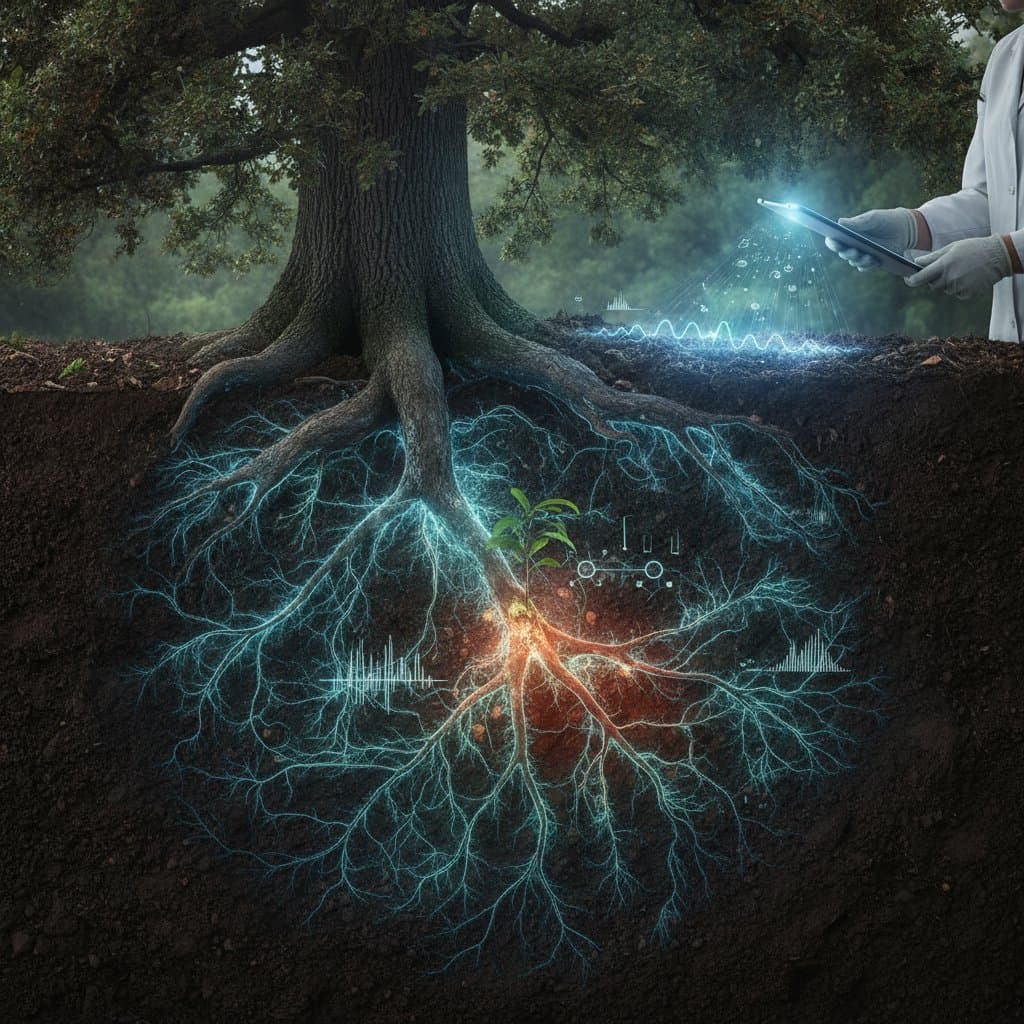
Trees may appear independent above ground, yet they depend on an extensive underground system of fungal threads. These threads form mycorrhizal networks that transfer nutrients and chemical messages between roots and soil organisms. Homeowners and arborists now use these relationships to assess tree condition with greater precision and to identify stress or disease at an early stage.
Understanding Mycorrhizal Networks
A mycorrhizal network consists of microscopic filaments that link tree roots with beneficial fungi. The fungi receive sugars from the tree while supplying water, nitrogen, and phosphorus in return. This partnership extends across forest floors and connects multiple trees into a shared resource system.
Effects of Mycorrhizal Networks on Tree Condition
Strong mycorrhizal networks support trees during drought, disease pressure, and pest attacks. They improve nutrient absorption and allow older trees to transfer carbon and water to younger or shaded individuals. When the network suffers damage, trees lose access to these supports and recover more slowly from stress.
Visible Indicators of Network Disruption
Surface symptoms often reflect underground problems. Sparse foliage or premature leaf drop can signal inadequate nutrient movement. Slow growth and stunted branches suggest broken root fungus links. Clusters of mushrooms near the base may indicate root decay or fungal imbalance. Soil compaction from construction or heavy traffic can sever the delicate threads.
Key Influences on Fungal Network Health
Soil Structure
Fungi require aerated, organic rich soil. Heavy clay or compacted ground restricts oxygen and limits spread. Adding compost and reducing tillage restores suitable conditions.
Water Availability
Both prolonged drought and excessive watering harm fungal colonies. Steady, moderate irrigation maintains network stability.
Chemical Inputs
Herbicides, synthetic fertilizers, and certain pesticides damage beneficial fungi. Organic or slow release products protect microbial life that supports root function.
Tree Species Selection
Oak, maple, pine, and beech each partner with distinct fungal groups. Mixed plantings foster diverse fungal communities that improve soil stability.
Root Zone Protection
Excavation, foot traffic, and landscaping can break fungal threads. Mulch layers and restricted soil disturbance preserve network integrity.
Assessing Network Status
Laboratory soil tests now measure fungal diversity and activity. Arborists collect samples to detect imbalances before visible decline occurs. Homeowners can note consistent leaf color, steady growth rates, and an earthy soil scent as positive signs.
Steps to Strengthen Mycorrhizal Connections
Professional services follow a sequence to restore fungal activity.
- Collect soil samples to assess fungal diversity, pH, and organic content.
- Loosen compacted zones and incorporate mulch or compost for better aeration.
- Apply mycorrhizal spores near roots through liquid or granular methods.
- Maintain controlled irrigation and organic nutrients to encourage colonization.
- Schedule follow up checks to confirm network expansion and stable tree indicators.
Comparing Observation Methods
| Approach | Suitable Situations | Advantages | Limitations |
|---|---|---|---|
| DIY Observation | Small ornamental trees and routine soil care | Low cost and direct involvement | Potential to overlook deeper root or fungal issues |
| Professional Monitoring | Mature trees, large sites, or noticeable decline | Precise data and targeted treatment | Requires specialized equipment and service fees |
Homeowners can support basic soil health through mulching and chemical avoidance. Professional analysis supplies the detailed interpretation needed for effective interventions.
Selecting a Qualified Specialist
- Verify certification as an arborist or soil ecologist with mycorrhizal training.
- Confirm use of laboratory soil analysis or microbial sensors.
- Request references that demonstrate improved tree vitality.
- Obtain a written estimate covering testing, inoculation, and follow up visits.
- Ensure adequate insurance for any root zone work.
Common Questions
How do fungal networks transmit signals between trees?
Mycorrhizal threads carry chemical messages that warn neighboring trees of drought or pest threats, allowing defensive adjustments.
Can natural practices improve fungal networks in a yard?
Organic mulch, reduced soil disturbance, and native plantings encourage beneficial fungi. Synthetic fertilizers should be avoided to maintain microbial balance.
Do mushrooms near trees always indicate a problem?
Some mushrooms reflect healthy mycorrhizal activity. Others point to decay. Clusters directly on roots or the trunk base warrant inspection by an arborist.
Do fungal networks reduce the need for fertilizer?
A robust network increases nutrient uptake, which lowers requirements for supplemental feeding and supports sustainable practices.
How soon do results appear after fungal inoculation?
Most trees show improvement within one growing season. Richer foliage, stronger growth, and better drought response become evident as mycelium spreads.
Practical Steps for Sustainable Tree Care
Supporting mycorrhizal networks shifts tree management from reactive measures to informed, preventive action. Consistent attention to soil biology produces stronger trees and more stable landscapes over time.