
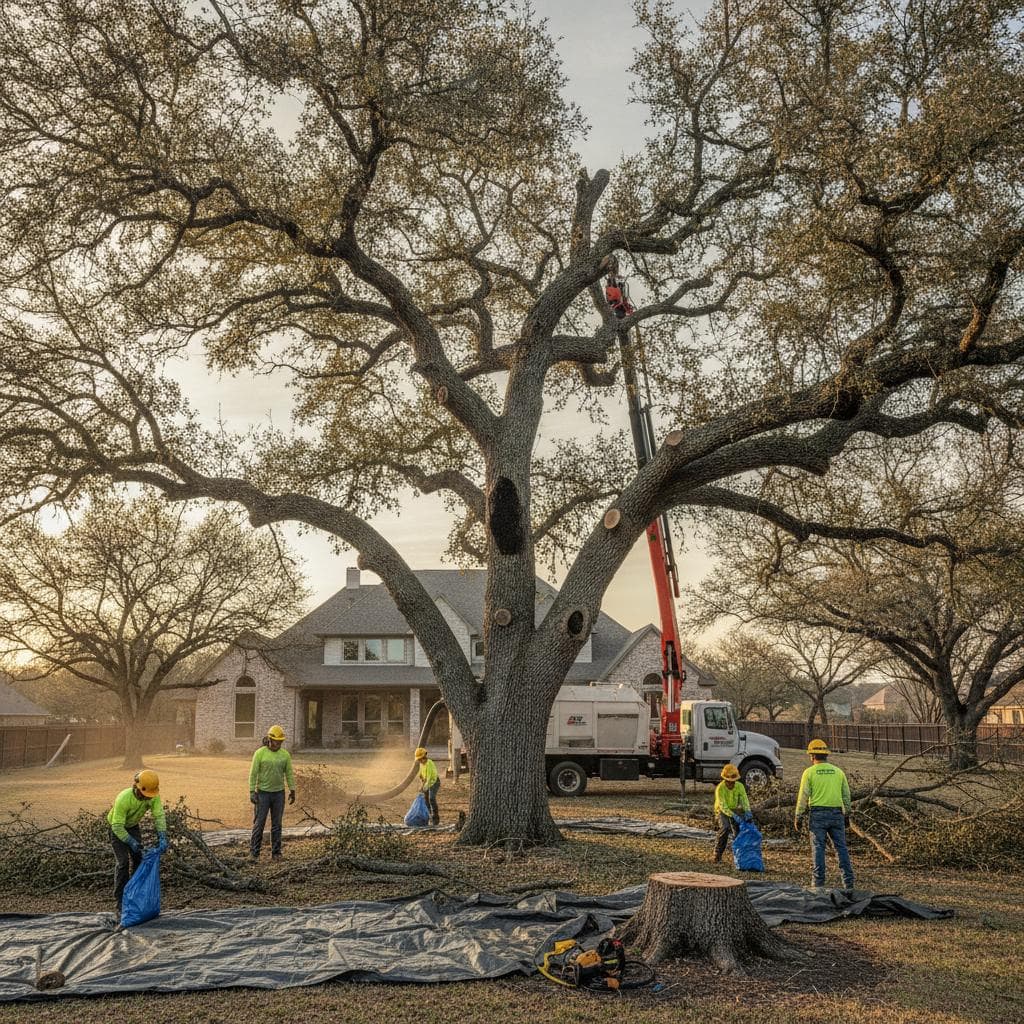
Texas Oak Wilt Outbreak Raises Emergency Removal Costs
Texas homeowners face rising emergency tree removal costs as oak wilt spreads across the state. This fungal disease kills thousands of oaks annually. When infections occur near homes or power lines, rapid removal protects safety and limits further damage.
Oak wilt moves through root grafts and insect carriers, which complicates containment. Professional intervention addresses both the immediate hazard and the risk of spread. Homeowners benefit from understanding cost drivers and response steps.
Factors That Shape Emergency Removal Pricing
Emergency oak removal in Texas typically costs between $1,200 and $4,000 per tree. Larger or hazardous specimens often exceed this range. Several variables determine the final price.
- Tree size and decay level affect equipment needs and labor hours.
- Proximity to structures, fences, or lines requires rigging and controlled dismantling.
- After-hours or peak-demand scheduling increases rates.
- State rules mandate sealed or destroyed disposal of infected wood, which adds fees.
- Crane use or extra crew members can double baseline expenses.
Request a written breakdown before authorizing work to avoid surprises.
How Oak Wilt Progresses and Spreads
The fungus blocks water movement inside the tree, producing wilting leaves and eventual death. Red oaks succumb quickly. Live oaks transmit the pathogen through connected roots. Sap beetles carry spores to fresh wounds on healthy trees.
Pruning during active beetle months raises infection risk. Immediate wound sealing reduces that exposure. Infected trees rarely recover once symptoms appear.
Professional Removal Sequence
Certified crews follow a controlled sequence to remove infected oaks safely.
- Confirm the diagnosis through field signs or laboratory analysis.
- Map hazards, access routes, and rigging points.
- Separate infected sections from nearby healthy oaks.
- Lower cut pieces in stages near buildings or wires.
- Chip, burn, or bury all wood per state guidelines.
- Clean the site and disinfect tools before departure.
This order limits both physical danger and disease transmission.
Why Professional Service Matters
Homeowners lack the specialized gear and containment protocols required for infected material. Improper cuts or movement of wood can spread the fungus to adjacent properties. Licensed arborists carry insurance and follow disposal regulations that protect clients from liability.
Selecting a Qualified Arborist
- Verify International Society of Arboriculture certification.
- Confirm current liability and workers compensation coverage.
- Obtain estimates that detail disposal methods.
- Confirm prior experience with regional oak wilt cases.
- Review recent customer references.
Common Questions About Oak Wilt Removal
How quickly does the disease kill an oak?
Red oaks can die within weeks after symptoms start. Live oaks decline more gradually, yet removal remains the primary safety measure.
Does firewood spread the pathogen?
Yes. Transporting wood from infected trees is a frequent vector. Use only locally sourced, certified material.
Are permits required?
Some cities mandate permits for large removals. The arborist can confirm local requirements.
Are treatments available?
Fungicide injections and root trenching can protect nearby healthy trees when applied early, though they do not cure already infected specimens.
When is pruning safest?
Schedule pruning during the coldest months when beetle activity drops, and seal every cut at once.
Immediate Actions for Property Owners
Schedule a professional assessment at the first sign of wilting. Document tree locations and any recent pruning. Avoid moving wood from the site until disposal plans are confirmed. These steps reduce both safety risks and long-term landscape losses.