
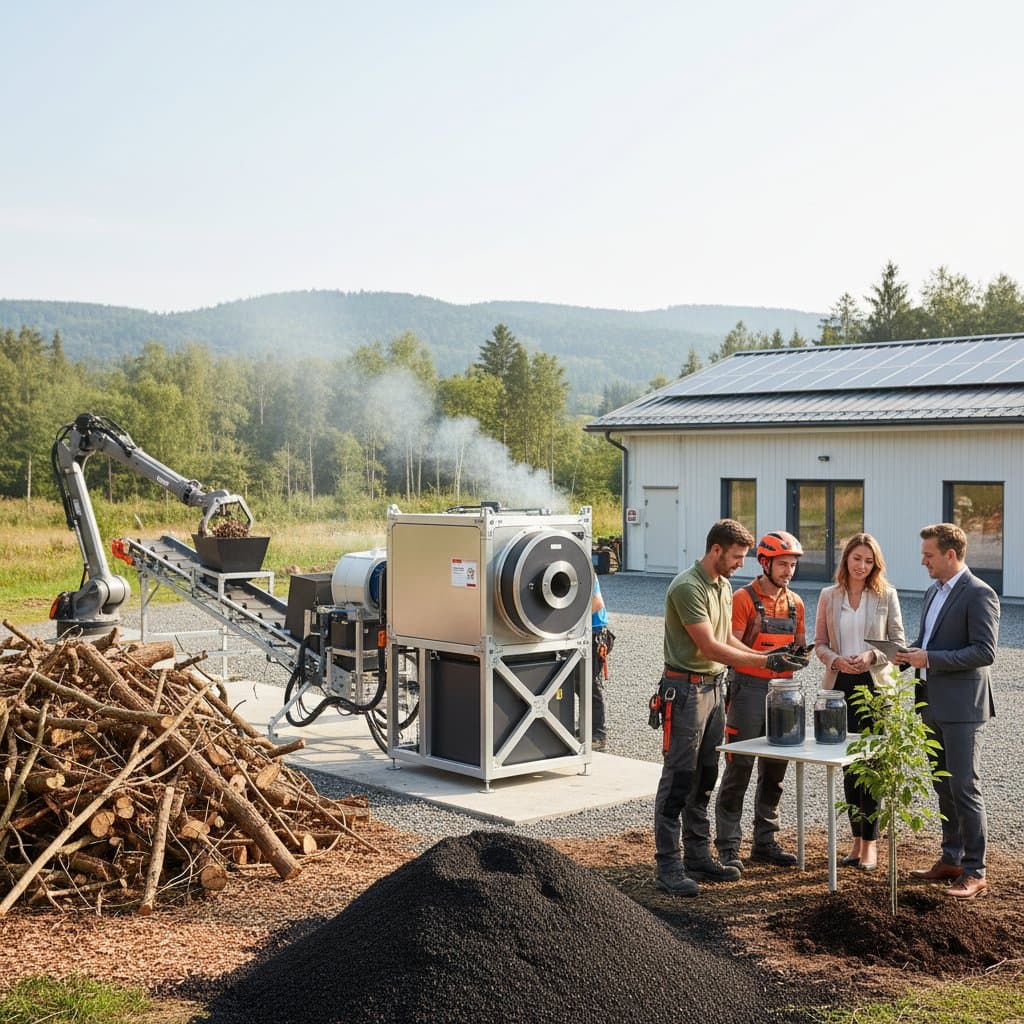
Select equipment based on production scale. For home use, a simple metal barrel kiln suffices, processing 50 to 100 pounds per batch. Commercial operations benefit from retort systems, which recycle gases for efficiency, or continuous pyrolysis units handling thousands of pounds hourly.
-
Load the Feedstock:
Arrange the wood evenly within the chamber. Prevent overpacking to maintain air circulation, which promotes uniform heating and prevents hotspots. -
Ignite and Control Airflow:
Initiate the burn from the top, allowing pyrolysis gases to flow through the unburned wood below. Restrict oxygen intake using dampers or vents to favor carbonization over complete combustion, typically running for 4 to 12 hours depending on batch size. -
Monitor Temperature:
Track internal temperatures with a thermocouple, aiming for 400 to 700 degrees Celsius. This range maximizes biochar yield, often 25 to 35 percent of input weight, while minimizing energy use. -
Cool and Quench:
Upon completion, seal the chamber immediately to exclude oxygen and halt the reaction. Cool naturally over 24 hours or quench with water for faster processing, ensuring safety with protective gear. -
Crush and Screen the Biochar:
Once cooled, fragment the biochar into granules using a hammer mill or manual crushing. Pass through screens to remove fines, ash, or unprocessed wood, targeting particle sizes of 1 to 5 millimeters for soil application. -
Activate and Store:
Enhance usability by soaking biochar in compost tea, worm castings, or nutrient solutions for 1 to 2 weeks to charge it with biology. Store unused portions in breathable bags in a dry, shaded location to avoid moisture absorption and quality degradation.
Tips for Successful Biochar Production
Success hinges on preparation and precision. Start with dry wood to accelerate pyrolysis and boost yields by up to 20 percent. Steer clear of treated or painted wood, as residues introduce toxins that harm soil life and reduce market appeal.
Manage airflow meticulously; excess oxygen produces ash rather than porous biochar. Maintain steady temperatures to achieve consistent porosity, which determines water-holding capacity. Finally, test biochar pH and nutrient content, then amend as needed to elevate its value for premium sales.
Frequently Asked Questions
How does biochar make tree waste profitable?
Biochar converts waste into a sought-after soil enhancer purchased by farmers, gardeners, and conservation groups. It eliminates disposal expenses while enabling sales at competitive prices, often yielding returns within the first season.
Is biochar production environmentally friendly?
The method sequesters carbon that might otherwise release as CO2 during decomposition. Applied to soil, biochar persists for hundreds of years, aiding in emission reductions and promoting regenerative agriculture.
Can any type of tree waste be used for biochar?
Untreated wood from hardwoods or softwoods works well, including prunings and stumps. Exclude materials with chemicals, paints, or laminates, which emit volatiles during heating and contaminate the final product.
What is the difference between biochar and charcoal?
Charcoal serves mainly as a fuel source with high combustibility. Biochar prioritizes soil benefits through its extensive pore network, fostering nutrient retention and beneficial microbes.
How can small tree service companies profit from biochar?
Companies process on-site debris into biochar for sale to local markets like nurseries or via online platforms. Collaborations with cities for debris management turn public contracts into steady income.
Do I need special permits to produce biochar?
Requirements differ by region; hobbyist setups rarely require approvals. Larger facilities must address air emissions and waste handling through local environmental agencies.
Scaling Up for Sustainable Revenue
Biochar production bridges waste challenges with economic gains. Individuals and firms managing tree waste should evaluate equipment investments or alliances with processors to launch operations.
By 2026, this practice aligns with global sustainability trends, fostering resilient businesses. Proper execution demonstrates how resource recovery nurtures both profit and planetary health.