
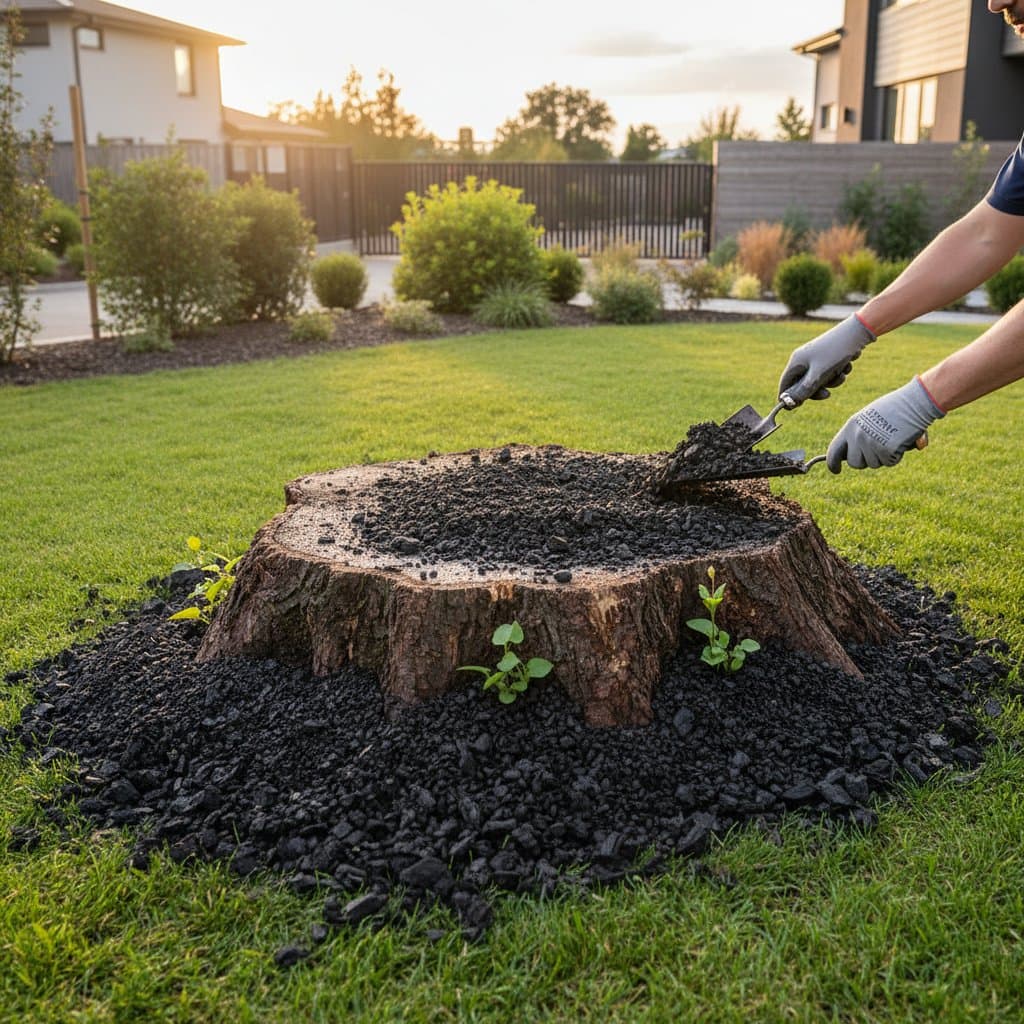
Eliminate 95% of Stump Regrowth with Biochar
Homeowners often face the challenge of persistent stump regrowth after tree removal. Conventional approaches, such as chemical herbicides or multiple grinding sessions, prove expensive, labor-intensive, and detrimental to soil quality. Biochar stump removal presents a superior option. This method curbs regrowth, enhances soil conditions, and provides an environmentally sound alternative to toxic substances. The following sections detail biochar's mechanism, associated expenses, and its rising popularity among those desiring thorough, green solutions.
Understanding Biochar Stump Removal
Biochar stump removal integrates stump grinding or excavation with the incorporation of biochar, a carbon-rich substanceorganic matter in low-oxygen conditions. This material amends the soil, neutralizing the root zone and withholding essential nutrients that fuel sprouting. Simultaneously, biochar boosts soil fertility, positioning it as a dual-purpose strategy for eradication and rejuvenation.
Biochar's porous structure absorbs water and fosters beneficial microbes, which accelerate organic decomposition in the roots. Over months, the treated stump area transforms into nutrient-rich ground suitable for new vegetation. Professionals recommend this technique for its longevity and minimal disruption to surrounding ecosystems.
Typical Costs for Biochar Stump Removal
The expense for stump removal combined with biochar treatment generally falls between $150 and $400, averaging $275 nationwide. Variations depend on stump dimensions, site access, and biochar quantity required for comprehensive coverage.
| Stump Size | Average Cost Range |
|---|---|
| Small (under 12 inches in diameter) | $100 - $200 |
| Medium (12-24 inches in diameter) | $200 - $350 |
| Large (over 24 inches in diameter) | $300 - $500 |
These figures encompass grinding operations followed by biochar integration, achieving up to 95% reduction in regrowth.
Key Factors Influencing Biochar Stump Removal Expenses
Tree Dimensions
Stumps from larger trees feature extensive root networks, demanding extended grinding and greater biochar volumes. Diameter directly correlates with labor and material demands, elevating total costs.
Species Characteristics
Hardwoods like oak and maple resist breakdown due to dense fibers and robust roots, necessitating more biochar for suppression. Softwoods such as pine and fir degrade faster, allowing reduced application for comparable efficacy.
Stump State
Recently severed stumps exhibit high regrowth potential from stored energy reserves. Aged or rotting stumps require minimal intervention, as vitality diminishes over time, affecting biochar dosage and treatment frequency.
Site and Access Considerations
Stumps in confined spaces, adjacent to barriers or on uneven terrain, incur additional fees for specialized equipment and precautions. Accessible, flat lawns facilitate straightforward operations and lower charges.
Soil Composition
Compacted clay demands preparatory tilling for biochar penetration, adding steps and costs. Permeable sandy soils facilitate swift integration, streamlining the procedure.
Supplementary Enhancements
Integrating biochar with compost or mycorrhizal fungi amplifies soil recovery, though it modestly increases outlay. Such combinations yield superior nutrient cycling and structural improvements over time.
Step-by-Step Biochar Stump Removal Procedure
-
Site Evaluation and Estimation
A certified arborist assesses stump scale, position, and root extent to formulate an optimal strategy. -
Grinding or Digging Out
The stump undergoes grinding to a depth of 6 to 12 inches, revealing the primary roots for treatment. -
Biochar Mixing
Biochar receives blending with compost or native soil to stimulate microbial growth and nutrient availability. -
Direct Application
The prepared mixture fills the excavated void, encasing roots to inhibit nutrient uptake and sprouting. -
Filling and Leveling
Topsoil covers the site, promoting even terrain. Biochar gradually regulates pH levels and sustains hydration for subsequent landscaping. -
Debris Removal and Review
Workers clear remnants and advise on replanting timelines, ensuring seamless integration into yard plans.
Deciding Between DIY and Professional Biochar Stump Removal
Suitable Scenarios for DIY
For diminutive stumps below 12 inches, capable homeowners may grind independently and apply purchased biochar. Thoroughly incorporate the material into exposed soil to mitigate regrowth risks effectively.
Benefits of Professional Services
Larger stumps or those near buildings and utilities warrant expert involvement. Specialists possess advanced tools, knowledge of root dynamics, and precise biochar dosing for optimal outcomes. They also prioritize safety, speed, and adherence to regulations.
Selecting a Tree Service for Biochar Applications
- Verify Qualifications and Coverage: Confirm licensing, insurance, and proficiency in grinding alongside biochar use.
- Inquire on Biochar Provenance: Opt for biochar derived from renewable wood or organic byproducts.
- Solicit Several Quotes: Evaluate costs, project details, and guarantees against regrowth.
- Assess Sustainability Measures: Prioritize firms committed to green waste handling and soil enhancement.
- Secure Documented Agreements: Contracts should specify expenses, schedules, and post-work obligations.
Common Questions on Biochar Stump Removal
What is the cost for treating a large stump with biochar?
Treatment for stumps exceeding 24 inches in diameter ranges from $300 to $500, covering grinding and application. Final pricing hinges on access and soil factors.
Does biochar guarantee complete prevention of regrowth?
Biochar suppresses up to 95% of regrowth by disrupting nutrient pathways and stabilizing soil. Certain vigorous species might necessitate supplementary monitoring.
Is biochar environmentally safe?
Yes, biochar qualifies as a non-toxic, carbon-sequestering amendment. It avoids chemical runoff, supports biodiversity, and contributes to carbon storage in soil.
When can replanting occur after biochar treatment?
Wait 4 to 6 weeks for initial root stabilization, then proceed with planting. Biochar enhances conditions for robust establishment of new flora.
Implementing Biochar for Lasting Yard Renewal
Biochar stump removal equips homeowners with a durable, planet-friendly approach to eradicating regrowth. It sidesteps ongoing chemical reliance, revitalizes soil ecosystems, and secures enduring yard improvements. Consult local experts to initiate this transformative process tailored to your property.