
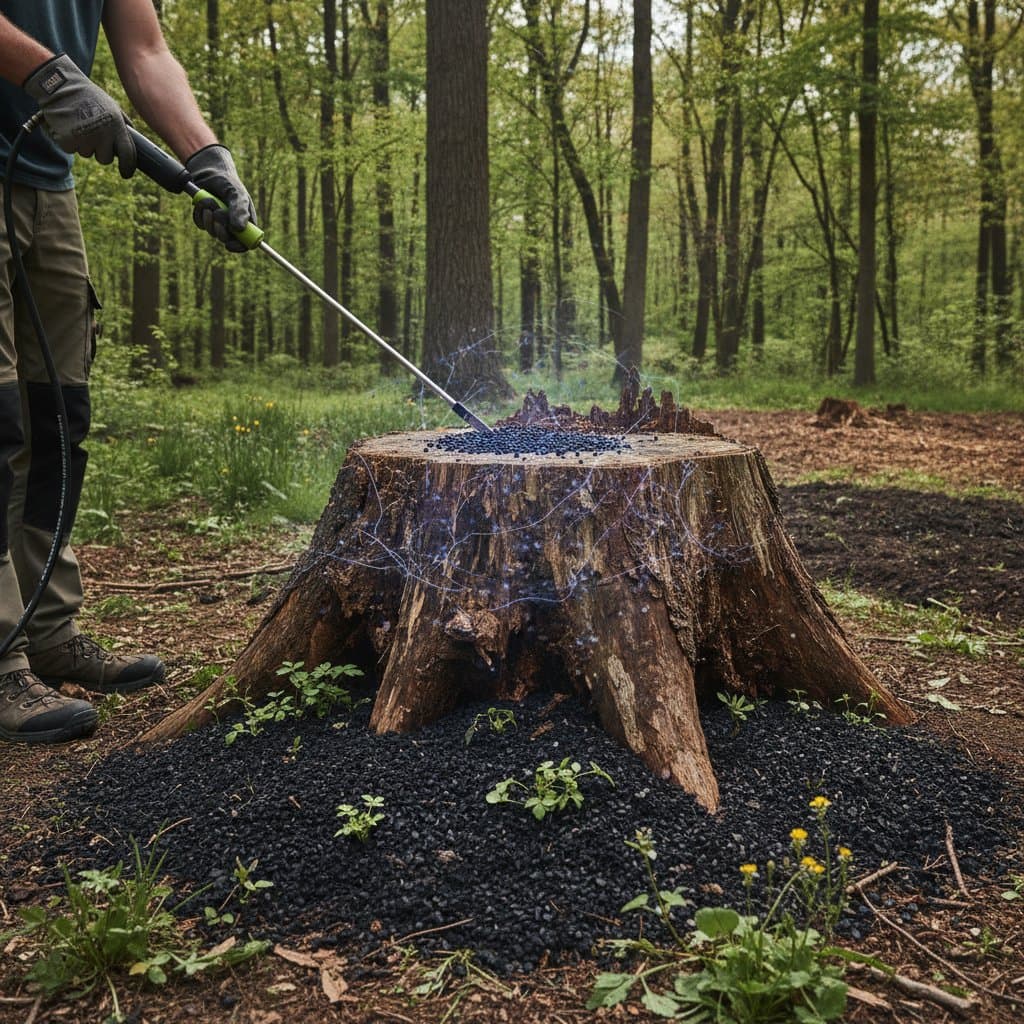
Biochar Injection Reduces Stump Rot Time by 70 Percent
Tree stumps often remain in place for years after a tree is cut. They occupy valuable space and create conditions for fungi and insects to thrive. Biochar injection offers a targeted solution that speeds natural decay by as much as 70 percent while improving soil quality. This approach replaces mechanical removal with controlled microbial activity.
The following sections detail costs, biochar selections, and step-by-step application methods. Readers will also find guidance on deciding between do-it-yourself work and professional service.
Typical Costs for Biochar Injection
Average National Pricing
Treatment usually falls between 150 and 600 dollars per stump. Price varies with diameter, wood density, and site access. Smaller stumps require less material and time, while large hardwood specimens demand greater volumes of biochar and deeper drilling.
Pricing by Stump Size
- Small stumps under 12 inches: 150 to 250 dollars
- Medium stumps 12 to 24 inches: 250 to 400 dollars
- Large stumps over 24 inches: 400 to 600 dollars
Contractors frequently reduce the per-stump rate when several stumps are treated during one visit.
Factors That Influence Final Cost
Wood density affects labor because oak and similar hardwoods resist breakdown longer than pine. Higher-porosity biochar produced from hardwood feedstock costs more yet supports greater microbial retention. Specialized augers and injectors add to equipment expenses, and sites near buildings or on slopes require extra setup time. Optional microbial additives such as compost tea increase both material cost and decay speed.
Biochar Options for Stump Treatment
Hardwood Biochar
Produced from oak, maple, or hickory, this type maintains structure for many seasons. Its high surface area encourages extensive microbial colonies and supports long-term soil fertility. The main drawback is higher purchase price and slower initial microbial activation.
Softwood Biochar
Made from pine or spruce, softwood biochar breaks down faster and promotes quicker microbial establishment. It carries a lower price point and works well for rapid stump reduction. Its shorter persistence in soil means periodic additions of organic matter may be necessary.
Agricultural or Mixed Biochar
Derived from corn stalks, nutshells, or similar residues, mixed biochar supplies both structure and immediate nutrients. It supports root development for future plantings and uses sustainable feedstocks. Quality can vary, so source verification remains important.
Choosing Between DIY and Professional Service
Performing the Work Yourself
Homeowners with landscaping experience may handle small stumps. Required tools include a heavy-duty drill, 1-inch bit, and an injection device that many households lack. Consistent depth and spacing of holes determine success, and protective equipment is essential during drilling and mixing.
Benefits of Professional Application
Certified technicians use calibrated equipment that places material at uniform depths. They evaluate soil conditions first and combine biochar with appropriate fungal or bacterial inoculants. Results appear more predictable, and many providers include follow-up visits if decay stalls.
For stumps larger than 12 inches or located near structures, professional service is the safer and faster route.
Step-by-Step Application Process
Site Preparation
Remove surface debris and cut the stump as close to grade as possible. This step reduces the volume of wood that must decompose and creates a level work surface.
Creating Access Points
Drill vertical holes 6 to 8 inches apart across the top face, each at least 10 inches deep. On larger stumps add several angled holes around the outer edge to reach the heartwood. Clear wood shavings after drilling.
Preparing the Inoculant Mixture
Combine biochar with compost tea or a commercial microbial blend until the material is moist but not saturated. The liquid helps microbes enter the porous structure of the biochar.
Filling the Holes
Use a funnel or pressure injector to pack each hole completely. Cover the surface with a thin layer of soil or mulch to limit moisture loss. Professional rigs apply the mixture under pressure for deeper penetration.
Ongoing Moisture Management
Water the treated area every few days during dry periods. Consistent moisture supports the microbial populations responsible for breaking down lignin and cellulose.
Monitoring Progress
After four to six weeks the wood surface should soften. A light second application of microbial solution can restart activity if progress slows. Most treated stumps reach full decomposition in a fraction of the time required for untreated wood.
Practices That Improve Results
Add a modest quantity of compost or urea to offset the carbon load of biochar and sustain microbial growth. Maintain surface moisture without creating standing water. Cover the stump with organic mulch to deter termites and carpenter ants. Avoid chemical stump killers that destroy the beneficial organisms biochar depends upon. Once decay is largely complete, incorporate remaining biochar into the surrounding soil to enhance structure and nutrient retention.
Common Questions About Biochar Injection
How does the material speed decay?
Biochar creates a protected habitat for microorganisms that digest wood components. When moisture and inoculants are present, the combination produces rapid breakdown of lignin and cellulose.
Is the treatment safe near existing plants?
Properly applied biochar improves soil aggregation and nutrient holding capacity. It does not damage turf, shrubs, or garden beds when used according to recommended rates.
Can this method replace stump grinding?
Biochar injection does not remove the stump in a single day. It does eliminate heavy equipment, lower overall expense, and leave enriched soil rather than a pile of chips.
How long does full decomposition require?
Natural rot may take several years. Treated stumps typically lose structural integrity within months, though exact timing depends on wood species, size, and climate.
Will the ground settle after the wood disappears?
Some settling occurs. Filling the depression with topsoil or compost restores a level surface and prepares the site for new planting.
Can homeowners produce their own biochar?
Clean feedstock and a controlled burn setup allow production of usable material. Purchased biochar offers more consistent pore structure and documented performance.
Implementing the Process
Biochar injection shortens the interval between tree removal and site reuse. It improves soil conditions without heavy machinery or synthetic chemicals. Homeowners who follow the drilling, mixing, and moisture steps outlined above can expect reliable results on most residential properties. Larger or multiple stumps benefit from consultation with a certified arborist who can adjust the formulation to local soil conditions.