
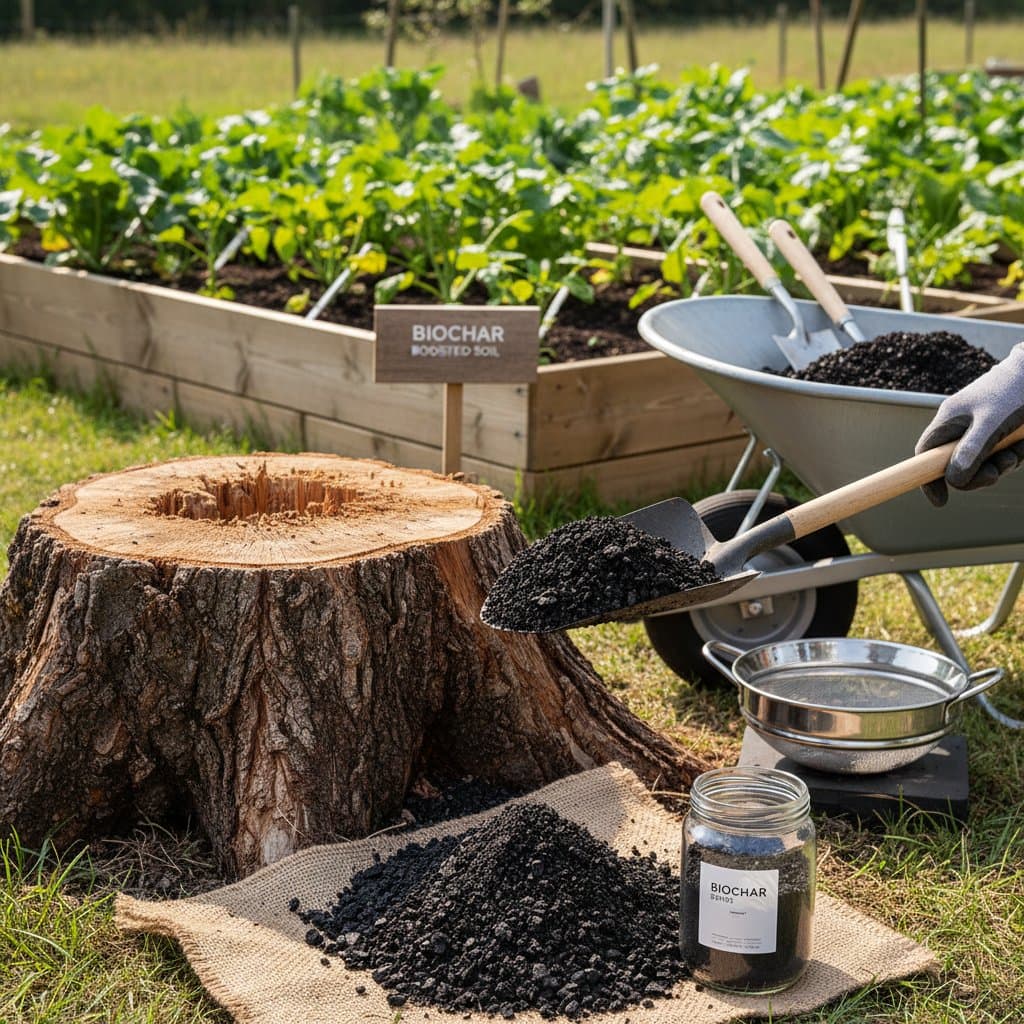
Turn Tree Stump Waste Into Valuable Garden Biochar
When a large tree is removed, the remaining stump often becomes an overlooked challenge. Grinding produces wood waste that many view as difficult to manage. Converting this material into biochar transforms it into a soil amendment that improves structure, water retention, and nutrient availability while supporting sustainable practices.
This guide outlines production costs, available methods, and clear steps for creating biochar from stump waste.
Biochar Production Costs
Average National Ranges
Professional services that convert stump waste into biochar typically fall in the moderate to high range because they rely on specialized kilns and containment systems. Homeowners who already possess grinding waste and basic burn equipment can complete the process at lower expense.
Costs by Stump Size
Project scale influences total outlay through fuel, time, and equipment needs.
- Small stump under 12 inches in diameter: minimal added cost when chips come from an existing grind.
- Medium stump 12 to 24 inches in diameter: moderate expense for a controlled burn or small kiln.
- Large stump over 24 inches in diameter: higher expense due to extended processing time and safety requirements.
Primary Cost Drivers
Hardwood species require longer conversion times yet produce denser biochar. Equipment choices such as barrels, kilns, or lined pits affect both upfront and operating costs. Labor includes grinding, drying, and monitoring the burn. Local permits or disposal rules may add fees. Post processing steps such as crushing and screening increase preparation time.
Biochar Production Methods
Open Pit Approach
A shallow pit allows stump chips to burn with restricted oxygen.
Pros include simplicity and low equipment needs. Cons involve limited control over airflow, resulting in uneven char and increased smoke.
Barrel or Kiln Approach
A metal barrel or kiln provides better regulation of temperature and oxygen.
Pros include cleaner combustion, reduced smoke, and consistent biochar quality. Cons include the need for initial setup and ongoing monitoring.
Retort System
A sealed container heated externally achieves near complete carbonization.
Pros include high quality output, efficient heat use, and low emissions. Cons include higher equipment cost and greater operational complexity.
DIY Production Versus Professional Service
Homeowners comfortable with hands on tasks and already holding stump waste often choose the DIY route. Success requires attention to safety, airflow management, and burn uniformity. Lack of control can convert wood to ash rather than stable biochar. Professional operators supply equipment and expertise when scale or site constraints exceed personal capacity.
Step by Step Production Process
- Grind the stump into chips or small chunks so pieces heat evenly.
- Spread the chips in a dry, sunny location until moisture content drops fully.
- Prepare a metal barrel, kiln, or lined pit with controlled air inlets.
- Ignite the material from the top and maintain a slow downward burn while limiting oxygen once flames subside.
- Quench the char with water or soil once it turns black and crumbly, then allow complete cooling.
- Crush the cooled material to uniform size and store it in a sealed, dry container.
Practices That Improve Results
Use only fully dry wood to limit smoke and preserve carbon structure. Adjust airflow continuously to prevent complete combustion to ash. Begin with small test batches to refine technique before scaling up. Blend finished biochar with finished compost to increase microbial activity once added to soil. Wear gloves, eye protection, and a dust mask during handling.
Answers to Common Questions
What defines biochar produced from stumps?
Biochar results from heating wood chips in a low oxygen setting. The finished product improves soil drainage, holds moisture, and retains nutrients for plant use.
Which wood types work for biochar?
Both hardwood and softwood function well. Hardwoods yield denser, longer lasting biochar while softwoods produce lighter material that decomposes more quickly.
Does the process harm air quality?
Properly managed low oxygen burns release fewer particulates than open fires and sequester carbon in stable form within the soil.
What yield can one stump provide?
Approximately one third of the dry weight converts to biochar. Actual output varies with species, moisture level, and method.
Are permits required?
Many jurisdictions mandate burn permits regardless of project size. Confirm local rules before ignition.
How should biochar be applied?
Combine one part biochar with three parts compost or soil before incorporation. This ratio supports microbial colonization and prevents nutrient tie up.
Applying Biochar to Garden Beds
Once cooled and crushed, biochar integrates directly into planting areas or container mixes. Regular use builds long term soil resilience, reduces irrigation demand, and diverts wood waste from landfills.