
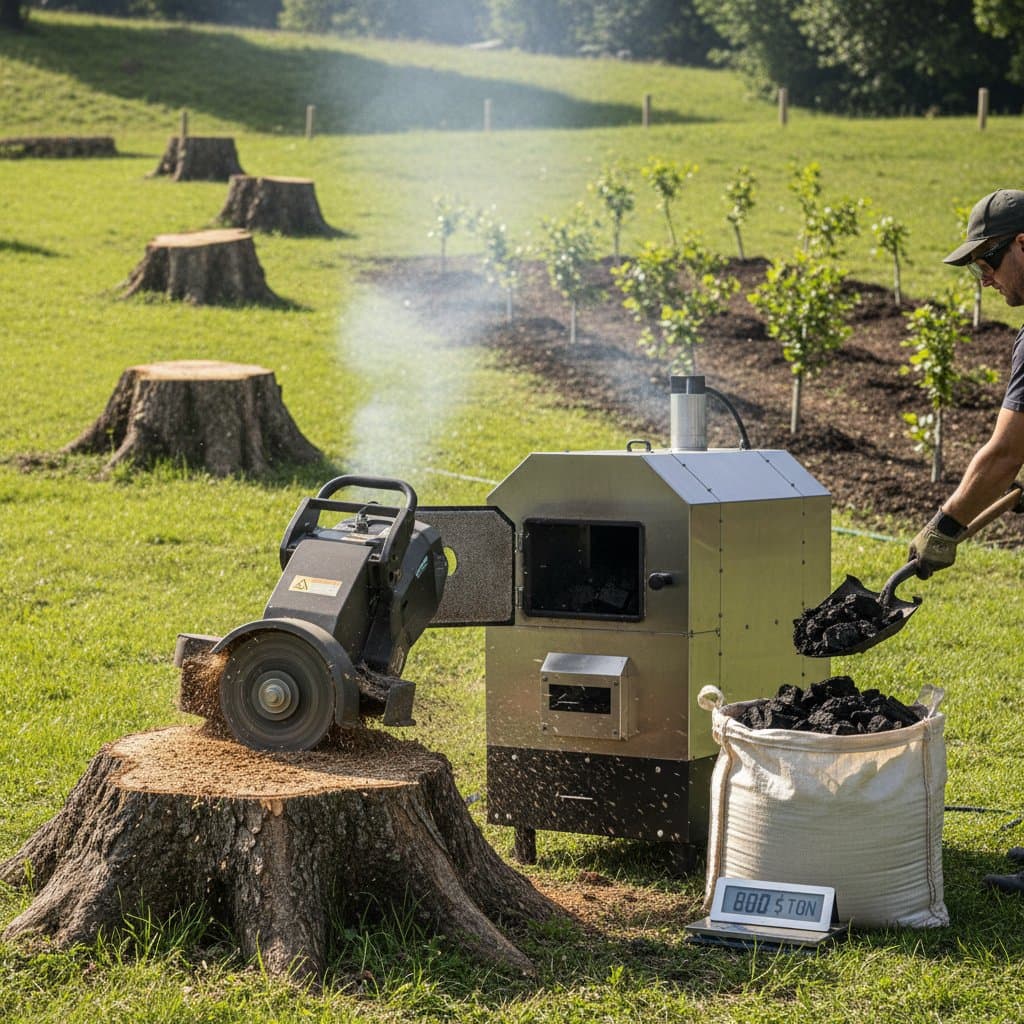
Convert Tree Stumps to $800-Per-Ton Biochar Revenue by 2026
Tree stumps typically represent a disposal challenge after removal. However, rising interest in sustainable soil amendments and carbon-capturing products positions these remnants as a potential asset. Individuals, landscaping professionals, and tree service operators can process stump waste into biochar, a premium material valued at up to $800 per ton. This overview details the conversion of stump grinding byproducts into biochar, including production expenses, required tools, and strategies for monetization.
Understanding Biochar
Biochar emerges from heating wood or organic waste in an oxygen-limited setting through pyrolysis. This yields a lightweight, porous charcoal that sequesters carbon in soil for extended durations. Biochar enhances soil aeration, nutrient retention, and microbial activity. Producers distinguish it from standard charcoal by emphasizing its role in farming and ecological restoration over energy use.
Biochar Production Expenses
Expenses for generating biochar from stumps vary by operation size, raw material quality, and machinery. Small-scale operators often face $200 to $400 per ton in combined processing and energy outlays. High-grade biochar commands sale prices up to $800 per ton, creating opportunities for solid returns.
| Production Scale | Average Cost per Ton | Potential Sale Price |
|---|---|---|
| Small Batch (under 1 ton/day) | $300 - $400 | $500 - $700 |
| Medium Batch (1-5 tons/day) | $250 - $350 | $600 - $800 |
| Large Batch (industrial) | $200 - $300 | $700 - $800 |
These figures serve as benchmarks and illustrate the appeal for tree service firms integrating biochar into their workflows.
Influences on Biochar Production Costs
Raw Material Characteristics
Tree species impact yield and biochar density. Dense hardwoods, such as oak or maple, generate robust biochar suited for demanding soil uses, often commanding higher prices. Softer species like pine produce lighter variants that remain marketable but may sell for less.
Moisture Levels
Newly ground stumps hold significant water, which hampers pyrolysis efficiency. Producers dry chips outdoors or in controlled environments to drop moisture below 20 percent, cutting energy needs and boosting output. Plan for two to four weeks of drying based on weather conditions.
Machinery and Infrastructure
Pyrolysis setups range from basic portable kilns under $10,000 to full-scale systems over $100,000. Select based on output targets; modular units suit tree services handling intermittent volumes. Factor in maintenance and fuel sources like captured syngas to lower ongoing costs.
Workforce and Duration
Pyrolysis demands precise temperature and oxygen control, increasing labor for manual operations. Automated controls minimize oversight, allowing one operator to manage multiple batches. Streamline by scheduling around job sites to reduce transport time.
Buyer Networks
Profitability hinges on nearby markets. Regions with organic agriculture, vineyards, or green infrastructure offer steady outlets. For sparse local demand, platforms like agricultural cooperatives or online marketplaces expand reach without heavy shipping expenses.
Regulatory Adherence
Local rules may mandate permits for emissions or waste handling. Consult environmental agencies early to secure approvals. Compliance safeguards operations and prevents fines that erode margins.
Steps in Biochar Production
The process from stump to biochar prioritizes safety, yield, and consistency. Follow these stages to produce marketable material:
-
Gather and Prepare Feedstock
Collect stumps from removal sites and grind into uniform chips, ideally 1-2 inches in size, using standard equipment. -
Dry the Material
Spread chips in thin layers for air drying or use solar dryers to reach under 20 percent moisture, monitoring with a basic meter. -
Charge the Pyrolysis Unit
Load dried chips into an airtight kiln or retort, ensuring even distribution to promote uniform heating. -
Initiate Pyrolysis
Raise temperatures to 400-700 degrees Celsius over 2-4 hours, venting gases for safety or reuse as process fuel. -
Cool the Output
Allow gradual cooling over 12-24 hours in a sealed environment to prevent spontaneous combustion. -
Process and Package
Sift biochar to eliminate fines or chunks, then bag in 50-pound units for bulk sales or smaller packs for retail. -
Market or Deploy
Sell to end users or integrate into services, such as amending client soils post-project for added value.
Options: Self-Production or Outsourcing
| Aspect | Pursue In-House Production When | Outsource to Specialists When |
|---|---|---|
| Volume | Handling small lots for gardens or trials | Scaling for commercial volumes |
| Risk Management | Using simple, low-heat setups on private land | Employing high-heat systems with oversight |
| Tools | Investing in barrels or entry-level kilns | Accessing advanced continuous-flow reactors |
| Legal Aspects | Limiting to non-commercial, unregulated use | Navigating permits for business operations |
| Objectives | Focusing on personal soil enhancement | Prioritizing revenue from sales |
For garden-scale needs, basic methods suffice with minimal risk. Commercial ventures benefit from expert partnerships to guarantee quality and regulatory alignment.
Launching a Stump-to-Biochar Venture
Establishing this sideline demands upfront assessment but yields scalable returns. Proceed through these phases:
-
Evaluate Feedstock Availability
Track monthly stump volumes from operations; aim for at least 5-10 tons to justify setup costs. -
Select Processing Approach
Opt for batch kilns if volumes fluctuate or continuous units for steady flows; test portable models at job sites. -
Obtain Approvals and Coverage
Review zoning and emission standards with authorities; secure general liability insurance starting at $1,000 annually. -
Build Sales Channels
Target farms and landscapers via direct outreach; price at $500-700 per ton initially, offering samples to build trust. -
Highlight Ecological Value
Emphasize carbon storage and reduced fertilizer use in pitches; certify products through soil associations for credibility. -
Monitor Financials
Log expenses like $0.50 per pound for drying fuel; target 50 percent margins by optimizing batch sizes. -
Scale Operations
Begin with one kiln, validate sales, then upgrade based on demand, potentially doubling output within a year.
Common Questions
Yield from a Single Stump?
A medium stump yields 10-20 pounds of biochar post-processing, varying with size and dryness.
Safety Considerations?
Proper equipment and protocols make it secure; equip sites with extinguishers and follow temperature guidelines.
Direct Use of Grindings?
Stump grindings work well if dried thoroughly; skip this step only for experimental runs.
Quality Indicators?
Seek uniform black, friable texture without residues; test pH (8-10 ideal) and carbon (over 80 percent) for commercial viability.
Primary Buyers?
Organic growers, soil blenders, and sustainability initiatives seek local sources to minimize transport.
Ecological Advantages?
Biochar prevents carbon release from decomposition, bolsters soil fertility, and conserves water.
Biochar Versus Compost?
Biochar structures soil for better nutrient holding, complementing compost's organic inputs.
Realizing Revenue from Remnants
Stumps evolve from liabilities to assets through biochar conversion, merging waste management with income generation. This approach advances soil vitality and atmospheric carbon reduction. Tree professionals and property owners alike stand to gain by adopting these methods, fostering enduring environmental and economic gains.