
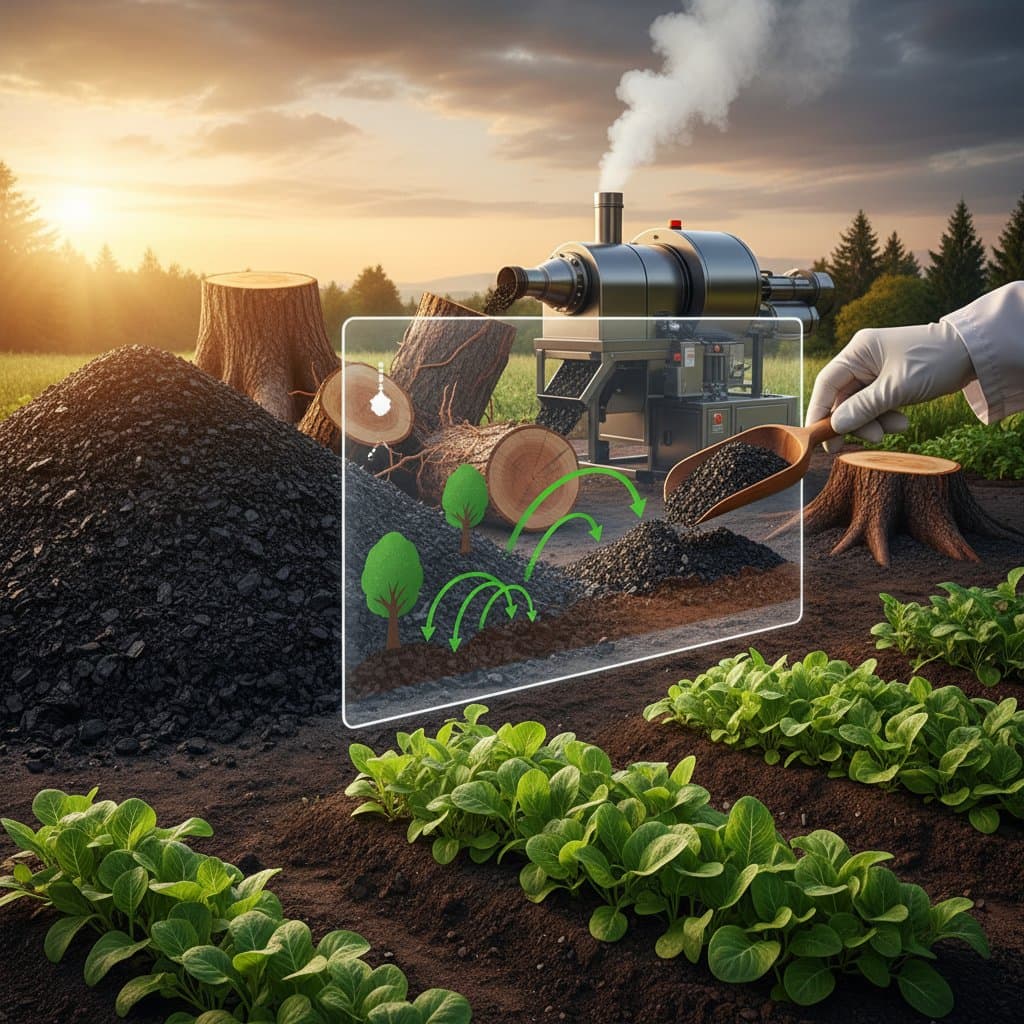
Stump Waste to $200/Ton: Unlock Profits with Biochar Production
Tree service companies and landowners face mounting costs for disposing of stump waste. Biochar production offers a viable solution by converting this material into a product valued at up to $200 per ton. This process not only generates revenue but also promotes environmental sustainability through carbon sequestration and soil enhancement.
This guide details the conversion of stump waste into biochar, explores its commercial potential, and provides practical steps for safe implementation. Professionals in tree care and land management can use these insights to turn liabilities into assets.
Understanding Biochar and Its Value
Biochar is charcoal produced from wood or other organic materials through pyrolysis, a heating process in a low-oxygen environment. This method yields a lightweight, porous substance that locks carbon in soil for centuries, preventing its release as greenhouse gases. Unlike traditional charcoal, biochar prioritizes environmental and agricultural applications over fuel use.
For those managing stumps and woody debris, biochar eliminates disposal fees associated with hauling or landfilling. It enhances soil fertility, improves water retention, and supports carbon sequestration, making it a staple in sustainable practices.
Factors Driving Biochar Profitability
Biochar prices range from $100 to $200 per ton based on quality and demand. Profit margins hinge on feedstock selection, processing efficiency, and market proximity. Addressing these elements maximizes returns for producers.
Feedstock Selection
Choose hardwoods like oak, maple, or hickory for dense biochar ideal for soil amendment. These yield higher carbon content and better nutrient retention compared to softwoods such as pine, which suit filtration applications. Inspect stumps for contaminants like soil or metals to maintain product purity.
Moisture Management
Process dry material to optimize yields and reduce energy needs. Fresh stump chips often hold 50 percent moisture, so air-dry them for two to four weeks or use a kiln for faster results. Lower moisture prevents steam interference during pyrolysis and cuts fuel costs by up to 30 percent.
Temperature Control and Equipment
Aim for 400 to 500 degrees Celsius for agricultural-grade biochar that retains minerals. Higher temperatures, around 600 to 800 degrees Celsius, produce purer carbon for industrial uses. Invest in retort systems or kilns with precise controls to match output to market needs.
Market Proximity
Target local buyers to minimize transport expenses. In urban settings, sell to community gardens or eco-conscious landscapers. Rural areas offer outlets through farms or restoration initiatives, where demand for soil enhancers remains strong.
Cost Optimization
Account for grinding, drying, and packaging in your budget. These steps can add $20 to $50 per ton. Collaborate with nearby nurseries or composting operations to share logistics and lower overhead.
The Biochar Production Process Step by Step
Convert stump waste systematically to ensure high yields and quality. Each phase requires attention to detail for consistent results.
Collect and Prepare Stumps
Grind stumps into uniform chips after tree removal. Remove debris like rocks, soil, or nails to avoid equipment damage and ensure even pyrolysis. Store prepared material in covered piles to prevent reabsorption of moisture.
Dry the Feedstock
Spread chips in thin layers for air-drying, turning them weekly to promote evaporation. For accelerated drying, employ solar or mechanical kilns, targeting below 15 percent moisture. This step boosts efficiency and yields by 10 to 20 percent.
Conduct Pyrolysis
Load dried chips into a sealed chamber and heat gradually. Limit oxygen to trigger thermal decomposition, releasing syngas while forming solid biochar. Monitor temperatures for four to eight hours, adjusting as needed for desired properties.
Cool and Process
Allow the biochar to cool in an oxygen-free environment to avoid combustion. Screen out fines and ash, then crush to the appropriate size, such as 1- to 5-millimeter granules for soil use. This refines texture for specific applications.
Activate and Package
Steam or chemically activate biochar to expand its surface area, enhancing adsorption for filtration. Package in sealed, breathable bags labeled with carbon content and pH levels. Store in dry conditions to preserve quality until sale.
Environmental and Economic Advantages
Biochar production diverts waste from landfills, reducing methane emissions and disposal costs by $50 to $100 per ton. It sequesters 2 to 3 tons of CO2 equivalent per ton produced, aiding climate goals.
Economically, it creates new revenue streams for tree services. Use biochar in landscaping packages or sell directly to generate $150 net profit per ton after costs. Soil benefits include 20 percent better water retention and reduced fertilizer needs.
Indicators for Adopting Biochar Production
Evaluate your operations to determine fit. Regular handling of 5 tons or more of stump waste annually signals potential. Access to open land for processing and clients prioritizing sustainability further support adoption.
If hauling costs exceed $75 per ton, biochar offers immediate savings. Expanding services with eco-products can attract premium clients and differentiate your business.
Comparing DIY and Professional Approaches
Small-scale production suits hobbyists, while professionals handle volume efficiently.
DIY Methods
Construct a simple top-lit updraft kiln from metal drums for batches under 100 pounds. This requires minimal tools but demands outdoor setup with fire suppression nearby.
Advantages include startup costs under $200 and hands-on learning. Drawbacks involve variable quality, emission risks, and scalability limits to personal use.
Professional Systems
Opt for automated retorts or continuous kilns that process tons daily with emission controls. These ensure compliance and uniformity.
Benefits encompass higher yields, safety features, and certification options. Partnering reduces your capital outlay while leveraging expertise.
Selecting a Reliable Biochar Partner
Vet partners thoroughly for success. Seek those with five or more years in pyrolysis and certifications from environmental bodies.
Verify equipment includes scrubbers for clean emissions. Request lab tests showing 80 percent minimum carbon content and neutral pH. Discuss customization for your feedstock and end-use, plus fixed pricing to avoid surprises.
Essential Questions for Biochar Initiatives
Assess feasibility with targeted inquiries. Identify feedstock sources and estimate annual volume, aiming for at least 2 tons to justify setup.
Pinpoint buyers like local farms or retailers. Calculate costs, including $0.50 per kilowatt-hour for energy. Review permits for pyrolysis to ensure regulatory alignment.
Diverse Uses for Biochar
Apply biochar across sectors for broad appeal.
In agriculture, incorporate 5 to 10 percent by volume into fields to lift yields by 15 percent. Horticulturists blend it into mixes for healthier roots and less leaching.
For livestock, add to feed or bedding to cut odors by 50 percent. In filtration, it purifies water by adsorbing 90 percent of heavy metals. Construction integrates it into materials for enhanced insulation and reduced cracking.
Frequently Asked Questions on Stump Waste Biochar
Suitable Woods for Biochar?
Most woods work, with hardwoods yielding superior results. Steer clear of treated lumber to prevent toxin release.
Yield Expectations?
Expect 25 to 35 percent from dry weight; 1 ton of chips produces 500 to 700 pounds.
Home Production Safety?
Use enclosed kilns away from structures, with extinguishers ready. Cool fully before handling to mitigate risks.
Biochar vs. Charcoal?
Biochar focuses on stability for soil, lacking fuel additives found in barbecue charcoal.
Environmental Impact?
It sequesters carbon long-term and cuts fertilizer use by 20 to 30 percent.
Production Expenses?
Range from $40 to $80 per ton for small operations, dropping with scale.
Soil Longevity?
Biochar persists 100 to 1,000 years, sustaining benefits indefinitely.
Implementing Biochar for Lasting Gains
Integrate biochar to streamline waste management and boost sustainability. Homeowners enhance gardens, while businesses diversify offerings. This approach yields profits and environmental wins for enduring impact.