
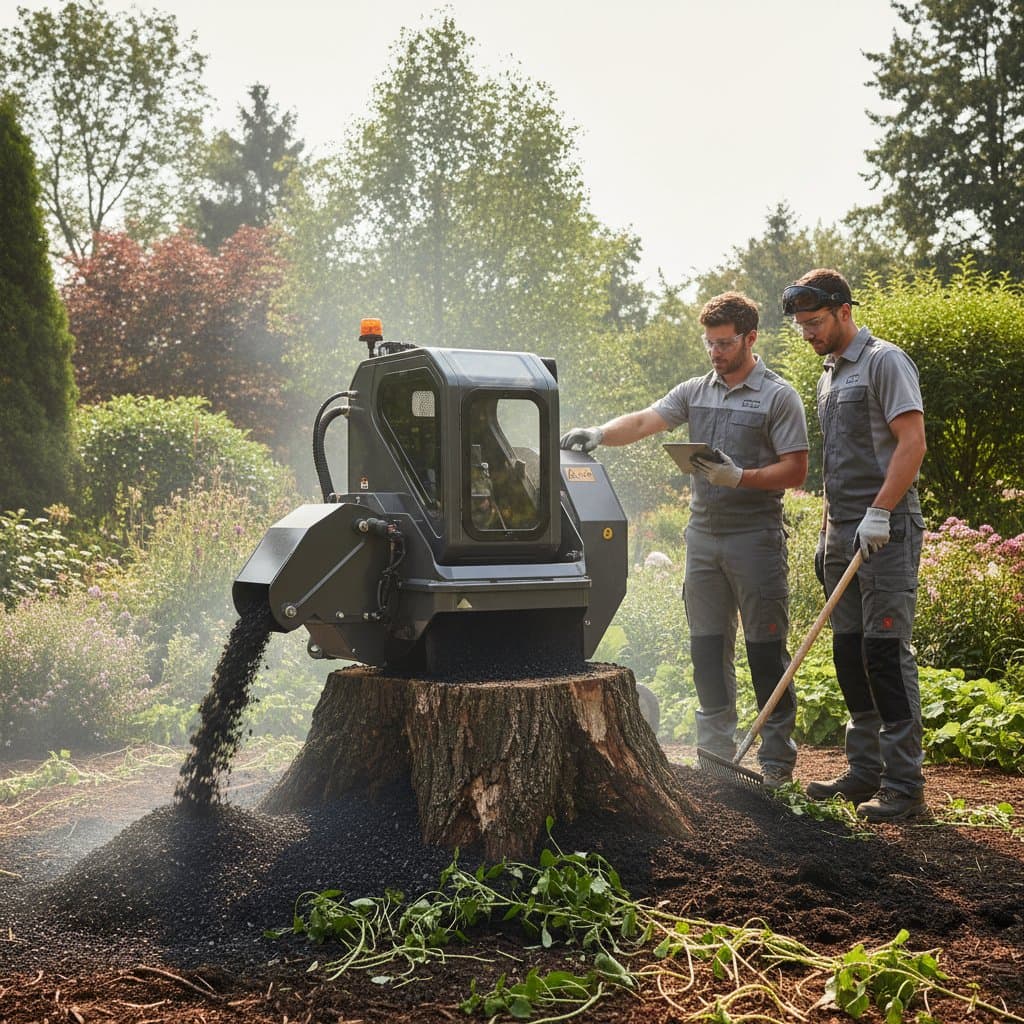
Enhance Your Landscape: Biochar Stump Grinding for Soil Enrichment
Healthy soil forms the base of any vibrant landscape. After tree removal, the leftover stump can hinder new plantings or detract from the yard's appearance. Standard stump grinding addresses the visible issue, yet biochar stump grinding elevates the process by improving the underlying soil. This approach turns wood waste into a durable amendment that supports long-term environmental health.
Homeowners gain multiple advantages from this technique. It reduces landfill contributions and enhances nutrient availability. The following sections detail the process, expenses, and implementation strategies to help you integrate biochar effectively.
Biochar Stump Grinding Expenses
Average Costs Across the United States
Biochar stump grinding generally ranges from 75 to 300 dollars per stump, influenced by dimensions and location. This pricing aligns closely with conventional grinding rates, yet it incorporates the value of producing biochar as a soil enhancer. The additional step justifies the investment through sustained benefits to soil quality.
Pricing Based on Stump Dimensions and Species
- Stumps smaller than 12 inches in diameter: 75 to 150 dollars
- Stumps between 12 and 24 inches: 150 to 225 dollars
- Stumps larger than 24 inches: 225 to 300 dollars or higher
The type of tree impacts expenses, as dense hardwoods such as oak or maple demand more processing time compared to softer varieties like pine or birch. Professionals account for these factors to provide accurate estimates.
Factors Influencing Total Costs
Several elements determine the final price. Stump diameter and root system depth extend grinding duration. Dense wood species accelerate equipment wear and increase operational time.
Accessibility plays a key role; confined areas or uneven terrain necessitate advanced tools. The biochar conversion process adds time for heating and handling. Cleanup and material transport, if required, further adjust the quote.
Understanding Biochar and Its Soil Benefits
Biochar consists of carbon-rich materialorganic substances like wood in limited oxygen. Unlike everyday charcoal, this form suits agricultural applications. When incorporated into soil, it enhances nutrient holding capacity, improves water retention, and fosters microbial communities.
This material also sequesters carbon for extended periods, aiding climate efforts. In stump grinding contexts, professionals process the wood chips into biochar, transforming potential waste into a resource. The result decreases reliance on synthetic fertilizers and promotes resilient landscapes.
Methods for Biochar Stump Grinding
On-Site Production
Professionals grind the stump into chips and then pyrolyze them directly at the location using controlled low-oxygen heating. This keeps all materials on the property and allows immediate application.
Advantages
- Direct integration into local soil
- Eliminates debris transport
- Supports zero-waste practices
Disadvantages
- Demands specific pyrolysis units
- Extends on-site project time
Off-Site Processing
Contractors gather the grindings and transport them to a dedicated facility for biochar conversion. The processed material returns for soil incorporation or alternative uses.
Advantages
- Maintains a tidy work area
- Avoids on-site emissions
- Ensures uniform biochar standards
Disadvantages
- Involves shipping fees
- Postpones amendment application
Combined On-Site and Off-Site Strategy
This option processes a portion of the material locally while sending the remainder to a facility. It suits varied site conditions and budget considerations.
Advantages
- Optimizes expenses and efficiency
- Maintains oversight on quality
- Minimizes overall environmental impact
Disadvantages
- Requires service coordination
- Potential for scheduling overlaps
Professional Services Versus Self-Performed Work
Attempting biochar stump grinding independently poses significant challenges. Renting basic grinders proves feasible for surface removal, but pyrolysis demands precise temperature management and safety measures. Homeowners risk inconsistent results or hazards without proper setup.
Benefits of Self-Performance
- Reduced initial expenses
- Schedule adaptability
Drawbacks of Self-Performance
- Exposure to fire and inhalation risks
- Variable biochar effectiveness
- Risk to nearby vegetation
Advantages of Professional Involvement
- Access to calibrated equipment
- Reliable, superior biochar output
- Efficient completion without strain
Certified arborists or soil specialists provide expertise that yields optimal outcomes. They ensure compliance with safety standards and maximize soil improvements.
Steps to Integrate Biochar Post-Grinding
-
Process the Stump Thoroughly
Engage experts to reduce the stump to 6 to 12 inches below ground level. Collect all chips for subsequent conversion. -
Produce the Biochar
Heat the wood particles in an oxygen-restricted setting to form stable carbon structures. This step stabilizes the material for soil use. -
Blend with Organic Materials
Mix the fresh biochar with compost to charge it with nutrients. Unactivated biochar might initially bind soil elements, so this preparation enhances immediate efficacy. -
Distribute into the Soil Profile
Apply the blend uniformly over the former stump site. Till it into the upper 6 to 8 inches to promote root access and water flow.
Strategies for Eco-Friendly Stump Management
Schedule tree removals with biochar options in mind to avoid standard waste disposal. Conduct a soil analysis beforehand to tailor application rates and address specific deficiencies.
Source biochar from nearby operations when on-site methods prove impractical, thereby cutting transport-related emissions. Pair it with natural additives like mulch to stimulate soil biology.
Apply biochar judiciously to prevent pH shifts in delicate ecosystems. Monitor plant vitality and adjust usage based on observed responses.
Common Questions on Biochar Stump Grinding
In What Ways Does Biochar Stump Grinding Surpass Traditional Methods?
Biochar processing refines stump wood into a soil conditioner that captures carbon, unlike standard grinding which yields basic mulch. This upgrade fosters fertility and sustainability over mere removal.
Does Biochar Suit Every Plant Variety?
Biochar proves compatible with most species by aiding aeration and nutrient storage. For plants preferring acidic conditions, such as rhododendrons, combine it with pH-neutralizing organics.
Can Biochar Remedy Compacted or Nutrient-Deficient Soil?
It excels in such scenarios by breaking up clay particles, bolstering sandy retention, and nurturing microbes that rebuild soil integrity.
Does Biochar Eliminate Fertilizer Requirements?
It optimizes nutrient efficiency but complements rather than replaces fertilizers. Over time, it lessens overall application needs within integrated soil care.
What Is the Durability of Biochar in Soil?
Biochar persists for hundreds of years, offering enduring support to soil functions and vegetation.
Implement Biochar for Lasting Soil Gains
Biochar stump grinding redefines stump management as a pathway to enriched terrain. Collaborate with knowledgeable professionals to execute the process seamlessly. This choice not only clears space but also invests in enduring ecological advantages.