
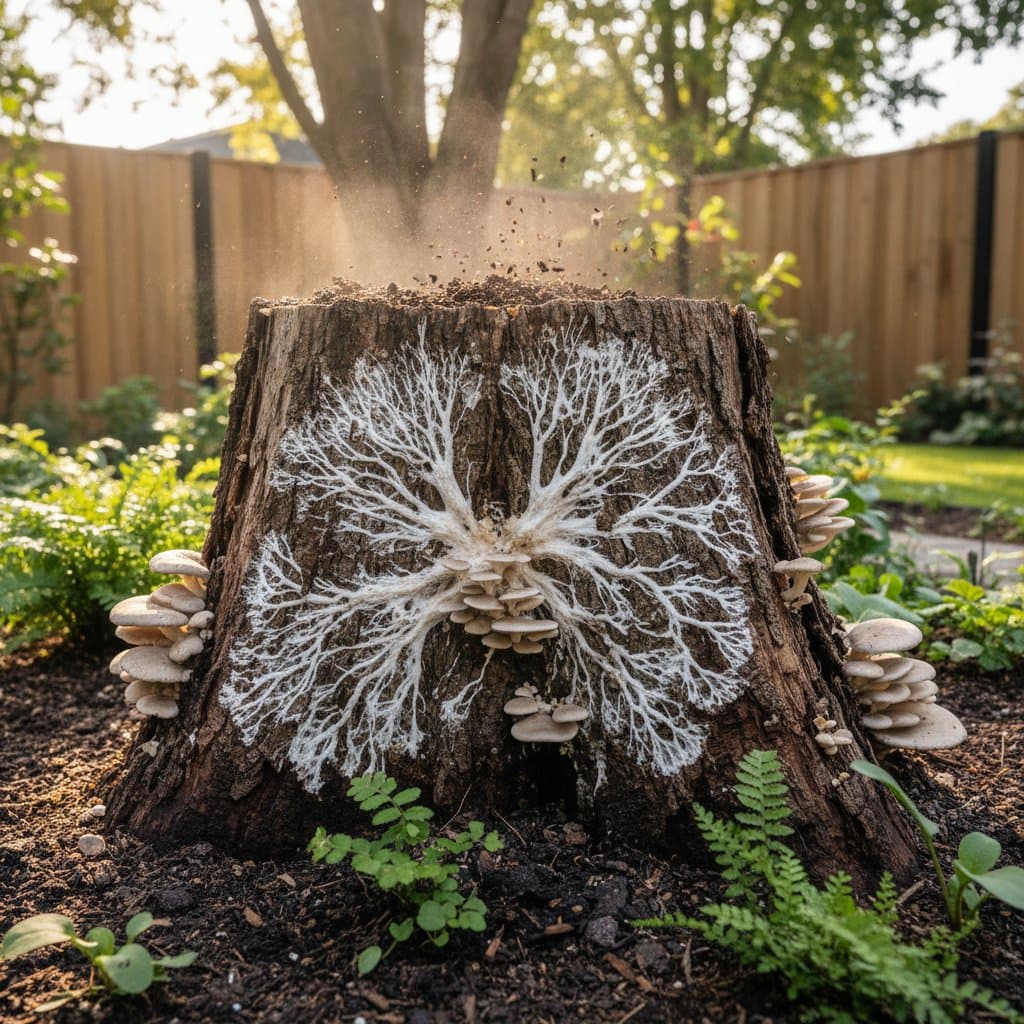
Viral Mycelium Hack Decomposes Stumps in 90 Days Naturally
Homeowners often encounter the frustration of leftover tree stumps that disrupt lawns and gardens. These remnants resist simple removal and demand effective solutions. Traditional approaches, such as mechanical grinding or chemical treatments, involve high costs, significant noise, and potential environmental damage. An emerging natural alternative, the mycelium stump removal method, leverages fungal networks to break down wood efficiently and sustainably, typically within three months. This guide details the process, associated expenses, and practical steps for implementation.
Understanding Mycelium in Stump Removal
Mycelium consists of the thread-like filaments that form the vegetative part of fungi, spreading through soil and organic matter. In the context of stump removal, these networks function as biological decomposers by targeting the cellulose and lignin components of wood. Introduced to a stump, mycelium penetrates the material, accelerating decay into fertile soil that enriches the surrounding area. This technique replicates natural forest processes where fungi contribute to nutrient cycling, offering a silent, non-toxic alternative to invasive methods.
Cost Breakdown for Mycelium Stump Removal
The expense for mycelium-based stump decomposition generally falls between $50 and $250, influenced by factors like stump dimensions and fungal variety. This range proves more economical than professional grinding, which averages $150 to $450 per stump. Effective application not only reduces financial outlay but also enhances soil quality through organic breakdown.
| Stump Size | Typical Cost Range |
|---|---|
| Small (under 12 inches diameter) | $50 - $100 |
| Medium (12 - 24 inches diameter) | $100 - $175 |
| Large (over 24 inches diameter) | $175 - $250 |
Key Influences on Mycelium Decomposition Expenses
Wood Type
Dense hardwoods, including oak and maple, demand more robust fungal strains due to their resistance to breakdown. Softwoods like pine or poplar decompose more readily, often requiring less material and time for complete results.
Dimensions and Root Structure
Stumps with greater volume necessitate additional spawn and extended timelines. Those with extensive shallow roots allow mycelium to propagate swiftly, while deep-rooted systems may prolong the effort.
Environmental Conditions
Fungi flourish in humid, shaded environments. Arid or compacted soils hinder progress, so regular irrigation and mulching prove essential to sustain optimal conditions.
Fungal Selection
Varieties such as oyster mushrooms (Pleurotus ostreatus) or turkey tail (Trametes versicolor) excel in wood degradation. These choices impact both the pace of decay and potential secondary benefits, like the emergence of harvestable mushrooms.
Preparation Techniques
Thorough drilling and precise spawn insertion promote uniform colonization. Inadequate setup risks patchy results, extending the overall duration.
Regional Weather Patterns
Temperate, moist climates accelerate growth, whereas arid zones require supplemental watering and protective covers to mimic favorable settings.
Step-by-Step Guide to Mycelium Stump Decomposition
-
Evaluate the Stump
Begin by measuring the stump's diameter and assessing the tree species. Clear away loose bark, soil, and debris to reveal fresh wood, which facilitates initial fungal attachment. -
Prepare Access Points
Employ a power drill to bore holes, each one inch in diameter and three to four inches deep, spaced evenly across the top surface and sides. This preparation maximizes exposure for mycelium entry. -
Apply Fungal Inoculant
Place pre-grown fungal plugs into the holes or pack them with a mixture of mycelium spawn and moist sawdust. Seal the area with a two-inch layer of organic mulch or straw to retain humidity and suppress competing weeds. -
Sustain Hydration
Irrigate the site deeply every two to three days, ensuring the stump remains consistently damp without waterlogging. This moisture supports mycelial expansion and enzymatic activity on the wood. -
Observe Progress
Within two to four weeks, visible white threads indicate active colonization. As decomposition advances, the wood softens; gently probe with a tool to gauge softening levels periodically. -
Complete the Transformation
By the 90-day mark, the stump typically crumbles into friable matter. Excavate the softened remains manually or integrate them directly into the soil as a natural amendment.
Deciding Between DIY and Professional Assistance
Ideal Scenarios for DIY Efforts
Opt for a hands-on approach with smaller stumps under 24 inches, where personal oversight of watering and monitoring aligns with your schedule. This method suits those committed to organic practices and willing to invest initial time.
Benefits of Professional Services
Engage experts for oversized or strategically located stumps, especially near foundations or utilities. Specialists select optimal fungi, ensure thorough inoculation, and may incorporate hybrid techniques for expedited outcomes while preserving landscape integrity.
Professionals frequently blend mycelium with minor mechanical aids or soil enhancements, delivering reliable results with minimal disruption.
Selecting a Reliable Fungal Decomposition Provider
-
Verify Qualifications
Seek providers certified in arboriculture or mycology, with demonstrated expertise in bio-decomposition techniques. -
Review Past Work
Examine client testimonials, project images, and case studies to evaluate the efficacy of their fungal applications. -
Obtain Quotes
Solicit itemized proposals covering spawn costs, labor, and monitoring schedules from at least three services. -
Assess Coverage
Confirm possession of appropriate licenses and comprehensive insurance to protect against unforeseen issues. -
Secure Agreements
Document all specifics, including timelines, fungal types, and performance expectations, in a formal contract.
Common Questions on Mycelium Stump Removal
How Much Does It Cost to Remove a 50-Foot Pine Tree Stump Naturally?
For a stump from a 50-foot pine, expect costs of $175 to $250, based on diameter and root extent. This natural process remains more affordable than mechanical alternatives like grinding or digging.
Is Grinding Faster Than Mycelium Decomposition?
Grinding achieves removal in hours through physical force, but it disrupts soil and requires heavy equipment. Mycelium offers a slower yet gentler path, preserving ecosystem balance over 90 days.
What Fungi Perform Best for Stump Breakdown?
Oyster mushrooms and turkey tail fungi lead in efficiency, rapidly targeting lignin-rich wood. Select strains suited to your local climate for optimal colonization.
Does This Method Attract Pests?
Mycelium decomposition rarely draws insects or rodents, as it focuses on internal wood decay. Monitor for unusual activity and maintain mulch covers to deter surface intruders.
Can Planting Resume in the Treated Area Post-Decomposition?
Yes, once the stump fully integrates into the soil, the nutrient-boosted site supports new plantings. Allow two to four weeks for settling before sowing seeds or transplanting.
Integrate Mycelium into Your Landscape Strategy
Adopting mycelium for stump removal transforms a persistent problem into an opportunity for soil regeneration. This approach not only cuts costs and avoids chemicals but also fosters a healthier yard ecosystem. Start with a site assessment today to harness nature's decomposers effectively, yielding a restored space ready for future growth.