
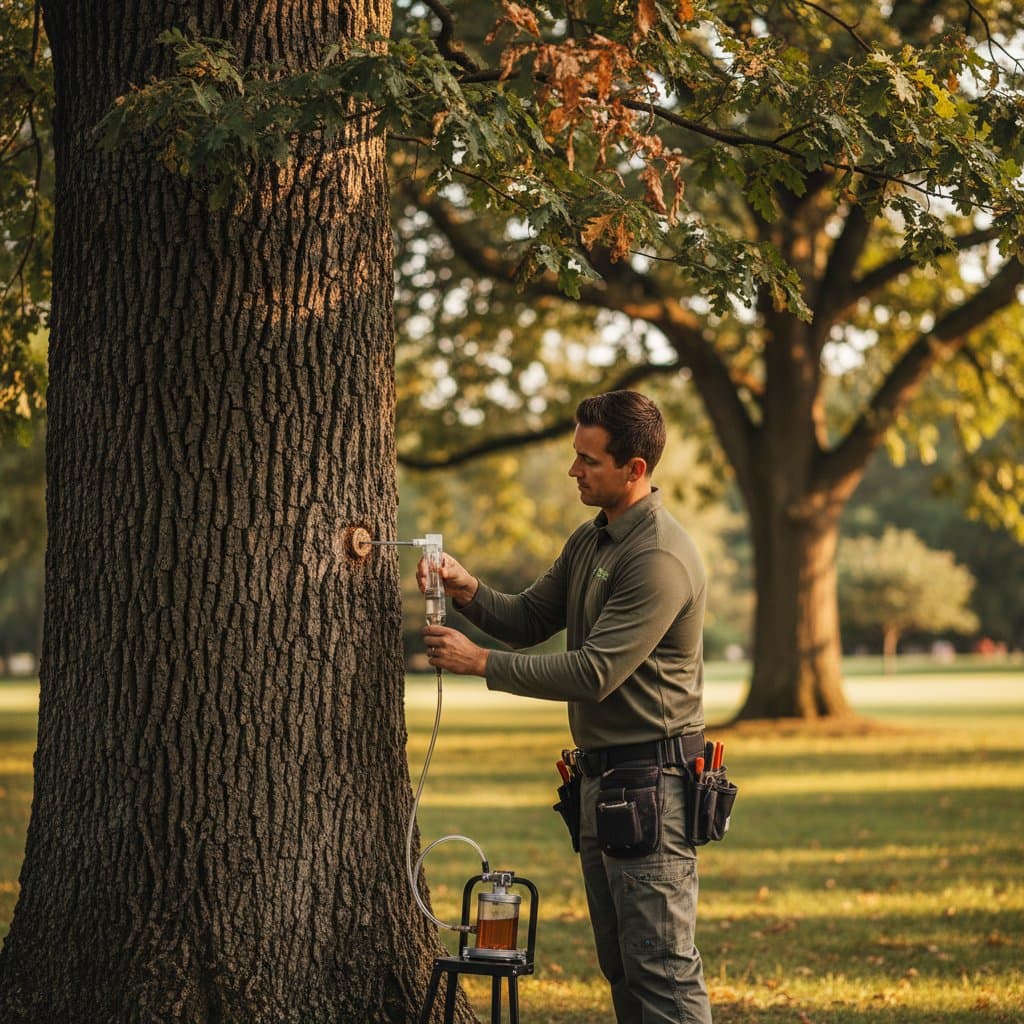
Halt Oak Wilt Rapidly: Bio-Fungicide Trunk Injections Explained
Homeowners notice distress in cherished oaks and immediately worry about irreversible damage. Oak wilt ranks among the most aggressive tree diseases, capable of felling robust mature specimens without timely response. Fortunately, bio-fungicide trunk injections serve as a proven, swift intervention to arrest the disease and preserve tree vitality. This article outlines the mechanics of trunk injection therapy, treatment expectations, and strategies to shield trees from subsequent threats.
Understanding Oak Wilt
Oak wilt arises from a fungal pathogen that invades the tree's vascular network, obstructing water and nutrient transport. The culprit, Bretziella fagacearum, propagates via interconnected roots or sap-feeding beetles. Symptoms manifest as leaf wilting, edge browning, and early defoliation. Red oaks succumb in mere weeks without action, whereas white oaks endure longer yet remain vulnerable to eventual mortality.
Early detection proves vital, as arborists identify infection through vein browning in leaves or distinctive mat formation under bark. The disease spreads efficiently in spring and fall, exploiting beetle vectors or root contacts between trees. Homeowners spot initial signs like canopy thinning or branch dieback, prompting urgent professional evaluation to contain spread.
Treatment Costs for Oak Wilt
Bio-fungicide trunk injections for oak wilt typically cost between $250 and $700 per tree, varying by dimensions and health status. Preventive applications on uninfected trees often prove more economical than remedial efforts on symptomatic ones. These figures encompass initial assessment, injection execution, materials, and subsequent monitoring.
| Tree Size | Average Cost Range |
|---|---|
| Small Oak (under 20 ft) | $150 - $300 |
| Medium Oak (20-40 ft) | $300 - $500 |
| Large Oak (over 40 ft) | $500 - $900 |
Budget for potential add-ons, such as soil testing or adjacent tree treatments, to address broader infection risks.
Key Factors Influencing Oak Wilt Treatment Expenses
Tree Dimensions
Greater height and girth demand increased fungicide volumes and more injection sites, extending labor and resource demands. Compact oaks allow straightforward access, minimizing overall expenditure. Arborists measure diameter at breast height to gauge precise needs accurately.
Health Status
Vigorous trees receive preventive doses in one session, streamlining costs. Symptomatic cases necessitate repeated applications or progress checks, elevating fees. Severe infections may require complementary therapies, such as root barrier installation, to curb underground transmission.
Species Variation
Red oaks demand immediate, intensive protocols due to their acute susceptibility. White oaks permit slightly extended timelines, potentially reducing urgency premiums. Tailored fungicide concentrations align with each species' resilience profile for optimal efficacy.
Site and Access Challenges
Isolated or urban settings involve extra travel or equipment for safe navigation around obstacles. Proximity to buildings or utilities complicates drilling and injection, often incurring specialized handling charges. Permits in regulated areas add administrative layers to the process.
Seasonal Timing
Optimal injections occur during peak sap flow in spring or early summer, enhancing fungicide distribution. Off-season efforts risk diminished absorption, possibly requiring rescheduling or boosters. Plan ahead to align with these windows for cost efficiency and results.
Response Urgency
Rapidly worsening conditions trigger priority scheduling with associated surcharges. Proximity to other oaks heightens the need for swift isolation measures. Delaying action amplifies expenses through escalated damage control.
Executing Bio-Fungicide Trunk Injections
Arborists follow a meticulous protocol to deliver treatment directly into the tree's circulatory system without undue stress.
-
Initial Evaluation and Confirmation
Certified specialists examine foliage, bark, and roots to verify oak wilt presence. They assess infection extent and scan neighboring trees for contagion risks. Diagnostic tools, including sample analysis, confirm the pathogen before proceeding. -
Site Preparation
The trunk base receives thorough cleaning to eliminate debris. Arborists drill shallow, evenly spaced ports at calculated intervals based on trunk diameter. This setup ensures uniform fungicide uptake while preserving structural integrity. -
Fungicide Administration
A specialized bio-fungicide, formulated for systemic action, injects at controlled pressure through the ports. The solution travels upward via sap flow, targeting fungal blockages precisely. Low-volume delivery prevents tissue disruption and promotes natural recovery. -
Port Sealing and Cleanup
Injected sites seal with tree-friendly plugs or sealants to block secondary infections. Surrounding soil restores to avoid erosion or pest attraction. Professionals document the procedure for ongoing reference. -
Post-Treatment Observation
Follow-up visits track symptom regression and vascular function. Arborists advise on watering, mulching, and pruning to support healing. Early detection of complications allows timely adjustments.
Weighing DIY Approaches Against Professional Services
Scenarios for Homeowner Involvement
Preventive care on diminutive, healthy saplings suits capable individuals with basic tools. Acquire approved bio-fungicides from reputable suppliers and adhere to label dosages strictly. Consult extension services for technique tutorials to sidestep errors.
Necessity of Expert Intervention
Mature trees or confirmed infections demand certified arborists' expertise. Professionals wield advanced diagnostics, regulated products, and compliance knowledge essential for success. Mishandled injections risk further harm or regulatory violations.
Selecting a Reliable Arborist for Oak Wilt Management
-
Confirm Qualifications and Coverage
Seek International Society of Arboriculture certification and proven oak wilt experience. Verify liability insurance protects against treatment mishaps. -
Inquire on Treatment Agents
Ensure the chosen bio-fungicide holds EPA approval specifically for oak wilt suppression. Request details on formulation and application methods. -
Obtain Comprehensive Quotes
Demand itemized estimates covering evaluation, execution, materials, and monitoring phases. -
Gather Community Insights
Solicit referrals from local networks or online forums detailing treatment outcomes and reliability. -
Plan Routine Maintenance
Integrate annual inspections and preventive injections into landscape care schedules.
Common Queries on Oak Wilt Interventions
What is the expense for a 50-foot oak?
Treatment for a 50-foot specimen falls between $500 and $900, influenced by site access and disease severity.
Does removal cost less than treatment?
Injections generally prove more affordable than excision, factoring in disposal, grinding, and replacement expenses. Retaining the tree maintains aesthetic and ecological benefits.
When should injections occur?
Active growth phases, typically spring through early summer, maximize fungicide circulation.
Can insurance offset treatment costs?
Standard policies exclude disease therapies, though hazard-related removals may qualify under certain conditions.
Sustaining Oak Vitality Long-Term
Implement root barriers to sever potential grafts between susceptible trees. Foster soil health with organic amendments and consistent irrigation to bolster natural defenses. Engage in seasonal monitoring to catch threats early, ensuring oaks thrive amid environmental pressures. Professional partnerships yield enduring landscapes free from wilt's grasp.