
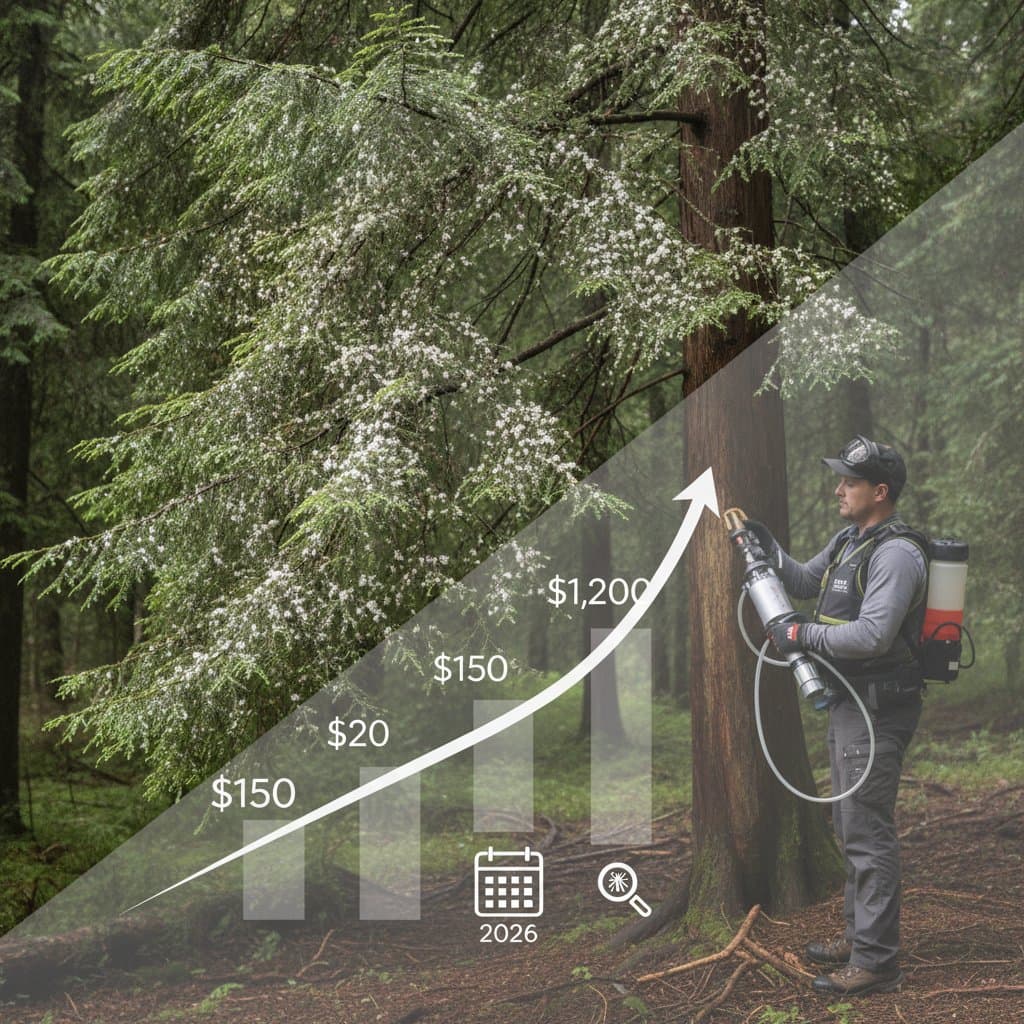
Hemlock Woolly Adelgid Spread Sends Treatment Costs Soaring
Homeowners across many regions face a growing challenge as the hemlock woolly adelgid continues its rapid spread. This tiny sap sucking insect ranks among the most destructive pests of hemlock trees. It creates widespread infestations that prove both costly and difficult to control. As more trees become affected, treatment expenses climb and leave property owners seeking practical ways to protect their landscapes.
What is the Hemlock Woolly Adelgid?
The hemlock woolly adelgid is a small invasive insect that feeds on sap at the base of hemlock needles. It appears as tiny white cotton like masses on the undersides of branches. While each insect remains barely visible, large populations drain nutrients and block new growth. Infested hemlocks lose needles, weaken over time, and die without treatment.
Average Hemlock Woolly Adelgid Treatment Costs
Treatment costs for a hemlock tree typically range from 150 to 1200 dollars per tree. The final price depends on treatment method, tree size, and infestation severity. Most homeowners spend around 450 dollars per tree for professional chemical or systemic treatments.
| Tree Size | Average Treatment Cost Range |
|---|---|
| Small Tree (under 30 ft) | 150 to 300 dollars |
| Medium Tree (30 to 60 ft) | 350 to 700 dollars |
| Large Tree (over 60 ft) | 800 to 1200 dollars |
These figures reflect professional applications such as soil drenches, trunk injections, or foliar sprays. Costs increase when multiple trees require treatment or when repeat applications become necessary every few years.
Factors Affecting Treatment Costs
Tree Size
Larger hemlocks need more pesticide volume, which raises material and labor expenses. Tall trees often require specialized spraying equipment along with added safety protocols for technicians.
Tree Condition
Heavy infestations or visible dieback may call for repeat treatments and higher doses. Severely stressed trees benefit from follow up care that includes watering, mulching, and fertilization to support recovery.
Tree Species
The pest targets Eastern and Carolina hemlocks most aggressively. Some hybrid varieties show partial resistance, which can influence both the treatment approach and the number of required applications.
Location and Accessibility
Trees on steep slopes or near buildings demand extra equipment and time. Urban sites with restricted access frequently incur higher service fees.
Time of Year
Prices vary with seasonal demand. Spring and early summer represent peak treatment periods, and scheduling during these months can elevate costs due to service backlogs.
Urgency
Emergency service for rapidly declining trees carries premium rates. Rush fees apply when immediate action is needed to limit tree loss or further pest spread.
The Treatment Process
-
Inspection and Assessment
A certified arborist examines each tree for white woolly masses, needle loss, and branch thinning. -
Treatment Recommendation and Estimate
The arborist supplies a written quote that outlines systemic insecticides, foliar sprays, or biological controls suited to the site. -
Permitting if Required
Local environmental rules may restrict certain chemicals near water. The service provider secures any necessary approvals before work begins. -
Application
The selected product is delivered through soil injection or trunk treatment so the active ingredient moves through the vascular system and reaches feeding insects. -
Follow Up and Maintenance
Technicians monitor treated trees for several months. Additional visits are scheduled when infestation pressure remains high.
DIY versus Professional Treatment
Homeowners may apply horticultural oil or insecticidal soap to small trees under 15 feet with light infestations. This option works only when ground access is easy and label directions are followed exactly. Protective gear is required at every step.
Professional treatment remains the safer choice for most properties. Larger trees need specialized equipment for thorough coverage, and systemic products must be applied by licensed applicators. Professionals also identify secondary issues such as fungal infections that could slow recovery.
How to Select a Tree Service
- Verify that the company employs certified arborists and maintains current liability insurance.
- Request local references and examples of completed adelgid projects.
- Obtain at least three written estimates that detail methods, frequency, and warranties.
- Confirm all contract terms in writing, including follow up visits and any guarantees.
- Inquire about biological controls or reduced toxicity options that limit impact on beneficial insects.
Frequently Asked Questions
How much does it cost to treat a 50 foot hemlock?
A 50 foot tree usually requires between 400 and 700 dollars for professional treatment. The exact amount depends on the chosen method and whether neighboring trees also need service.
Is it cheaper to remove a hemlock than to treat it?
Removal of a large hemlock often exceeds 1500 dollars. Early treatment preserves the tree at a lower total cost and avoids the expense of replacement.
What time of year is best for adelgid treatment?
Late fall or very early spring provides the most effective control window. Treatments applied during these periods allow the product to move through the tree before peak insect activity resumes.
Does homeowners insurance cover adelgid damage?
Most policies exclude coverage for insect damage because infestations are viewed as a preventable maintenance issue rather than a sudden peril.
Safeguard Your Landscape Investment
Timely professional intervention can rescue infested hemlocks and protect property values. Partnering with a qualified arborist delivers the most reliable path to long term tree health and avoids the higher costs of removal or replacement.