
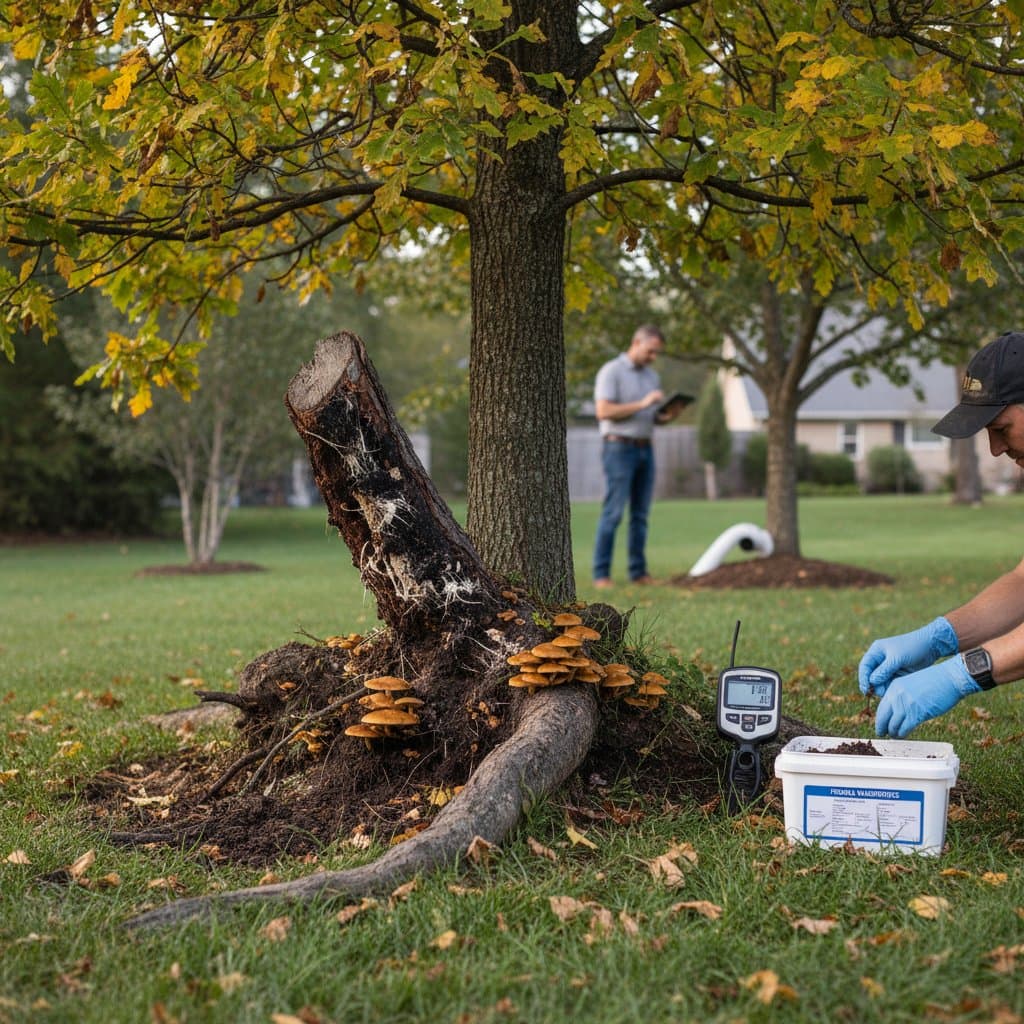
Detect Root Rot Early to Protect Your Landscape
Root rot destroys landscapes silently, targeting roots before surface symptoms appear. This fungal disease, frequently triggered by pathogens like Armillaria, compromises tree stability, results in branch dieback, and threatens entire yard sections. Early identification saves trees and halts further damage.
This resource details recognition of initial symptoms, underlying causes, and swift interventions to secure your outdoor space.
Understanding Root Rot and Its Impact
Root rot occurs when fungi invade the root systems of trees and shrubs. These organisms flourish in waterlogged, poorly drained soil, disrupting water and nutrient uptake. Consequences include leaf discoloration, canopy thinning, and plant mortality.
Armillaria mellea, known as honey fungus, stands out as a primary aggressor. It propagates via root connections or rhizomorphs, shoestring-like extensions that traverse soil to infect vulnerable hosts. Prompt recognition determines whether a tree survives.
Recognizing Symptoms of Root Rot
Early detection demands vigilant monitoring, as surface signs often mimic other issues like water scarcity or poor nutrition.
Surface-Level Signs
- Leaves that yellow or wilt despite sufficient irrigation
- Abrupt branch death or sparse foliage
- Stunted growth or undersized leaves
- Sap leakage or dark exudate at the trunk base
- Fungal mushrooms or growths encircling the trunk in damp areas
Root-Level Signs
- Roots that feel soft and disintegrate readily
- Roots showing blackening or emitting a rotten odor
- White, fan-shaped mycelial sheets beneath bark at the root crown, indicative of Armillaria
Multiple indicators signal advanced compromise. Immediate response limits progression.
Primary Causes and Contributing Factors
Environmental conditions and care practices foster root rot development. Awareness enables risk mitigation.
- Inadequate soil drainage or compaction that retains moisture
- Excessive irrigation maintaining perpetual soil wetness
- Introduction of contaminated plants from nurseries
- Root damage from excavation or building activities
- Soil densification due to foot traffic or equipment
Optimal drainage and watering routines form essential barriers.
Common Root Rot Pathogens
Various fungi induce root rot in home settings, each with distinct traits yet comparable root harm.
Armillaria Root Rot
This variant devastates trees most severely, transmitting through roots and persisting dormant in soil for extended periods.
Early identification benefits include targeted remedies prior to major harm and containment to avoid adjacent infections. Challenges involve eradication difficulties post-establishment and potential need for tree excision plus soil decontamination.
Phytophthora Root Rot
Prevalent in decorative shrubs and fruit trees, Phytophthora favors persistently moist environments.
Advantages of early action encompass control via enhanced drainage and fungicides, plus straightforward prevention through watering adjustments. Drawbacks feature rapid dissemination in flooded soil and initial confusion with nutritional shortfalls.
Pythium Root Rot
This pathogen targets turf and low-growing plants, eroding fine roots and producing irregular patches of decline.
Positive aspects involve responsiveness to aeration and moderated watering, with confinement to shallow roots typically. Limitations include swift expansion in low-drainage zones and subsurface weakening preceding observable effects.
Assessing DIY Efforts Versus Professional Assistance
Suspected root rot prompts urges to excavate roots, yet such actions risk additional injury.
Homeowners handle prevention basics effectively:
- Tracking soil dampness levels
- Enhancing site drainage
- Mulching appropriately without trunk contact
- Removing compromised branches
Limitations arise in precise fungal diagnosis, which necessitates laboratory analysis or expert evaluation. Errors waste resources and endanger trees.
Professionals, including certified arborists and pathologists, provide:
- Precise diagnostics via root and soil examinations
- Customized strategies employing fungicides or biocontrols
- Advice on replanting post-removal
Engage experts for multi-tree symptoms, proximity to buildings, or high-value trees.
Strategies for Early Root Rot Detection
Proactive surveillance combines visual checks, tests, and safeguards.
- Conduct routine yard inspections biweekly, scanning for foliage changes or basal fungi.
- Excavate modestly near roots; sour scents or persistent sogginess flag drainage problems.
- Examine roots for firmness and color; mushy, darkened, or fibrous textures indicate decay.
- Employ a soil moisture gauge to detect chronic saturation.
- Submit root and soil specimens to extension services or arborists for confirmation.
Prevention Measures for Root Rot
Establish robust practices to deter fungal incursions.
- Irrigate thoroughly yet sparingly to promote deep rooting.
- Aerate dense soil and adjust slopes for better runoff.
- Steer clear of mulch volcanoes that retain trunk moisture.
- Excise and dispose of diseased material promptly.
- Select tree varieties resilient to local soil types.
Vigorous roots rely on equilibrated hydration and aerated earth.
Frequently Asked Questions
How rapidly does root rot progress to tree death?
Progression spans months to years, influenced by moisture levels, pathogen strain, and plant vigor. Surface symptoms often reveal substantial prior underground deterioration.
Does root rot transmit between trees?
Affirmative. Pathogens disseminate via soil, irrigation, or root proximity. Armillaria notably expands subsurface to nearby specimens.
Can a tree recover from root rot?
Initial infections yield to drainage corrections, selective root pruning, and fungicide applications. Severe instances demand extraction.
What steps follow discovery of mushrooms near a tree?
Mushrooms signal potential fungal activity. Avoid disturbance; inspect for other symptoms and consult an arborist for soil testing and treatment options.
How does one avert root rot in newly planted trees?
Prioritize site preparation with drainage assessments, plant in elevated beds if needed, water judiciously during establishment, and monitor for stress indicators regularly.
Sustaining a Resilient Yard
Implement these insights to fortify your trees against hidden threats. Consistent care ensures enduring vitality and aesthetic appeal in your landscape.