
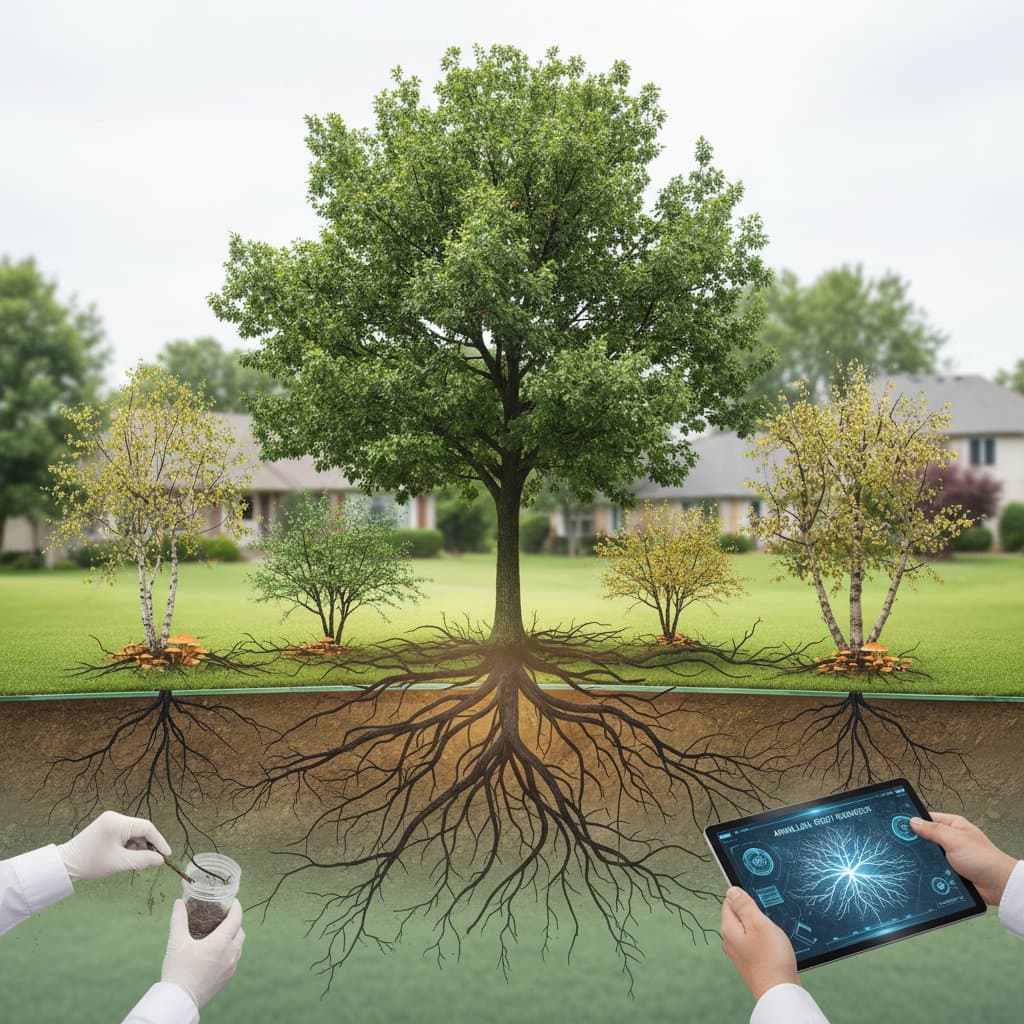
Detect Armillaria Root Rot Early: Test Your Suburban Trees Now
Armillaria root rot ranks among the most damaging diseases in suburban settings. This soil-borne fungus targets roots of healthy and stressed trees alike. Infected trees decline gradually, displaying yellowed foliage, sparse canopies, and branch dieback. Without intervention, the pathogen spreads underground to adjacent plants, underscoring the need for timely testing and expert diagnosis.
The fungus persists in soil for decades, propagating via root contacts or decaying timber. Suburban properties face heightened vulnerability as the disease advances unseen under turf, barriers, and pavements. Knowledge of its origins, recognition methods, and control measures empowers homeowners to shield trees and sustain landscape value.
Understanding Armillaria Root Rot
Armillaria root rot, also known as honey fungus, assaults root systems of trees and shrubs. Species within the Armillaria genus infect diverse hosts. It flourishes in damp soils and disperses via rhizomorphs, dark strands resembling roots.
Upon contacting roots, the fungus decays woody tissues, disrupting water and nutrient flow. This results in canopy sparsity, limb death, and ultimate tree failure. Its persistence in soil post-removal poses ongoing threats to replacements.
Factors Driving Armillaria Spread
Environmental and site conditions dictate the pace and intensity of Armillaria progression. Homeowners can mitigate risks by addressing these elements proactively.
- Soil Moisture Levels: The fungus favors waterlogged or dense soils that retain moisture near roots. Excess irrigation or leaks foster its development.
- Tree Vulnerability: Drought, mechanical injury, or concurrent illnesses weaken defenses, inviting attack.
- Planting Proximity: Close groupings enable rapid transmission through interlocking roots.
- Lingering Debris: Retained stumps and subsurface roots supply sustenance, prolonging viability.
- Microclimate Effects: Shaded, cooler spots, particularly under heavy mulch or foliage, enhance survival.
Enhance site conditions through better drainage, adequate spacing, and thorough stump extraction to curb advancement.
Recognizing Armillaria Infection Signs
Subsurface onset complicates early spotting, yet surface cues signal potential trouble.
- Foliage Discoloration: Leaves yellow or brown progressively, shedding ahead of schedule.
- Canopy Decline: Upper branches thin and die as hydration falters.
- Basal Mushrooms: Honey-toned clusters emerge at trunk bases, signaling activity.
- Mycelial Growths: Peeling bark reveals white, fan-like mats at the root collar.
- Rhizomorph Networks: Black, shoelace-like forms extend along roots or soil.
- Bark Deterioration: Lower trunk bark sloughs off, baring rotted interiors.
Multiple indicators warrant professional evaluation. Diagnostic confirmation guides appropriate responses.
Diagnosing Armillaria Through Testing
Arborists employ systematic methods to verify infection and gauge severity. Lab analysis often confirms the pathogen.
- External Examination: Review for mushrooms, color shifts, and foliage loss.
- Root Exposure: Uncover the trunk base to inspect for fans or rot.
- Specimen Gathering: Collect bark, wood, or root portions for lab scrutiny.
- Soil Evaluation: Analyze for percolation and debris harboring spores.
- Health Assessment: Gauge stability to advise on preservation or excision.
Such processes prove cost-effective versus tree replacement expenses. Fees range from basic visual checks to comprehensive lab work.
Managing Armillaria Root Rot
Soil residency complicates eradication, yet targeted tactics can impede spread and safeguard neighbors.
- Expose Root Flares: Uncover bases to promote airflow and desiccation of affected areas.
- Enhance Drainage: Aerate soil and curb overwatering to starve the fungus.
- Install Barriers: Dig trenches to sever root connections between zones.
- Excavate Debris: Clear stumps, roots, and tainted earth to eliminate reservoirs.
- Apply Fungicides: Use protectants on at-risk trees, though efficacy wanes in advanced cases.
- Select Resilient Replacements: Opt for tolerant varieties like specific maples, birches, or pears post-removal.
Integrated approaches prolong asset longevity and minimize recurrence.
Weighing DIY Efforts Against Expert Help
Minor issues tempt self-handling, but Armillaria demands precision beyond lay capabilities.
DIY Constraints:
- Underground extent evades simple detection.
- Mishandled actions accelerate dissemination.
- Faulty identification squanders resources.
Professional Engagement Triggers:
- Presence of mushrooms, fans, or severe dieback.
- Symptoms across several trees.
- Involvement of mature or hazardous specimens.
- Requirement for testing or remediation.
Trained arborists deploy tools and protocols for secure, efficacious intervention, plus tailored prevention plans.
Selecting a Reliable Arborist
Credentials and transparency distinguish top providers.
- Professional Accreditation: Seek certification from esteemed bodies upholding scientific standards.
- Disease Expertise: Inquire about prior Armillaria cases.
- Protection Policies: Verify liability and employee coverage.
- Detailed Proposals: Demand itemized quotes covering diagnostics and plans.
- Regional Insight: Prioritize locals versed in area soils and weather.
Frequently Asked Questions
How Do I Know If Armillaria Has Spread to Nearby Trees?
Similar symptoms like thinning crowns, leaf changes, or basal fungi in adjacent plants suggest transmission. Expert surveys map infection scope.
Can Armillaria Infect Vigorous Trees?
Primarily, it exploits weaknesses, yet entrenched soil populations endanger even robust ones. Vigilance averts escalation.
Is Replanting Safe After Removing an Infected Tree?
Contaminated sites harbor risks. Excavate extensively, choose resistants, or employ soil treatments like solarization.
Which Trees Resist Armillaria Best?
Ginkgos, birches, and certain pears show tolerance over vulnerable oaks or pines. Consult locals for fits.
How Persistent Is Armillaria in Soil?
Decades-long survival occurs in remnants. Eradicate hosts and optimize drainage for control.
Do Fungicides Eliminate Armillaria?
They suppress rather than cure, shining in prophylaxis for uninfected proximates.
What If Armillaria Causes Tree Failure?
Summon urgent services for safe dismantling, followed by decontamination and renewal planning.
Strategies to Safeguard Against Armillaria Recurrence
Preventive vigilance fortifies landscapes. Maintain optimal watering to avoid saturation. Space plantings to limit root overlap. Monitor for early cues and act swiftly. With these habits, homeowners sustain thriving, resilient green spaces.