
Oak Wilt Spread Increases 300 Percent: Treatment Costs and Control Methods
Oak wilt ranks among the most destructive tree diseases in North America. Recent reports indicate its spread has increased by roughly 300 percent in many regions. The fungal infection can kill a mature oak within weeks and leave landscapes barren. Homeowners, arborists, and forest managers need clear information on spread patterns, effective treatments, and cost considerations to protect trees and property value.
This guide covers transmission methods, available treatment options, and practical steps that limit damage before an entire stand is lost.
Treatment Cost Overview
National Average Cost
Professional treatment for a single tree ranges from several hundred to several thousand dollars. Cost depends on tree size, number of affected trees, and stage of detection. Preventive measures such as fungicide injections or root trenching usually cost less than removal followed by replanting.
Cost by Project Size
- Single tree treatment often requires one fungicide injection or a short root barrier.
- Multiple tree treatment raises expense when root systems connect several oaks.
- Tree removal and replacement becomes the highest cost option for large mature specimens.
Main Cost Factors
Tree size and species affect price because larger red oaks are more susceptible. Early detection reduces expense while advanced infection frequently leads to removal. Labor, specialized equipment, regional demand, and the choice between preventive and reactive work also influence total cost.
Treatment Options
Fungicide Injections
Trunk injections with propiconazole move through the vascular system and block fungal spread in healthy trees near infected ones.
Pros:
- Effective preventive measure.
- Quick and minimally invasive application.
- Protection lasts several seasons.
Cons:
- Ineffective on severely infected trees.
- Requires professional equipment.
- Periodic reapplication is necessary.
Root Trenching
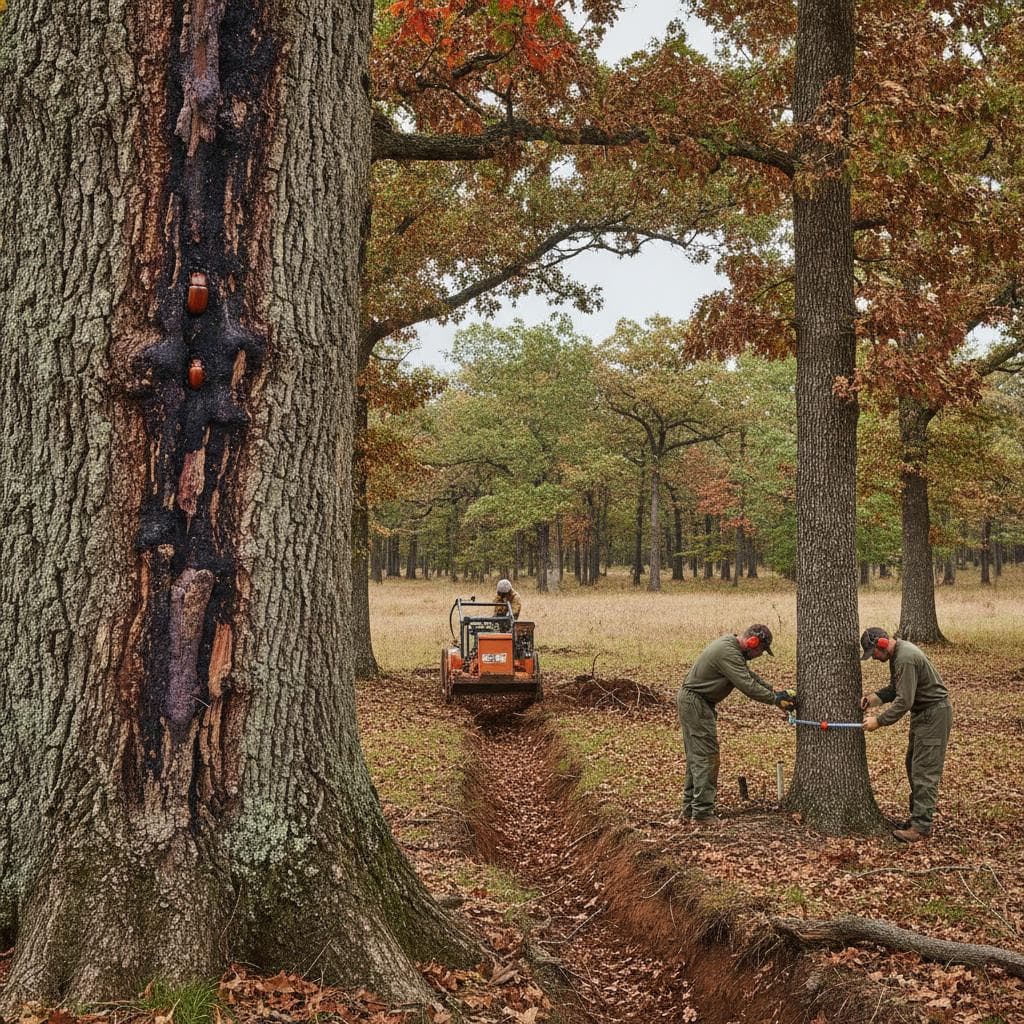
Root trenching installs a physical barrier that interrupts underground transmission between infected and healthy trees.
Pros:
- Stops root graft spread reliably.
- Provides long term separation.
- Suitable for clustered oak stands.
Cons:
- Labor intensive and costly.
- Risk of damage to nearby roots.
- Needs specialized machinery.
Tree Removal and Disposal
Infected trees that cannot be saved must be removed promptly to limit further spread through roots or beetles.
Pros:
- Eliminates the infection source.
- Prevents contamination in dense stands.
- Creates space for resistant species.
Cons:
- High cost for mature trees.
- Immediate loss of shade and landscape value.
- Requires careful disposal procedures.
Preventive Care and Sanitation
Proper pruning timing and wound protection reduce entry points for the fungus, especially during beetle active months.
Pros:
- Low cost and straightforward.
- Improves overall tree health.
- Limits new infections.
Cons:
- Demands consistent attention.
- Does not cure existing infection.
- Timing must be precise.
Professional Service Versus DIY
Homeowners can manage basic sanitation such as avoiding high risk pruning periods and disposing of wood correctly. Accurate diagnosis, fungicide application, and root trenching require certified expertise and equipment. Professionals also ensure regulatory compliance. Hiring an arborist is recommended when multiple trees or property boundaries are involved.
Step by Step Containment Process
- Confirm diagnosis through leaf symptoms and laboratory testing if needed.
- Isolate the infection with root trenching.
- Apply preventive fungicide injections to nearby healthy trees.
- Remove and dispose of infected trees without storing or moving the wood.
- Sanitize all tools after each use.
- Monitor surrounding oaks for early symptoms on a regular schedule.
Prevention Practices
Avoid pruning oaks during warm humid periods. Seal any wounds immediately. Keep infected firewood away from healthy trees. Schedule periodic fungicide injections in high risk zones. Arrange annual inspections with a certified arborist.
Common Questions
How can I tell if my oak tree has oak wilt?
Early signs include wilting leaves with browning from the margins and rapid leaf drop. Red oaks often die within weeks once symptoms appear.
Can oak wilt spread to other tree species?
Oak wilt affects only oak species, yet interconnected root systems allow rapid movement between individual oaks.
Is it safe to use infected wood as firewood?
Infected wood should not be stored or burned near healthy oaks because spores can still spread.
How long does fungicide protection last?
A single injection typically protects trees for two to three seasons before reapplication is required.
Can oak wilt be cured once a tree is infected?
No cure exists for advanced infections. Containment and removal of severely affected trees remain the only reliable options.
Long Term Oak Protection Strategies
Consistent monitoring, timely preventive treatments, and professional guidance keep oak populations healthy and limit future expense. Early action preserves both tree cover and property value across multiple seasons.