
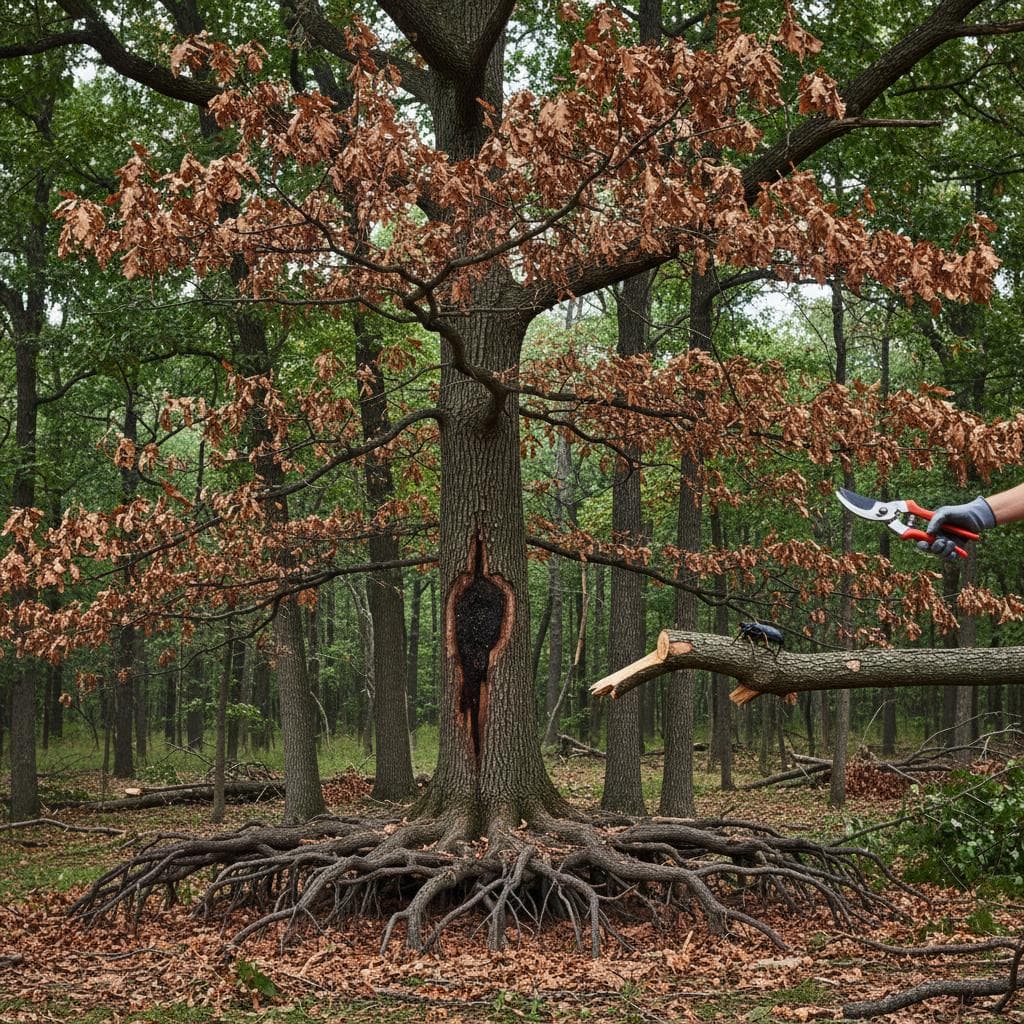
Oak Wilt Confirmed in Eight States: Steps for Tree Protection
Oak trees rank among the most valued landscape specimens, yet a lethal fungal pathogen now threatens them across expanded regions. Oak wilt has reached eight additional states, where it can kill mature specimens within weeks. Homeowners benefit from recognizing symptoms promptly and applying targeted prevention measures.
Disease Fundamentals
The causal fungus restricts water movement in the vascular tissue. This produces rapid wilting, progressive branch death, and eventual mortality. Transmission occurs via root connections between adjacent trees and via sap beetles that carry spores.
Red oak species suffer the highest mortality rates. White oaks display greater tolerance, while live oaks face risk from their interconnected root networks.
Expense Considerations for Property Owners
Average National Costs
Professional intervention typically ranges from several hundred dollars for single-tree treatments to several thousand dollars when multiple trees require trenching or removal.
Itemized Project Costs
- Fungicide injection: several hundred dollars per tree.
- Root-trenching barriers: a few dollars per linear foot based on soil conditions.
- Infected tree removal: several hundred to several thousand dollars depending on size and site access.
Primary Cost Drivers
Tree diameter, species susceptibility, equipment access, regional labor rates, and any follow-up replanting determine final expenses.
Species Susceptibility Profiles
Red Oaks
These species die rapidly once infected and serve as primary breeding sites for vector beetles.
- Advantage: rapid growth and substantial shade.
- Limitation: minimal chance of recovery after infection.
White Oaks
Natural resistance allows some individuals to persist for years with early intervention.
- Advantage: slower decline permits treatment response.
- Limitation: still vulnerable when red oaks nearby harbor the pathogen.
Live Oaks
Interconnected roots accelerate underground spread despite moderate susceptibility.
- Advantage: longevity and structural strength.
- Limitation: difficult isolation of infection zones.
Professional Intervention versus Self-Management
Accurate diagnosis requires laboratory confirmation or arborist expertise. Specialized injection equipment and trenching machinery lie beyond typical homeowner resources.
Self-managed efforts should focus on tool sanitation and seasonal pruning avoidance. Confirmed infections warrant engagement of certified professionals for mapping, treatment, and containment.
Containment Procedures
- Monitor for early wilting that begins in the upper canopy and progresses downward.
- Install trenches at least four feet deep between healthy and symptomatic trees to sever root grafts.
- Schedule preventive fungicide injections on adjacent oaks before symptoms appear.
- Remove infected red oaks promptly and destroy wood by chipping or burning.
- Disinfect all pruning and drilling tools between trees using a bleach or alcohol solution.
Prevention Practices
- Schedule pruning only during dormant winter months.
- Apply wound dressing immediately after any necessary cuts.
- Refrain from transporting firewood from infected areas.
- Conduct annual visual inspections for discoloration and dieback.
- Consult a certified arborist when oak wilt occurs within several miles.
Common Questions Addressed
Detection in Local Areas
State forestry agencies publish distribution maps. Rapid decline of multiple neighborhood oaks signals the need for professional testing.
Recovery Potential
Red oaks rarely survive once the trunk is colonized. White oaks may retain viability when fungicides and pruning occur at the first sign of symptoms.
Impact on Non-Oak Species
The pathogen is oak-specific. Proper disposal of infected material prevents secondary insect pressure on other stressed trees.
Safe Pruning Windows
Cooler months minimize beetle activity. Fresh wounds in warm weather attract vectors that spread spores.
New Planting Guidance
Select white or bur oak cultivars. Maintain adequate spacing and conduct soil assessment before installation in previously affected zones.
Sustained Landscape Protection
Consistent monitoring combined with timely professional treatments preserves oak populations even in expanding outbreak zones. Property owners who adopt these protocols reduce loss risk substantially.