
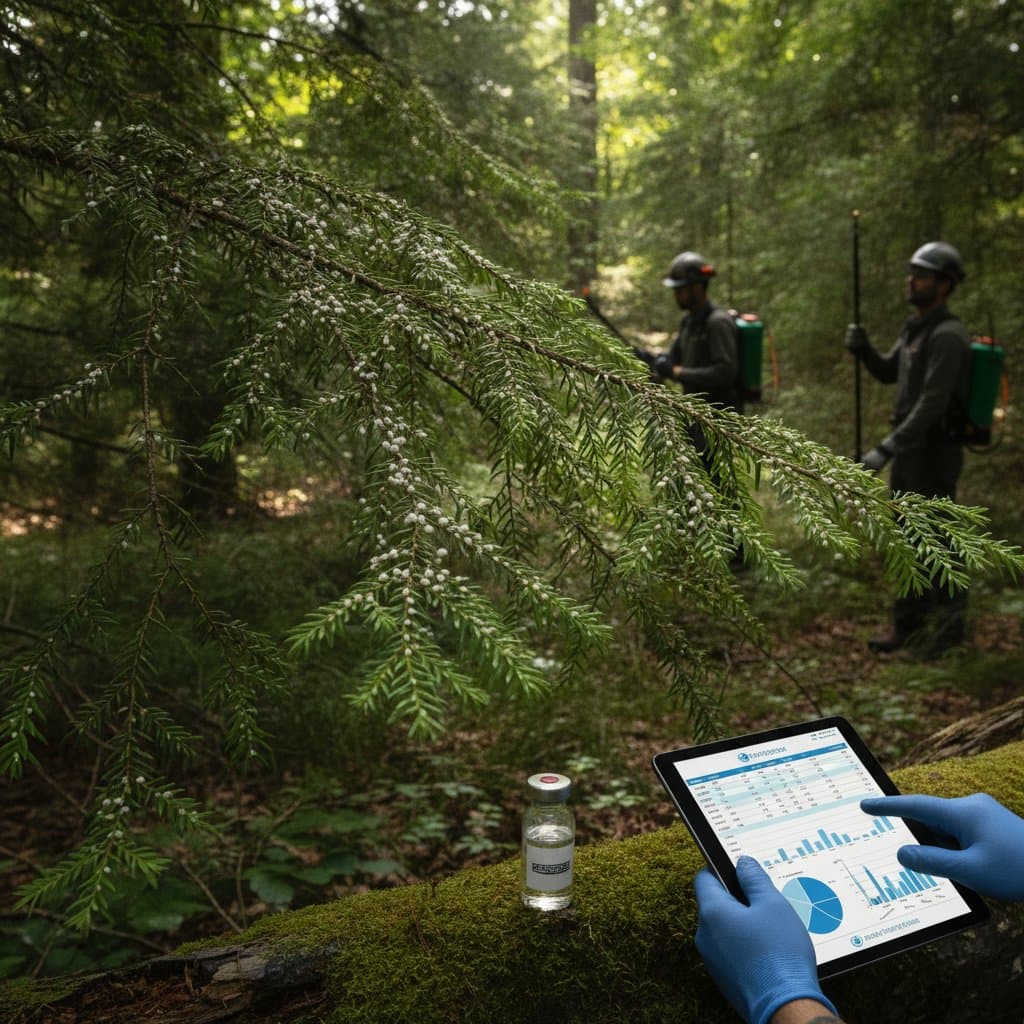
Why Hemlock Woolly Adelgid Treatment Costs Are Rising
The hemlock woolly adelgid threatens hemlock trees across North America. Homeowners and land managers report rising treatment expenses driven by supply issues, labor constraints, and stricter rules. This guide details the cost drivers, compares treatment options, and provides steps to control expenses while protecting trees.
Average Treatment Costs
Professional treatment for one mature hemlock ranges from soil applications at lower prices to trunk injections or sprays that reach several hundred dollars. Property-wide programs with monitoring often total several thousand dollars for large sites. These ranges reflect material costs, labor, and the added complexity of repeated management.
Small properties face higher per-tree fees due to minimum charges and travel. Larger sites may receive volume pricing, yet overall outlays remain substantial. Soil drenches suit many medium trees at moderate cost. Trunk injections cost more yet deliver longer protection near water. Foliar sprays work for young trees but need repeated visits.
Key factors that set final prices include tree size, site access, chosen method, product type, local labor rates, and required follow-up visits. Steep or wooded locations add setup time. Premium products that last longer raise upfront costs but reduce annual visits.
Drivers Behind Rising Prices
Chemical supply chains face import limits and raw-material increases that raise distributor prices. Arborist shortages push wages and training expenses higher, which companies pass along in service quotes. Expanding adelgid populations increase service demand and require more intensive work on heavily infested sites.
Regulatory compliance adds training, equipment, and record-keeping costs. Demand for lower-risk products also lifts expenses because these options often need extra applications. Each factor compounds the pressure on current estimates.
Treatment Methods Compared
Soil drench or injection places product at the tree base for root uptake. This approach costs less per tree and lasts one to several years, though it acts slowly and cannot be used near water.
Trunk injection delivers product directly into vascular tissue. It provides fast results with no runoff yet requires drilling and carries higher initial fees.
Foliar sprays coat needles for contact kill. They suit small ornamental trees but demand repeat visits and risk drift.
Biological releases of predatory beetles support long-term forest control yet remain impractical and costly for most residential properties.
Professional Service Versus DIY
Homeowners may apply over-the-counter products to trees under ten feet tall. Accurate dosing and coverage prove difficult, often resulting in incomplete control and earlier retreatment.
Certified arborists use calibrated equipment, professional-grade materials, and site assessments that improve outcomes and include follow-up monitoring. The higher initial fee buys longer protection and reduced environmental risk. Mature trees or widespread infestations require professional handling.
Steps to Control Costs
- Inspect branch undersides each season for white cottony masses.
- Count affected trees and note infestation severity before requesting quotes.
- Obtain evaluations from at least two certified arborists to compare methods and pricing.
- Choose treatments matched to tree size, soil, and proximity to water.
- Time applications for active nutrient flow in spring or fall.
- Track results after each season and schedule retreatment only when needed.
- Combine limited chemical use with pruning and debris removal to extend protection intervals.
Sustaining Tree Health
Limit nitrogen fertilizer that can attract adelgids. Maintain diverse plantings to support natural predators. Follow all label directions to prevent runoff into streams. Updated local guidelines reflect new research and should be reviewed yearly.
What Happens Without Treatment
Untreated trees lose needles, weaken, and often die within several years. Early action preserves both the tree and future budget flexibility. Contact a certified arborist promptly when white tufts appear to develop a practical, site-specific plan.