
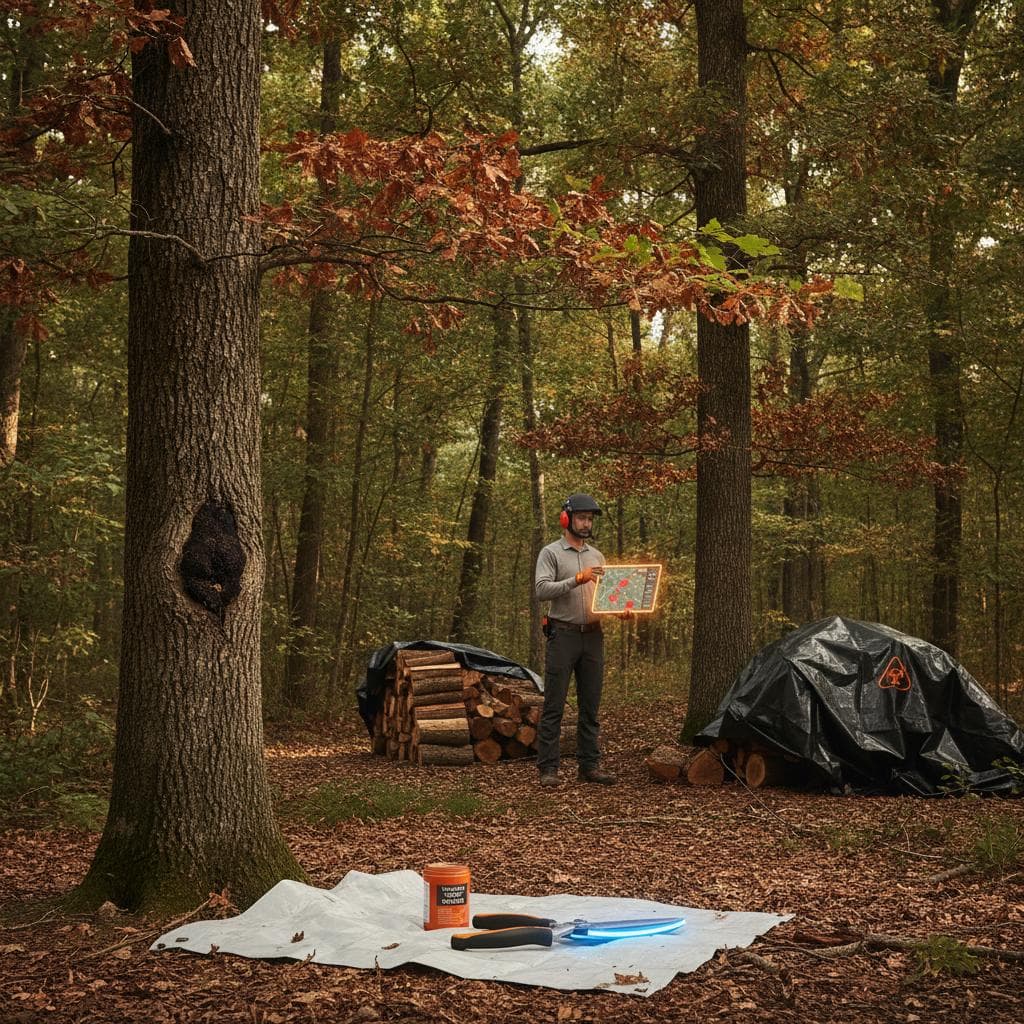
Oak Wilt Spreads to Eight States: Updated Pruning Rules
Oak wilt is a serious tree disease that can kill healthy oaks quickly. New pruning restrictions are changing how property owners handle branches, removals, and storm damage. The disease spreads through beetles, connected roots, and contaminated tools, so a careless cut can create a larger problem.
Understanding oak wilt symptoms, seasonal pruning rules, disposal requirements, and professional treatment options helps protect valuable trees. These steps also reduce the risk of spreading the disease to nearby woodlands, parks, and residential landscapes.
Oak Wilt Treatment Cost
National Average Cost
Oak wilt treatment commonly costs several hundred dollars for inspection and minor pruning. Larger projects can cost several thousand dollars when they involve trenching, root separation, tree removal, stump grinding, or treatment across multiple trees.
A certified arborist should inspect the site before work begins. The cost depends on the number of trees, disease stage, access conditions, and whether the infection has moved through connected roots.
Cost by Project Type
- Tree inspection: A basic evaluation may cost a modest service fee, especially when laboratory confirmation is needed.
- Removal and disposal: Diseased oaks often require controlled removal, cutting, hauling, and processing.
- Root trenching: A trench may be installed between infected and healthy trees to interrupt underground root connections.
- Preventive treatment: Fungicide injections may protect selected high-value oaks, but treatment does not repair dead tissue.
- Storm cleanup: Emergency work can cost more when damaged limbs must be handled during a restricted pruning period.
Key Cost Factors
- Tree size, species, health, and location
- Number of affected trees
- Distance between oak root systems
- Need for laboratory testing
- Equipment access and overhead hazards
- Local disposal rules for infected wood
- Required permits or removal notifications
- Seasonal restrictions on cutting
- Whether a certified arborist performs the work
Oak wilt regulations differ by state, county, and municipality. Ask the contractor to explain local requirements in writing before signing an agreement.
Types of Oak Wilt Spread
Beetle-Borne Spread
Small sap beetles can carry fungal spores from infected oak tissue to fresh wounds on healthy trees. The insects are attracted to sap, which makes newly cut branches especially vulnerable during restricted periods.
Prevention protects healthy trees near infected oaks. It requires simple changes to pruning habits and reduces disease movement across property lines. Emergency cuts may still be necessary after storms. Wounds can remain vulnerable if cuts are poorly sealed or contaminated. Timing restrictions can complicate routine landscape work.
Root Graft Spread
Oak roots can naturally connect with neighboring trees. Once the fungus enters one root system, it can move underground into nearby oaks, even when the trees appear separate above ground.
Root separation can protect healthy trees within an outbreak area. It helps contain an infection that has not spread widely and creates a clearer boundary for monitoring. The process requires specialized equipment. It may disturb lawns, gardens, irrigation, and hardscape. Root separation does not cure trees already infected.
Firewood and Wood Waste Spread
Firewood from infected oaks can carry fungal material or beetles into new areas. Moving logs, branches, chips, and untreated wood is a common pathway for disease expansion.
Proper disposal limits movement beyond the infected site. It supports compliance with local quarantine rules and reduces reinfection risk after removal. Hauling wood can spread disease to distant properties. Chipping may be restricted until officials approve the method. Stacking infected logs for later use can preserve the hazard.
DIY vs. Hiring a Professional
Homeowners can remove small dead twigs with clean tools when local rules allow it, but oak wilt work often demands more judgment than ordinary pruning. Correct identification matters because drought stress, boring insects, vascular diseases, and root damage can resemble oak wilt.
DIY mistakes include cutting during a restricted season, pruning an apparently healthy tree near an infected oak, transporting firewood, or using tools that were not disinfected. A homeowner may also miss root connections that require trenching or professional mapping.
A qualified arborist can inspect the canopy, examine symptoms, collect samples, identify likely spread routes, and recommend removal or treatment. Professionals also carry liability insurance, use proper rigging around structures, and understand disposal procedures.
Hire a professional when an oak shows sudden browning, when several trees decline together, when large limbs require cutting, or when the tree stands near buildings, wires, roads, or neighboring property. Ask for proof of insurance, relevant credentials, a written scope of work, and a disposal plan.
How to Prevent Oak Wilt Spread
- Inspect the trees. Look for rapid leaf browning, wilted foliage, premature leaf drop, and discoloration in the sapwood.
- Confirm the diagnosis. Have a qualified arborist or plant disease laboratory evaluate suspicious symptoms before removing healthy-looking trees.
- Schedule routine pruning carefully. Avoid cutting oaks during the locally restricted period when beetle activity and disease transmission risk are higher.
- Respond to storm damage. Cover fresh oak wounds with approved wound paint when regulations or local guidance recommend it, then arrange an inspection.
- Clean cutting tools. Disinfect saws and pruners between trees, especially when working around suspected infected material.
- Control root connections. Ask an arborist whether trenching is appropriate between infected and healthy oaks.
- Handle wood legally. Keep infected logs and branches on site unless local authorities approve transport, treatment, or disposal elsewhere.
- Monitor nearby trees. Inspect surrounding oaks regularly for new symptoms, and report rapid changes promptly.
- Document the work. Keep photographs, inspection notes, treatment records, and disposal receipts for future decisions or property transactions.
Fresh pruning wounds are not the only concern. Construction, utility work, lawn equipment, and accidental bark damage can also create entry points. Protect trunks from mowers and string trimmers, and plan excavation away from major roots whenever possible.
Tips for Protecting Oak Trees
- Prune with a purpose. Remove hazardous, dead, or crossing branches, but avoid unnecessary cuts that create extra wounds.
- Use proper cuts. Cut just outside the branch collar, never flush against the trunk and never leave a long stub.
- Avoid transporting firewood. Burn or process oak wood where it was cut unless local officials approve movement.
- Watch symptom patterns. One declining branch can have many causes, but rapid symptoms across multiple oaks deserve immediate attention.
- Maintain tree vigor. Water deeply during prolonged dry conditions, preserve root-zone soil, and avoid piling mulch against the trunk.
- Question vague bids. A proposal that promises a cure without diagnosis, disposal details, or follow-up monitoring deserves caution.
Healthy trees have better resistance to stress, but good maintenance cannot guarantee protection after exposure. Early detection gives property owners more options and may prevent a single infected tree from threatening an entire stand.
Frequently Asked Questions
Which states have oak wilt restrictions?
Oak wilt has been confirmed in several regions, including eight states where homeowners and land managers face growing concern about disease movement. Rules are set locally, so restrictions on pruning, removal, hauling, and firewood may differ between neighboring communities.
When is it safe to prune oak trees?
Safe pruning periods depend on local beetle activity and state or county guidance. Many jurisdictions restrict oak pruning during the season when sap-feeding insects are active, so verify the approved window before cutting.
Can oak wilt be cured?
There is no simple cure for an oak that has extensive wilt symptoms. Fungicide injections may protect selected valuable trees when applied early, while root trenching and controlled removal can help contain the disease.
Should I remove a tree with oak wilt?
Removal may be recommended when the tree is confirmed infected, structurally unsafe, or connected to other vulnerable oaks. An arborist should determine the best approach and explain how the wood must be handled.
Can I burn oak wilt firewood?
Do not move or burn suspected infected oak wood without checking local rules. Some areas require wood to remain within a controlled zone, be chipped under approved conditions, or be processed so beetles cannot emerge.
Does sealing a pruning wound prevent oak wilt?
Approved wound paint can reduce beetle access to a fresh cut when used promptly, but it does not replace correct pruning timing, clean tools, or professional diagnosis. Follow local guidance because product and application rules can differ.
Protecting Your Oak Landscape
Oak wilt prevention starts with disciplined pruning, careful wood handling, and quick action when symptoms appear. The safest plan combines local regulation checks with an arborist inspection, especially when several trees are involved or roots may be connected.
Before hiring anyone, compare written proposals, confirm insurance and credentials, ask how wood will be disposed of, and request a clear explanation of the pruning schedule. Find and vet qualified local tree professionals before cutting, removing, or treating an oak that may be affected.