
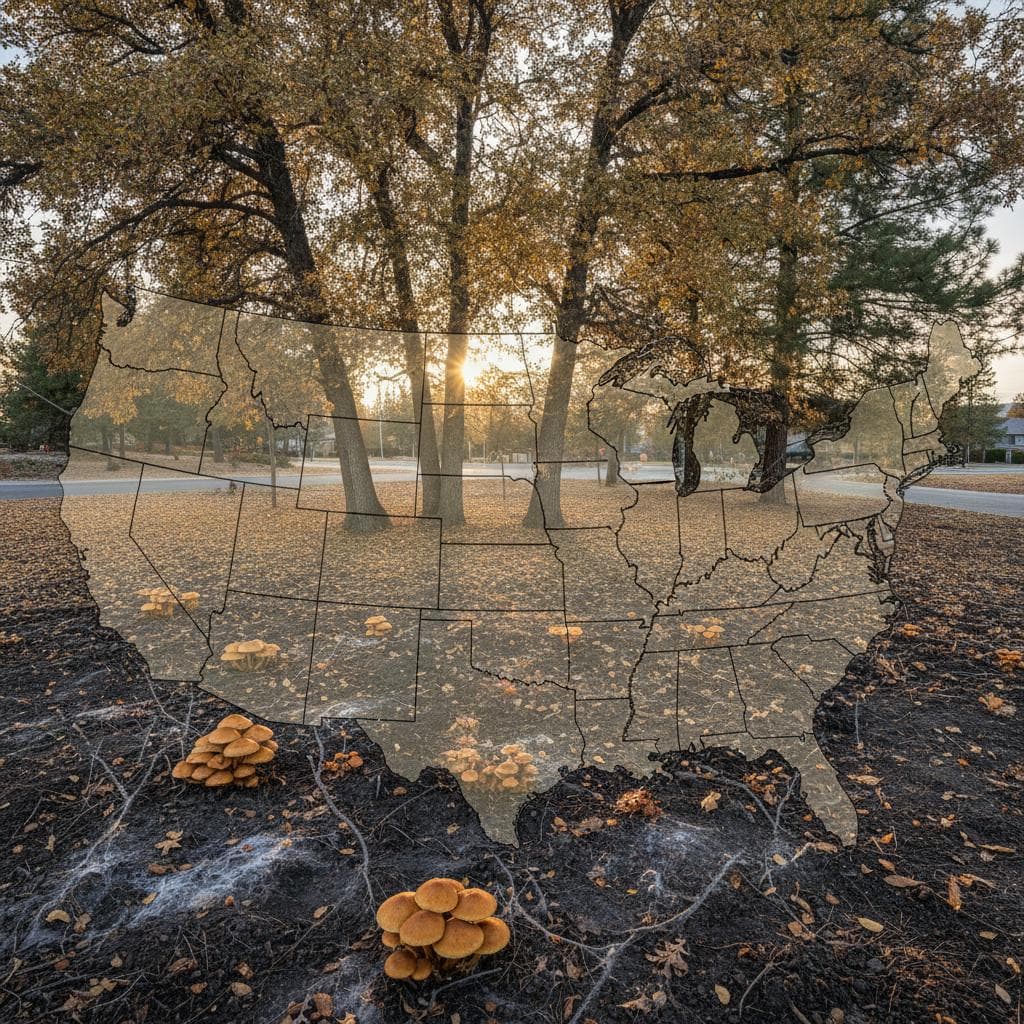
Root Rot Fungus Confirmed in Eight States
Root rot fungus caused by Armillaria species has been confirmed across eight states. This soil-borne pathogen attacks roots and lower trunks, producing decay, canopy dieback, and tree death. Early intervention can stabilize some trees, yet advanced cases usually require removal.
The situation shows how rapidly fungal pathogens travel through soil and root networks in warm, moist conditions. Property owners benefit from knowing the biology of the disease, its transmission routes, and the symptoms that signal infection.
Biology and Host Range of Armillaria
Armillaria root rot, commonly called honey fungus, damages oaks, pines, maples, and many fruit trees. The organism persists in soil for decades on decaying wood and spreads by root contact or by white, fan-shaped mycelial mats that form beneath bark.
Infection blocks water and nutrient movement, causing wilting, premature leaf drop, and crown dieback even when soil moisture is adequate.
Site Conditions That Accelerate Spread
Several measurable factors govern the rate of infection. Saturated soil from overwatering or poor drainage favors fungal growth. Trees stressed by drought, soil compaction, or construction injury become more susceptible.
Mild temperatures and high humidity increase activity, while infected stumps, buried roots, or contaminated mulch serve as reservoirs. Oaks and conifers rank among the most vulnerable species.
Observable Symptoms of Infection
Early detection improves the chance of saving a tree. Progressive yellowing or thinning of foliage often appears first on one side of the crown. Honey-colored mushroom clusters may emerge near the base during humid periods.
Peeling bark at the root collar can reveal white, fan-like fungal tissue. Soft, cracked, or oozing bark and loosening anchorage also indicate advancing decay. A certified arborist should evaluate any of these signs and may recommend laboratory confirmation.
Professional Management Steps
Effective control combines sanitation and prevention. An arborist first inspects the tree and surrounding soil to map the extent of infection. Root and soil samples distinguish Armillaria from similar diseases such as Phytophthora.
Severely infected trees are removed with major roots to lower fungal inoculum. Stump grinding follows, after which aeration and improved drainage reduce conditions favorable to the fungus. Replanting with resistant species such as birch or certain ornamental pears completes the process.
Because the pathogen survives for decades, eradication is seldom feasible. Management focuses on limiting activity and protecting remaining trees.
When to Engage a Certified Arborist
Homeowners can correct drainage and avoid overwatering, yet diagnosis, root excavation, and safe disposal require specialized equipment and training. Professional removal prevents spore dispersal and ensures proper species selection for replacement.
Select an arborist who holds certification from a recognized association, maintains sanitized tools, provides written estimates, and communicates risks and costs clearly.
Common Questions from Property Owners
Healthy trees with strong root systems and good drainage often resist or slow infection. Mushrooms near a trunk do not always indicate Armillaria, yet honey-colored clusters justify inspection.
The fungus can remain viable in soil for decades. Fungicides rarely eliminate established infections and work best within a broader cultural program.
Replanting in the same location carries risk unless all infected material is removed and drainage is corrected. Birch, hawthorn, and ginkgo demonstrate greater resistance in many regions.
Wood from infected trees should never be used as mulch, because rhizomorphs can spread the disease. Professional chipping and off-site disposal are required.
Protecting Remaining Landscape Trees
Regular monitoring, prompt removal of declining specimens, and strategic replanting with resistant species reduce long-term losses. Consistent soil management further limits conditions that favor the pathogen.