
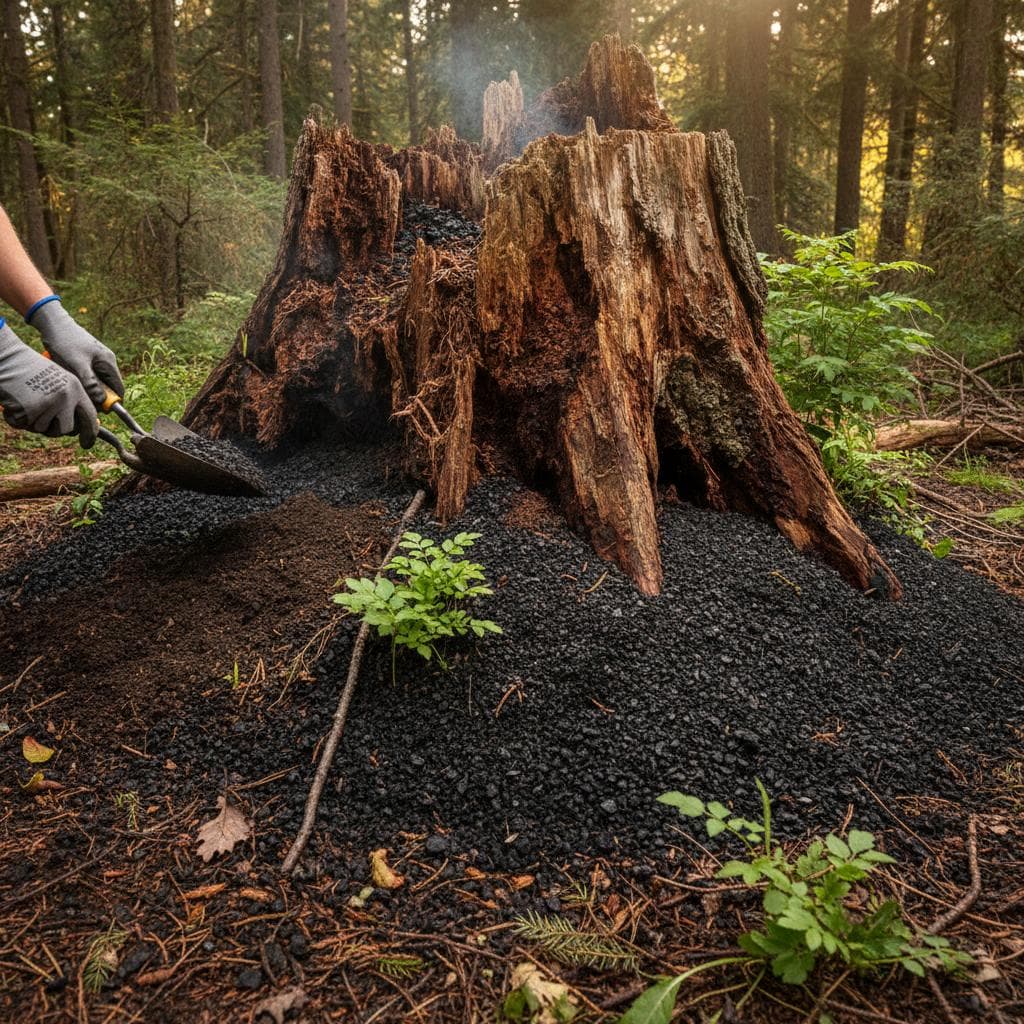
Biochar Accelerates Stump Decay Three Times Faster
Biochar can speed up tree stump decomposition nearly three times faster than natural decay. When applied correctly, it transforms tough, lingering stumps into nutrient-rich soil in a fraction of the usual time. This technique offers a cleaner, faster, and more sustainable alternative to grinding or chemical treatments.
Homeowners tired of waiting years for an old stump to break down gain a practical solution. It combines science and soil health to accelerate the natural decay process without harming the environment.
What Is Biochar and How Does It Work?
Biochar is a form of charcoalorganic matter like wood chips or crop waste in a low-oxygen environment. The result is a porous, carbon-rich material with remarkable soil-enhancing properties. It acts like a sponge, absorbing nutrients, water, and beneficial microbes while improving soil structure.
When biochar is applied around or into a tree stump, it creates ideal conditions for fungi and bacteria that break down wood fibers. Decay organisms thrive in biochar porous structure, which holds moisture and oxygen. This combination speeds up the breakdown of lignin and cellulose, the tough compounds that make wood durable.
Why Stump Decay Is Normally So Slow
Without intervention, stump decomposition can take anywhere from several years to over a decade. The rate depends on the species of tree, stump size, moisture level, and soil conditions. Hardwoods like oak or maple decay much more slowly than softwoods such as pine. Dry, compacted soil can further delay the process because decay organisms struggle in oxygen-poor environments.
A stump large mass and dense wood limit airflow and microbial activity. Even if fungi begin to colonize the surface, progress slows deeper inside. Homeowners often resort to stump grinding or chemical accelerants. Biochar offers a more natural yet efficient alternative that maintains soil health.
How Biochar Speeds Up Stump Decomposition
The reason biochar accelerates stump decay three times faster lies in its chemical and physical structure. It enhances several conditions that favor microbial activity.
- Improved Aeration: Biochar open pores allow oxygen to penetrate deep into the stump area, feeding aerobic microorganisms that drive fast decomposition.
- Moisture Retention: It holds water near the stump, preventing the dryness that often halts decay.
- Microbial Habitat: The porous surfaces provide shelter for fungi and bacteria, allowing them to multiply and consume the wood more efficiently.
- Nutrient Exchange: Biochar binds nutrients and slowly releases them, creating a balanced environment that sustains biological activity for months or even years.
When used properly, biochar can jumpstart the natural recycling process. Homeowners often notice visible softening of the stump within months.
Key Factors That Influence Biochar Effectiveness
Not every stump or soil condition responds the same way. Several factors determine how quickly biochar can work.
- Stump Size and Age: Smaller, fresher stumps decay faster than older, dried ones. Biochar benefits are most noticeable on stumps that still retain some moisture.
- Tree Species: Softwoods decompose quicker, while dense hardwoods may take longer even with biochar assistance.
- Soil Moisture: Consistent dampness supports microbial life, so watering the area occasionally can help maintain ideal conditions.
- Biochar Quality: High-quality biochar with fine pores and neutral pH produces the best results. Low-grade material may contain residues that slow microbial growth.
- Application Technique: How biochar is mixed or applied around the stump directly affects performance. Deeper integration usually leads to better oxygen and moisture balance.
By adjusting these variables, homeowners can fine-tune the process for faster and more complete stump decay.
The Biochar Stump Removal Process: Step-by-Step
Applying biochar to accelerate stump decomposition is straightforward but requires patience and attention to detail. Follow these steps for optimal results.
- Prepare the Stump: Cut the stump as close to ground level as possible. Remove any loose bark or debris to expose clean wood.
- Drill Access Holes: Using a large drill bit, make several deep holes across the top surface. These holes should reach near the stump center to improve biochar penetration.
- Apply Biochar: Mix biochar with compost or rich topsoil at a ratio of roughly 1 part biochar to 2 parts organic material. Fill the drilled holes with this mixture and spread the rest evenly around the stump base.
- Maintain Moisture: Water the area thoroughly after application, and keep it slightly damp during dry periods. Moisture supports microbial colonization.
- Encourage Fungal Growth: Cover the stump with a layer of mulch or wood chips to retain humidity. Some homeowners even introduce mycorrhizal fungi or mushroom spores for extra decay power.
- Monitor Progress: Over the following months, inspect the stump for softening or fungal growth. Reapply biochar every few months if decay slows.
With consistent care, the stump will gradually crumble into rich, dark soil that can be replanted or left to nourish surrounding vegetation.
DIY vs. Hiring a Professional: What to Consider
Applying biochar is safe for most homeowners to attempt, but it still involves handling soil amendments and understanding wood decay. For small stumps, a DIY approach can work well, especially if you enjoy hands-on yard projects. The cost of materials typically ranges from a modest investment for a few pounds of biochar to a higher amount for large areas.
However, for large or deeply rooted stumps, professional help may be the better choice. Certified arborists or eco-focused tree care specialists can evaluate the stump condition, determine the right mixture, and ensure even application. They also have access to specialized biochar blends designed for rapid decomposition.
Professionals may combine biochar with other natural accelerants like compost tea or nitrogen-rich fertilizers for added speed. While this service costs more than DIY methods, it can save months of waiting and reduce the risk of uneven decay or pest attraction.
Environmental and Soil Health Benefits
One of biochar greatest advantages is its lasting benefit to soil health. Unlike chemical stump removers that introduce toxins, biochar enriches the surrounding ecosystem. As it breaks down, it continues to improve the soil structure and fertility.
Key environmental benefits include:
- Carbon Sequestration: Biochar locks carbon into the soil, reducing atmospheric carbon dioxide.
- Improved Drainage and Retention: It enhances both water-holding capacity and drainage, creating a balanced soil texture.
- Long-Term Fertility: Biochar remains stable for decades, continuing to support healthy root systems for new plants.
- Reduced Chemical Use: With biochar, there is no need for synthetic stump removers or fertilizers, minimizing chemical runoff into waterways.
For eco-conscious homeowners, biochar provides a sustainable way to manage stumps while improving the long-term vitality of their landscape.
Common Mistakes to Avoid
While biochar is forgiving, a few mistakes can slow results or reduce effectiveness.
- Using Too Little Biochar: A light dusting will not provide enough microbial support. Generous application ensures full coverage and consistent decay.
- Skipping Moisture Maintenance: Biochar works best in damp conditions. Allowing the area to dry out can stall decomposition.
- Neglecting Aeration: If the stump is tightly compacted or sealed under heavy mulch, oxygen cannot reach the microbes, slowing progress.
- Using Raw Charcoal Instead of Biochar: Regular charcoal lacks the same porous structure and may contain residues that harm soil life.
Avoiding these errors ensures your biochar treatment performs at its best.
How to Choose the Right Biochar for Stump Removal
Selecting the right biochar product is crucial for success. Look for these features when buying.
- Fine Grain Size: Smaller particles mix more easily with soil and decay material.
- Neutral pH: Extreme acidity or alkalinity can inhibit microbial activity.
- Organic Certification: Choose biochar made from untreated wood or agricultural waste.
- High Porosity: The more porous the material, the better it can retain water and provide microbial habitat.
FAQ
How long does it take for biochar to decompose a stump?
Most stumps treated with biochar begin to show noticeable softening within several months. Complete decomposition can occur in as little as one to two years depending on size and species.
Can I use biochar after grinding the stump?
Yes. Mixing biochar into the ground wood chips after stump grinding accelerates their breakdown and enriches the soil, making it ready for replanting sooner.
Is biochar safe for pets and children?
High-quality biochar made from clean organic material is non-toxic and safe once applied. It should still be handled with gloves to avoid dust irritation.
Do I need to mix biochar with compost?
While biochar can work alone, blending it with compost or nitrogen-rich soil creates a stronger biological environment that speeds up decomposition.
Can biochar help prevent pest problems in old stumps?
Yes. Healthy microbial activity supported by biochar can outcompete pest organisms like termites and beetles, reducing infestations naturally.
How much biochar should I use per stump?
A typical application involves about one gallon of biochar mixed with two gallons of compost for a medium-sized stump. Larger stumps may require proportionally more.
Will biochar affect nearby plants?
Biochar improves soil health and water balance, so nearby plants usually benefit. Just avoid over-application that could temporarily alter soil pH.
Integrating Biochar Into Routine Yard Care
Homeowners who apply biochar consistently see stumps transform into fertile ground without harsh interventions. This approach supports healthier soil and reduces long-term maintenance needs across the entire property.