
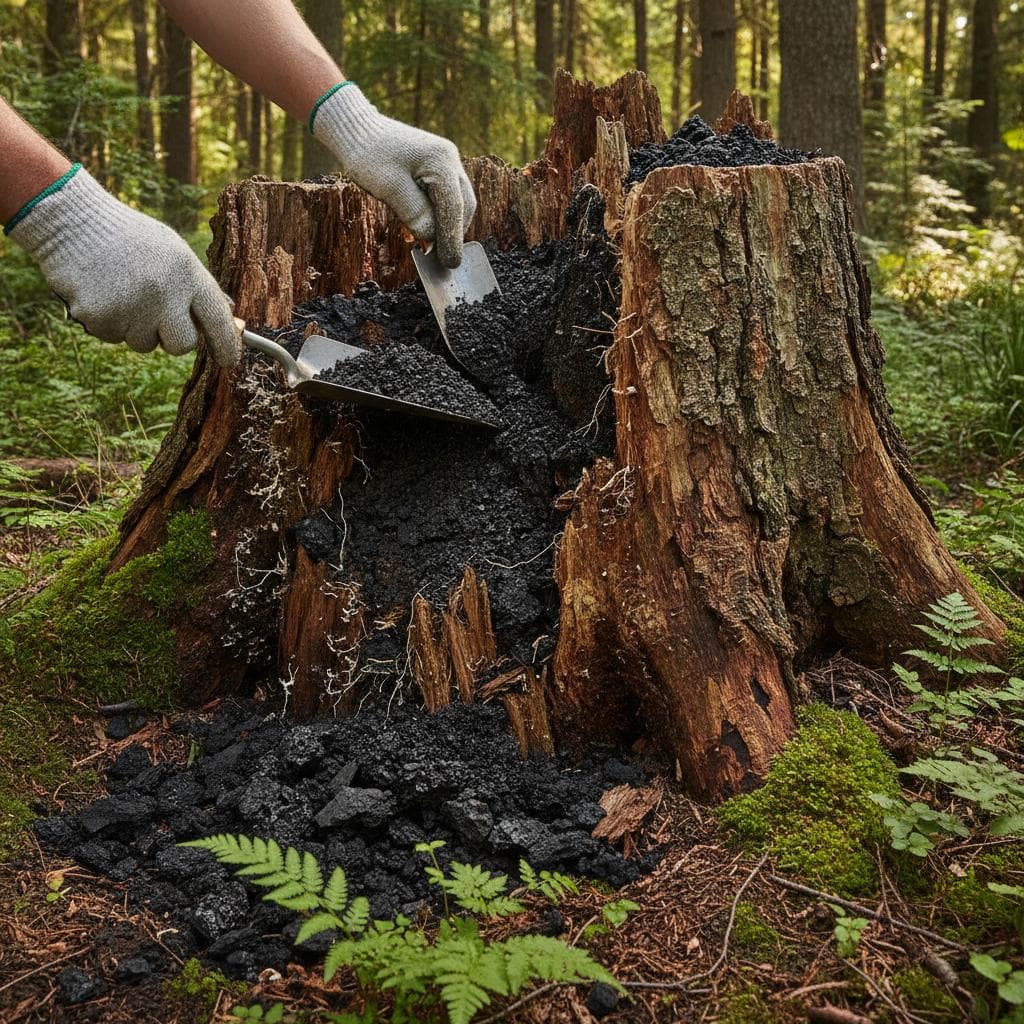
Biochar Removes Stumps Naturally in Three Weeks
Removing a tree stump ranks among the most challenging outdoor tasks for homeowners. Traditional grinding creates noise, expense, and debris. Biochar offers a natural alternative that accelerates decay, often within three weeks, without machinery or synthetic additives. This approach clears space while adding fertility to surrounding soil.
The following sections detail the process, associated costs, suitable biochar varieties, and precise application steps. Readers gain a complete method to handle stump removal through microbial activity rather than mechanical force.
Biochar Stump Removal Cost
National Average Cost
Homeowners spend between 20 and 60 dollars on biochar sufficient for one average stump. Professional grinding typically exceeds several hundred dollars for comparable work. Biochar retains value after use because leftover material improves garden beds and planting areas.
Cost by Project Size and Type
- Small stumps under 12 inches across require 15 to 25 dollars of biochar.
- Medium stumps between 12 and 24 inches need approximately 40 dollars.
- Large stumps over 24 inches call for 60 dollars or more to achieve full coverage.
Existing biochar supplies from routine soil conditioning can reduce new purchases to zero.
Key Cost Factors
Stump species affects speed. Hardwoods such as oak decay slower than softwoods like pine. Finer biochar particles host more microbes and retain moisture better than coarse grades. Consistent dampness supports faster breakdown, while mixing biochar with finished compost or molasses boosts microbial populations. Warm, humid climates shorten the timeline compared with cold or dry regions.
Types of Biochar for Stump Removal
Biochar forms when organic matter heats in low oxygen, yielding a stable, porous carbon matrix. Each feedstock produces distinct performance traits during stump treatment.
Hardwood Biochar
Hardwood biochar maintains structure and moisture over extended periods.
Pros
- Holds water and nutrients effectively
- Resists rapid breakdown in soil
- Sustains microbial colonies
Cons
- Carries a higher purchase price
- Decomposes more slowly than softwood options
Softwood Biochar
Softwood biochar from pine or fir promotes quicker microbial colonization.
Pros
- Accelerates initial decay rates
- Costs less than hardwood grades
- Blends readily with compost
Cons
- Loses structure faster in long-term soil use
- Performs less effectively in arid conditions
Agricultural Biochar
Crop-residue biochar supplies lightweight carbon and trace minerals.
Pros
- Creates abundant microbial habitat
- Adds fertility once the stump disappears
- Remains inexpensive and renewable
Cons
- Generates dust during handling
- Benefits increase when blended with compost
DIY Application Versus Professional Service
Most homeowners complete biochar stump treatment without outside help. Certain conditions favor hiring assistance.
DIY Advantages
- Avoids chemical residues
- Requires only basic tools
- Improves soil health as a byproduct
DIY Challenges
- Demands regular moisture checks
- Success varies with stump diameter and application accuracy
- Initial estimates of material quantity may fall short
Professional application suits large hardwood stumps or multiple removals when rapid results matter. Otherwise, the DIY route delivers reliable outcomes at lower cost.
How to Use Biochar to Remove a Stump
- Cut the stump level with the soil surface and clear loose bark.
- Drill one-inch holes across the top and sides to a depth of several inches.
- Combine biochar with compost or a small amount of molasses to introduce active microbes.
- Pack the mixture into the holes and spread a thin layer over the stump and adjacent soil.
- Maintain even moisture and cover with mulch or a tarp to retain warmth.
- Check progress weekly. Softened wood can be broken apart and mixed into surrounding soil after three weeks.
Tips for Successful Natural Stump Decay
- Maintain steady moisture without saturation to support microbial growth.
- Apply diluted compost tea weekly to sustain microbial populations.
- Reapply biochar if softening stalls after the first month.
- Skip chemical stump removers that inhibit natural fungi and bacteria.
- Incorporate decayed residue into garden beds to raise soil carbon levels.
Frequently Asked Questions
Does biochar really remove stumps completely?
Biochar creates ideal conditions for wood-decaying fungi and bacteria. The stump softens progressively until it crumbles into organic matter that blends with soil.
How long does it take for biochar to work on a stump?
Visible softening appears within three weeks under warm, moist conditions. Complete breakdown may require several additional months based on stump size and local weather.
Is biochar safe for pets and plants?
Biochar contains no synthetic toxins. Pets and plants remain unaffected when the material stays confined to the treatment area.
Can I make my own biochar for stump removal?
Home production is possible with a metal drum or pit kiln. Purchased biochar guarantees consistent particle size and purity for faster results.
What happens to the soil after the stump decays?
Decayed wood and biochar increase soil organic carbon and water-holding capacity. The treated zone supports stronger root growth for new plantings.
Next Steps for Yard Improvement
Biochar stump removal converts a disposal problem into a soil-building opportunity. Consistent moisture and proper microbial support produce measurable softening within three weeks while enriching the planting area for future use.