
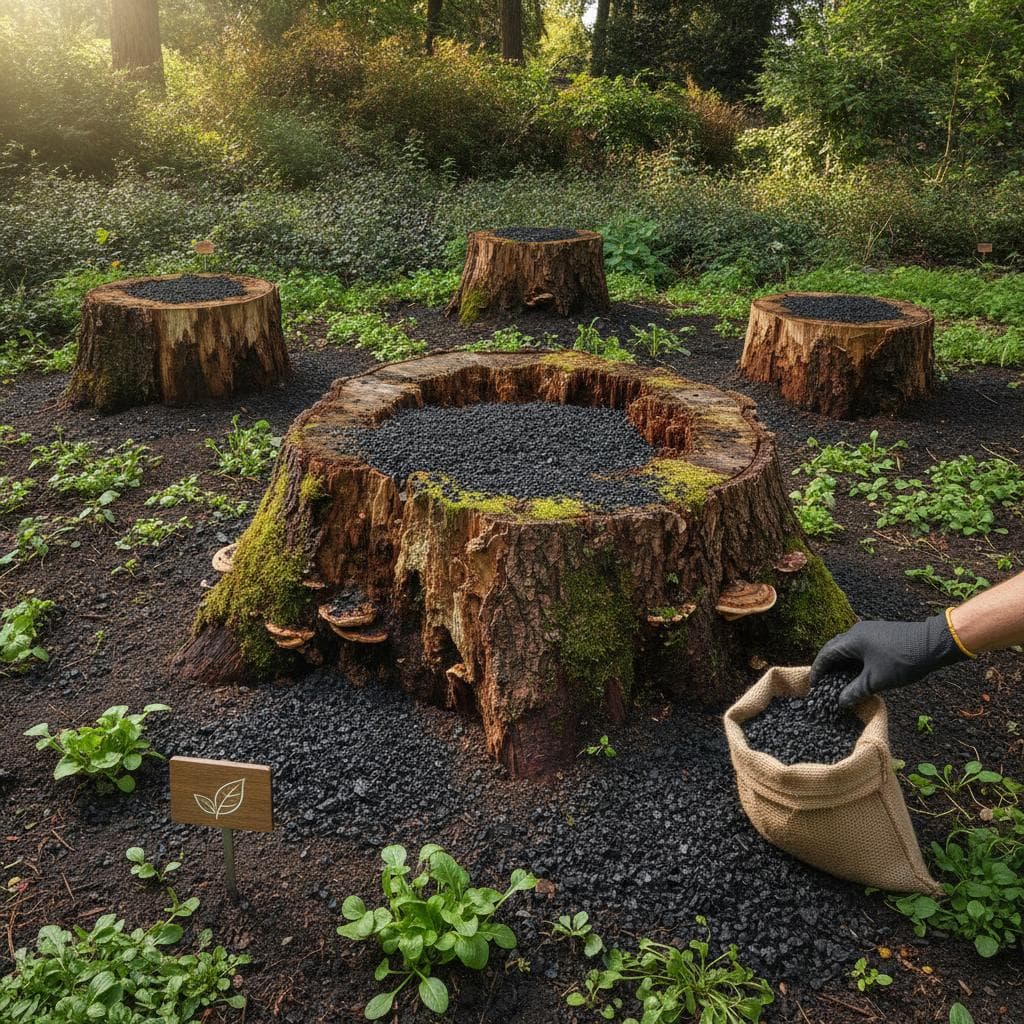
Biochar Treatment Speeds Stump Decay Three Times Faster
Tree stumps often remain in yards for years. They create maintenance challenges and potential tripping hazards. Traditional removal approaches such as grinding or chemical applications prove expensive or damaging to the environment. Biochar treatment offers an emerging eco-friendly option that accelerates natural decay up to three times faster than standard decomposition.
Understanding Biochar Treatment
Biochar treatment relies on a carbon-rich materialwood in a low-oxygen setting. The outcome is a porous substance similar to charcoal that enhances soil conditions and promotes microbial growth. Application to a tree stump boosts microbial activity and moisture retention. This approach breaks down the stump without chemicals or machinery.
Typical Costs for Biochar Stump Treatment
Costs for biochar stump treatment generally range from 80 to 250 dollars per stump. Pricing varies with stump dimensions and site access. This option provides an affordable, sustainable choice compared to grinding or chemical methods.
| Tree Stump Size | Average Cost Range |
|---|---|
| Small (under 12 inches) | 80 - 120 dollars |
| Medium (12 to 24 inches) | 130 - 180 dollars |
| Large (over 24 inches) | 190 - 250 dollars |
The quoted cost covers biochar material, application, and an initial soil conditioning layer.
Factors That Influence Biochar Stump Treatment Costs
Tree Size
Larger stumps require more biochar and extended treatment time. Deeper or wider root systems increase the volume of material and labor needed for complete coverage.
Tree Species
Hardwoods such as oak or maple break down more slowly than softwoods like pine or spruce. Biochar accelerates decay for both categories, yet hardwoods may need repeated applications to reach full breakdown.
Stump Condition
Older, partially decayed stumps absorb biochar more readily than freshly cut ones. Fresh stumps often require surface preparation to allow deeper biochar penetration.
Location and Accessibility
Stumps near structures, fences, or utilities demand extra care during application. Limited access can raise labor costs modestly.
Soil Conditions
Compacted or dry soil slows microbial growth. Mixing biochar with compost or organic matter improves soil structure and sustains consistent decay.
The Biochar Treatment Process
- Assessment and Preparation: A certified arborist or soil specialist evaluates stump size, species, and soil conditions. The surface may receive drilling or light cutting to improve biochar reach.
- Biochar Application: Biochar blends with compost or nutrient-rich soil and spreads across the stump surface and surrounding ground. This mixture supports fungi and bacteria that consume decaying wood.
- Moisture Management: The treated zone stays slightly damp to encourage microbial activity. A mulch layer helps retain moisture and maintain suitable decay conditions.
- Monitoring and Reapplication: The stump softens and decomposes over time. Additional biochar applications occur every few months for large root systems or hardwood species.
- Final Soil Restoration: Once decay completes, the area levels for replanting. Residual biochar boosts soil fertility for new vegetation.
DIY Biochar Treatment Versus Professional Service
| Option | When It Works Best | Key Considerations |
|---|---|---|
| DIY Biochar Treatment | Small stumps under 12 inches in diameter in accessible locations | Requires basic tools and safety gear. Homeowners monitor moisture and reapply as needed. |
| Professional Biochar Service | Large or multiple stumps, hardwood species, or sites near utilities | Experts ensure proper depth, safe handling, and lasting soil benefits. |
Professional service delivers stronger results for most homeowners while keeping the process safe and effective.
How to Select a Tree Service for Biochar Treatment
- Verify credentials and insurance with certified arborists who focus on eco-friendly stump removal.
- Confirm experience with biochar methods and request examples of prior results.
- Obtain multiple estimates that detail pricing, treatment length, and soil improvement services.
- Ensure biochar comes from sustainable sources and contains no contaminants.
- Request a written plan that lists application steps, follow-up visits, and soil restoration.
Frequently Asked Questions
How much faster does biochar make a stump decay?
Biochar accelerates natural stump decay approximately three times by increasing microbial activity and preserving moisture in surrounding soil.
Is biochar safe for the environment?
Biochar remains entirely natural and non-toxic. It improves soil quality, stores carbon, and eliminates the need for chemical stump removers.
Can biochar apply to freshly cut stumps?
Biochar works on freshly cut stumps when the surface receives proper preparation such as drilling to aid penetration.
Will biochar treatment remove the roots too?
Biochar promotes decay throughout the root system and gradually breaks down underground portions along with the visible stump.
Implementing Biochar Treatment Successfully
Biochar treatment supplies a safe, affordable, and environmentally sound method to eliminate unwanted stumps while enhancing soil health. Homeowners gain faster decay without reliance on chemicals or heavy equipment.