
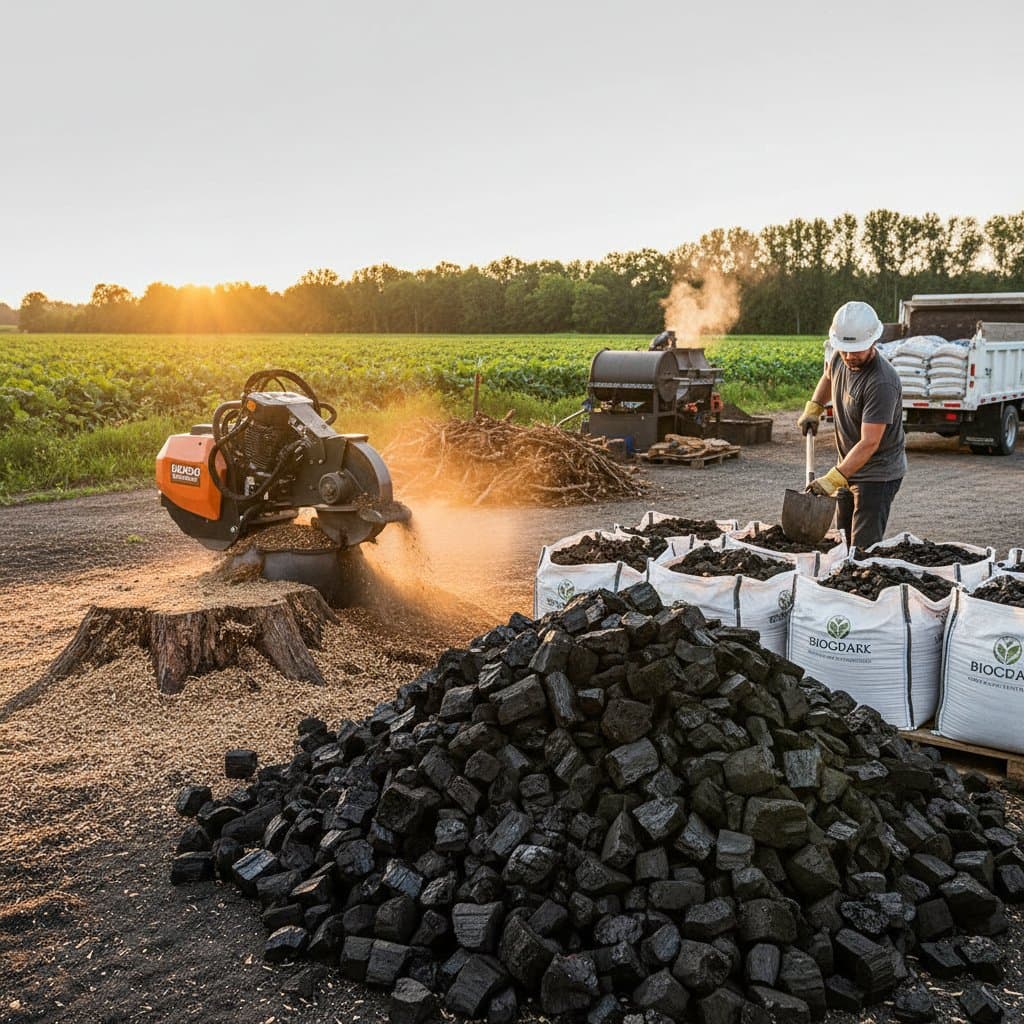
Earn $200 Per Ton by Selling Biochar from Stump Waste
One can transform leftover stump waste into valuable biochar, generating up to $200 per ton. This method converts material typically discarded after stump grinding into a profitable, carbon-negative product with robust demand across agriculture, landscaping, and soil restoration sectors. Homeowners and small tree service operators benefit by reducing waste volumes, enhancing soil quality, and establishing a reliable income source.
Stump waste often poses challenges following tree removal, but it conceals significant potential. Through an appropriate process, this waste becomes a high-value item that supports environmental goals and offsets removal expenses. Property owners who master safe and efficient biochar creation and sales can leverage what previously headed to landfills.
Understanding Biochar and Its Importance
Biochar consists of charcoal derived from pyrolysis, a technique that heats organic matter in an oxygen-limited setting. This method stabilizes carbon, inhibiting its release as carbon dioxide back into the atmosphere. The outcome yields a lightweight, porous substance that enhances soil structure, conserves moisture, and facilitates nutrient uptake.
Biochar qualifies as a carbon-negative material due to its carbon sequestration capabilities. It delivers tangible ecological advantages, prompting buyers to invest in it. Biochar derived from hardwood stumps frequently secures premium rates, particularly when supplied to organic farming operations, landscaping firms, or composting sites.
Producers should note that biochar's effectiveness stems from its high surface area, which fosters microbial activity in soil. Applications extend beyond farming to remediation of contaminated sites, where it binds pollutants. As sustainability regulations tighten, demand for such materials surges, positioning biochar as a forward-thinking commodity.
Factors Driving Biochar Profitability
Several elements determine the financial success of biochar production:
- Feedstock quality: Hardwood stumps, with their elevated carbon density, produce superior biochar compared to softwoods.
- Moisture levels: Low-moisture stump waste ensures a thorough carbonization process and results in purer biochar.
- Production techniques: Options range from compact kilns and retorts to adapted burn pits; optimal choices balance yield with operational consistency.
- Market dynamics: Regional demand from farmers, nurseries, and soil distributors supports bulk sales, with prices fluctuating between $100 and $200 per ton based on purity and granularity.
- Operational expenses: Costs for fuel, labor, and equipment upkeep directly impact margins; streamlined processes maximize net gains.
- Certification potential: Meeting standards for organic or carbon credit programs can elevate prices by 20 to 30 percent.
Operators who optimize these aspects convert modest stump accumulations into steady earnings. Tracking local market trends and testing small batches help refine approaches for higher returns.
Step-by-Step Guide to Biochar Production
Creating biochar from stump waste demands precise preparation and suitable tools. Prioritize safety protocols throughout.
- Prepare the feedstock: Reduce stump segments to uniform sizes via grinding or chipping. Eliminate soil, rocks, and metallic debris to prevent contamination.
- Dry the material: Expose it to air until moisture drops below 20 percent, promoting efficient pyrolysis.
- Charge the production unit: Place dried waste into a kiln or retort without excessive packing to allow necessary airflow.
- Conduct pyrolysis: Apply heat gradually in a low-oxygen chamber to achieve carbonization rather than combustion. Monitor temperatures between 400 and 700 degrees Celsius for optimal results.
- Cool the product: Permit full cooling in an enclosed space to avoid spontaneous combustion upon air exposure.
- Process for market: Crush the biochar into desired forms, such as granules or fines, and store in sealed containers to maintain quality.
Production cycles vary from four to eight hours per batch, influenced by equipment scale. Regular maintenance of units ensures reliable output. Beginners may start with pilot runs to calibrate settings and assess yields.
Evaluating DIY Production Against Professional Services
Individuals can generate modest biochar quantities with basic setups, yet scaling up necessitates expertise and vigilance. Pyrolysis generates intense heat and restricted oxygen, posing risks of fire, smoke, or toxic emissions if mishandled.
Engaging certified tree services or collaborating with specialized biochar facilities guarantees compliance and superior results. These professionals utilize advanced machinery that boosts efficiency and curbs pollutants. For those preferring minimal involvement, direct sales of raw stump waste to manufacturers yield fixed payments per ton, bypassing production hazards while securing income.
Weigh factors like volume of waste, available space, and regulatory requirements when deciding. Local fire codes often dictate permissible methods, and insurance considerations apply to DIY efforts.
Strategies for Selling Biochar
With biochar ready, explore diverse outlets:
- Agricultural operations: Farms integrate it as a soil amendment to increase yields and fertility.
- Nurseries and greenhouses: They use it to optimize potting mixes and propagation media.
- Composting operations: Facilities incorporate it to balance carbon-nitrogen ratios and enhance compost maturity.
- Landscaping enterprises: Professionals apply it in erosion control and turf establishment projects.
- Digital platforms: Specialized e-commerce sites facilitate bulk transactions for organic inputs.
Test biochar for attributes like ash levels under 10 percent, pH around 7 to 9, and uniform sizing to attract discerning purchasers. Building relationships with repeat buyers through quality assurance fosters long-term contracts and premium pricing.
Frequently Asked Questions on Biochar Sales
What yield can a single stump provide?
A typical medium stump generates 20 to 40 pounds of biochar, varying with wood type and preparation thoroughness.
Does production require specialized gear?
Controlled systems like kilns or retorts prove essential for oxygen management and temperature precision.
Can biochar qualify for carbon credits?
Yes, verified production supports credit programs, adding revenue layers beyond direct sales.
Building Sustainable Revenue from Stump Resources
Stump waste represents more than disposal challenges; it offers a pathway to environmental stewardship and financial gain. By adopting biochar production, individuals contribute to carbon reduction while cultivating viable business prospects. Start small, refine techniques, and connect with markets to realize the full potential of this resource.