
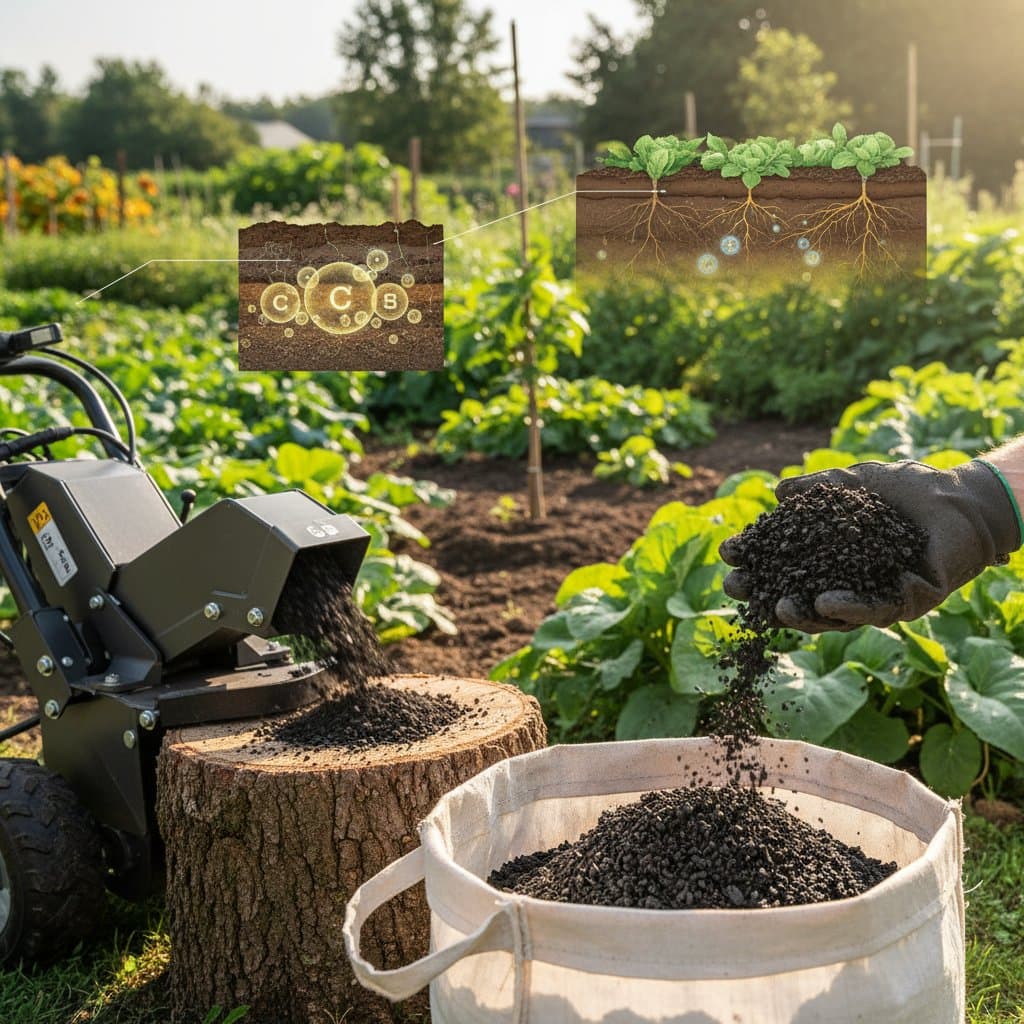
Biochar Stump Grinding Turns Waste into Soil Gold
Tree removal often leaves behind stumps that pose challenges for homeowners and landscapers. These remnants not only disrupt yard aesthetics but also represent untapped potential for soil improvement. Biochar stump grinding offers a sustainable solution by converting wood waste into a valuable amendment that enhances soil health and sequesters carbon.
This process involves grinding stumps into fine particles and subjecting them to pyrolysis, a controlled heating method that transforms the material into biochar. Unlike traditional stump grinding, which discards the debris, biochar production captures the wood's carbon in a stable form. The result is a porous, charcoal-like substance that improves soil structure, retains moisture, and supports microbial activity.
Homeowners increasingly turn to this method for its dual benefits: effective stump removal and long-term environmental gains. Professional services make the process accessible, ensuring safety and efficiency. By integrating biochar into landscaping, individuals contribute to carbon reduction while fostering healthier gardens.
The Science Behind Biochar Production
Biochar emerges from pyrolysis, where organic material heats in low-oxygen conditions. This technique prevents full combustion, preserving carbon in a durable structure. Stump grindings serve as an ideal feedstock due to their high lignocellulose content, which yields stable biochar.
The process begins with stump grinding to create uniform particles, typically one to two inches in size. These particles then enter a pyrolysis unit, where temperatures range from 400 to 700 degrees Celsius. At these levels, volatile compounds release as syngas, which professionals often capture for energy, minimizing waste.
Key factors influence biochar quality. Feedstock moisture content plays a critical role; drier stump material produces higher-quality biochar with better porosity. Pyrolysis temperature also matters: higher temperatures tend to produce more stable carbon structures, though this requires precise control and professional equipment.
Other considerations include particle size and residence time in the pyrolysis chamber. Finer particles ensure even heating, while adequate dwell time maximizes carbonization. Professionals optimize these variables to create biochar tailored for soil applications.
Factors Affecting the Cost of Biochar Stump Grinding
Investing in biochar stump grinding involves evaluating several cost determinants. Location impacts pricing, as urban areas often incur higher fees due to access challenges and disposal regulations. Soil type and stump depth further influence the effort required for grinding.
Labor and equipment represent significant expenses. Professional biochar stump grinding involves specialized machinery and safety procedures that influence the overall cost. Project size also plays a role: the number of stumps, their diameter, and accessibility all affect the price per stump.
Typical costs for biochar stump grinding range from the price of standard stump grinding plus an additional charge for the conversion process. Rates might start at 150 dollars per stump for basic grinding, with pyrolysis adding 50 to 100 dollars more, depending on scale. Although this may seem higher upfront, the long-term soil and environmental benefits often outweigh the initial investment.
For larger projects, such as commercial sites, bulk processing reduces per-unit costs. Homeowners can request quotes that itemize each step, from grinding to biochar application, to budget effectively.
DIY vs. Professional Biochar Stump Grinding
Some homeowners may consider turning stump grindings into biochar on their own. While small-scale biochar production is possible, doing it safely and effectively requires care. DIY methods can involve simple barrel systems or small kilns, but controlling oxygen levels and temperature proves challenging.
Improper technique can lead to smoky fires that release pollutants instead of capturing carbon. Home setups often lack the precision needed for consistent results, potentially producing low-quality biochar or hazardous byproducts. Safety risks, including burns and toxic fumes, further complicate amateur efforts.
Professional services use purpose-built equipment to achieve consistent pyrolysis conditions. Certified arborists or specialized contractors ensure that the process is safe, efficient, and environmentally sound. They also handle stump grinding and biochar preparation in one streamlined service.
For most property owners, hiring a professional is the safest and most reliable way to ensure quality biochar and proper stump removal. Experts provide guidance on application, maximizing the amendment's benefits for specific soil types.
How to Choose a Qualified Biochar Stump Grinding Specialist
Selecting the right professional makes all the difference in both the quality of the biochar and the safety of the process. When researching local providers, look for these key indicators:
- Certification and training: A certified arborist or tree care specialist has the expertise to handle stump removal safely.
- Experience with biochar production: Ask whether they have specific training or equipment for pyrolysis.
- Sustainability practices: Reputable professionals can explain how they minimize emissions and manage waste.
- Transparent pricing: A trustworthy company provides clear estimates that outline grinding, conversion, and soil application costs.
- Safety measures: Verify that they use protective gear and follow local safety regulations.
- References and reviews: Seek providers with proven track records in sustainable tree services.
A qualified specialist ensures that your stump grinding project contributes positively to both your property and the environment. Schedule consultations to discuss project specifics and view equipment demonstrations.
Signs Your Landscape Could Benefit from Biochar Enrichment
Even if you are not currently removing a stump, adding biochar to your soil can be a smart move. Here are signs your landscape might benefit:
- Plants struggle to thrive despite regular watering and fertilizing.
- Soil feels compacted or drains poorly.
- You notice nutrient runoff or yellowing leaves after rain.
- You are replanting after tree removal and want to restore soil balance.
- You are committed to sustainable landscaping and carbon sequestration.
- Your yard experiences frequent droughts or waterlogging.
Biochar works well in vegetable gardens, flower beds, lawns, and even around newly planted trees. It is compatible with most soil types and can be mixed with compost for enhanced results. Application in fall or spring allows integration before peak growing seasons.
Common Questions About Biochar Stump Grinding
What Makes Biochar Better Than Compost Alone?
Compost provides nutrients but breaks down quickly, releasing carbon into the air. Biochar, on the other hand, remains stable and acts like a sponge that holds nutrients and moisture. When combined with compost, it creates a balanced and long-lasting soil amendment.
How Long Does Biochar Stay Active in the Soil?
Biochar can remain stable for hundreds of years. Its structure resists decomposition, meaning it continues to improve soil quality for generations. Over time, it builds soil organic matter without the rapid turnover seen in other amendments.
Can Any Type of Stump Be Turned into Biochar?
Most hardwood and softwood stumps can be converted, though extremely rotted wood may yield less stable carbon. A professional can assess the stump's condition before processing. Avoid stumps treated with chemicals, as they may contaminate the biochar.
Is Biochar Safe for All Plants?
Yes, biochar is generally safe for all plants. It should be charged or mixed with compost or fertilizer before application to prevent temporary nutrient lockup. This pre-treatment activates its beneficial properties.
How Much Biochar Should I Add to My Soil?
A general guideline is to mix biochar into the top six inches of soil at a rate of about five to ten percent of total soil volume. For lawns or established gardens, apply a thin layer and water it in thoroughly. Test soil pH first, as biochar can slightly raise alkalinity.
Does Biochar Production Create Pollution?
When performed correctly in a controlled environment, biochar production releases minimal emissions. Professional systems capture gases and convert them into usable energy or heat. This closed-loop approach enhances the process's sustainability.
Can Biochar Help with Erosion Control?
Yes, biochar improves soil structure and water retention, making it more resistant to erosion, especially on slopes or exposed areas. Its aggregates bind soil particles, reducing runoff during heavy rains.
Steps to Integrate Biochar into Your Yard
Start by identifying stumps or areas needing soil enhancement. Contact a certified specialist for an on-site evaluation, discussing your goals for carbon sequestration or plant health. Once processed, incorporate the biochar during soil preparation for new plantings or as a top-dress for existing beds.
Monitor soil response over the first growing season, adjusting applications as needed. This proactive approach not only revitalizes your landscape but also aligns with broader environmental stewardship. Sustainable practices like these yield enduring rewards for your property and the planet.