
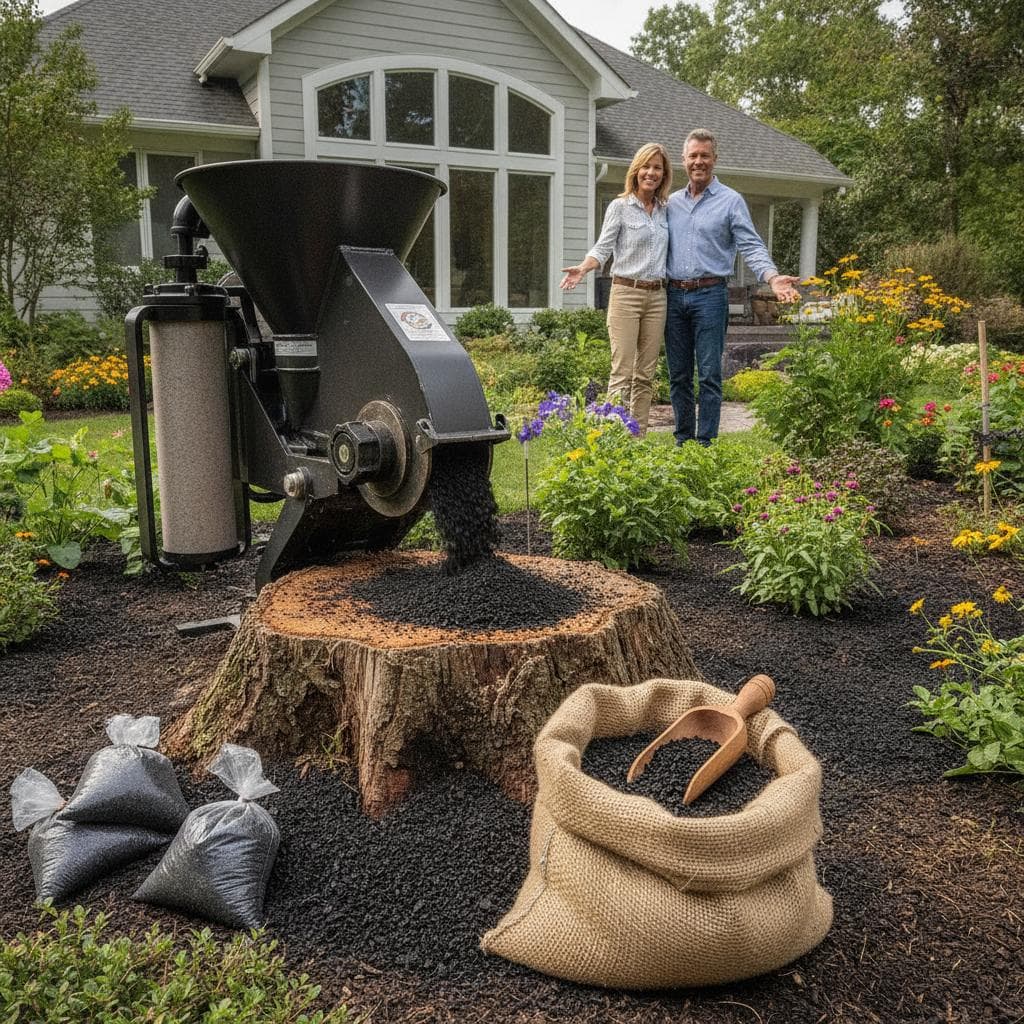
Earn $800 More Per Property Using Biochar Stump Grinding
Tree stumps create ongoing issues for homeowners. They attract pests, disrupt plans for new plantings, and lower curb appeal. Biochar stump grinding addresses these problems by turning the wood into a stable soil amendment that improves growing conditions and supports long term property value.
This approach combines removal with soil improvement. The following sections explain the method, typical expenses, and steps to arrange service.
What Biochar Stump Grinding Involves
Standard grinding leaves wood chips that decompose slowly. Biochar stump grinding uses controlled heat during the process to produce a porous carbon material. This material holds nutrients in the soil and resists breakdown for many years.
The finished product mixes directly into garden beds or lawn areas. It increases water retention and supports microbial activity without additional purchases.
Typical Costs for Biochar Stump Grinding
Prices range from 180 to 650 dollars per stump. Size, wood density, and site conditions determine the final amount. Many homeowners see returns that reach 800 dollars in added property value after soil improvement.
| Tree Stump Size | Average Biochar Grinding Cost |
|---|---|
| Small (under 15 inches) | 180 to 250 dollars |
| Medium (15 to 25 inches) | 250 to 450 dollars |
| Large (over 25 inches) | 450 to 650 dollars |
The biochar produced can be used on site, which reduces the need to buy separate soil amendments.
Elements That Influence Final Pricing
Several site specific factors affect cost. Larger stumps require more time and fuel. Dense hardwoods take longer to process yet produce greater volumes of biochar.
Decayed stumps grind quickly but may yield lower quality material. Fresh stumps demand more effort yet create stable carbon. Access around buildings or wet ground also changes labor requirements.
Steps in a Professional Biochar Grinding Project
Certified crews begin with a site visit to measure the stump and note species. They then set up equipment and contain debris. Specialized grinders generate the heat needed to form biochar particles.
After grinding, the material is blended into surrounding soil. Crews finish by leveling the area and removing any remaining wood fragments.
Professional Service Compared with DIY Work
Homeowners can rent grinders for very small stumps. This option does not produce biochar without extra equipment and knowledge.
Professional crews handle medium and large stumps safely. They carry insurance, create consistent biochar, and integrate it into the landscape without damage to nearby plants or structures.
How to Select a Qualified Provider
Request proof of licensing and insurance that covers biochar methods. Ask to see the equipment that performs the carbonization step. Obtain three written estimates that list cleanup and soil application.
Review photos of completed jobs and confirm the contract states how the biochar will be used. Discuss timing so work occurs during dry weather when soil benefits are greatest.
Common Questions
How much does biochar grinding cost for a 50 inch stump?
Expect a range of 500 to 650 dollars. The larger volume of wood produces more biochar that can be applied to planting areas.
Does grinding cost less than full stump removal?
Grinding avoids excavation and therefore carries a lower price. Biochar grinding adds further value by creating a usable soil product.
Which season works best for this service?
Dry periods allow faster work and higher quality biochar. Scheduling during the growing season lets plants benefit immediately from the soil changes.
Can the biochar stay on the property?
Yes. It mixes into beds or lawns to improve structure and nutrient holding capacity.
Does homeowners insurance cover biochar stump grinding?
Most policies treat stump grinding as a landscaping expense rather than a covered loss. Contact the insurer to confirm any available reimbursement.
Soil Improvement That Supports Property Returns
Biochar stump grinding removes an obstacle and creates a lasting soil resource. Homeowners gain both immediate site clearance and measurable increases in landscape performance.