
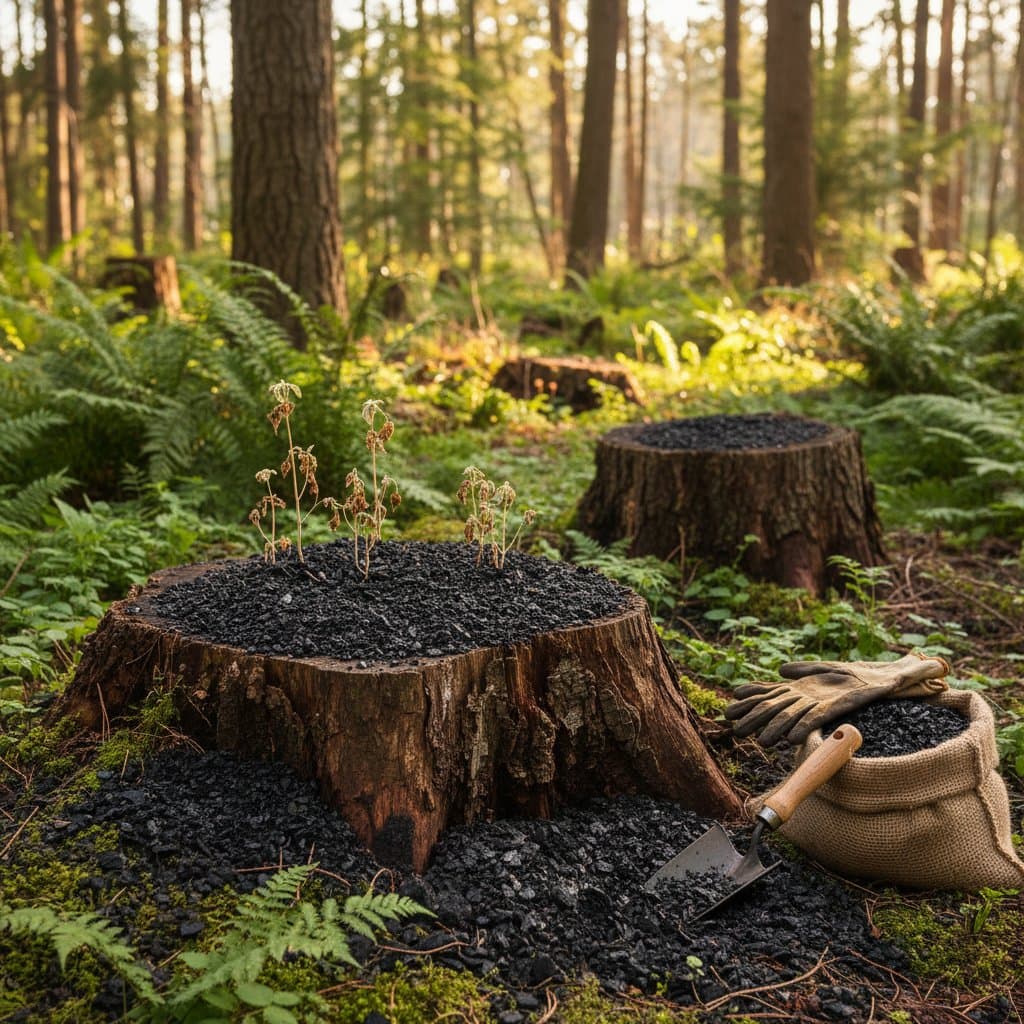
Biochar Reduces Stump Regrowth by 95 Percent: A Natural Approach
Tree stumps often persist after removal, producing persistent new shoots despite repeated cutting. Homeowners seek effective, non-chemical options to eliminate these nuisances. Biochar, a carbon-rich substance derived from organic materials, addresses this issue by inhibiting regrowth and benefiting soil structure. This article details biochar's mechanism, its advantages over conventional methods, and practical steps for implementation to maintain a tidy yard.
Understanding Stump Removal Costs
National Average Expenses
Stump removal expenses differ based on the chosen technique. Stump grinding typically costs between $100 and $300 per stump, depending on location and service provider. Chemical treatments range from $20 to $50 per application but demand ongoing use over months. Biochar treatment remains economical, with costs as low as $10 to $30 per stump when sourced affordably or produced domestically.
Expenses by Project Scale
- Small stumps (under 12 inches in diameter): These require minimal biochar, often less than one pound, making treatment straightforward and inexpensive.
- Medium stumps (12 to 24 inches in diameter): Application may involve two to five pounds of biochar, with potential for a follow-up dose after initial decay sets in.
- Large stumps (over 24 inches in diameter): Combine partial grinding with biochar to manage higher material needs, potentially using 10 pounds or more for thorough coverage.
Influential Cost Elements
Several factors influence overall expenses. The quantity and grade of biochar directly affect material outlays. Labor becomes relevant if professionals handle grinding or application, adding $50 to $150 per hour. Stump dimensions and root extent determine effort required. Local soil conditions, such as clay versus sand, and moisture availability also play roles in treatment efficiency. Accessibility challenges, like uneven terrain, may increase logistical costs.
Comparing Stump Removal Techniques
Mechanical Grinding
This method employs a specialized machine to pulverize the stump below soil level, typically to a depth of 6 to 12 inches.
Advantages:
- Delivers rapid elimination, often completed in under an hour per stump.
- Handles multiple stumps efficiently in one session.
Disadvantages:
- Necessitates heavy machinery, either rented or serviced professionally.
- Generates wood debris that can foster unwanted fungal development if not managed.
Chemical Treatments
These involve applying potassium nitrate or similar compounds to accelerate wood breakdown through oxidation.
Advantages:
- Demands little physical labor beyond initial setup.
- Products available at standard retailers for convenient access.
Disadvantages:
- Relies on synthetic agents that may leach into soil and affect ecosystems.
- Progresses gradually, requiring 4 to 12 weeks, with risks of incomplete results.
Biochar Application
Biochar consists of organic material charred in low-oxygen conditions, creating a porous, stable carbon form.
Advantages:
- Fully organic, posing no environmental risks or toxicity concerns.
- Deprives roots of essential nutrients and oxygen, halting regrowth effectively.
- Enhances soil fertility by retaining water and supporting microbial life over time.
Disadvantages:
- Requires precise application techniques for optimal penetration.
- Visible decomposition emerges more slowly than mechanical options, spanning 3 to 6 months.
Deciding Between DIY and Professional Services
Biochar treatment suits DIY efforts for stumps under 24 inches, using common tools like a drill and watering can. The process demands safety gear, such as gloves and goggles, to protect against dust and debris. Expect to invest several hours initially, followed by periodic checks over months as decay progresses.
Professionals, including arborists or landscapers, provide expertise for complex scenarios. They assess root systems accurately, apply treatments uniformly, and comply with regional guidelines on organic amendments. Insurance coverage adds security, particularly for larger projects involving multiple stumps or challenging sites. DIY appeals to those seeking control and savings, while professionals guarantee thorough, expedited outcomes for demanding tasks.
Step-by-Step Guide to Applying Biochar
-
Evaluate the Stump Condition
Measure the above-ground height and diameter to gauge biochar volume. Inspect for existing shoots or rot, which influence hole depth and placement for maximum efficacy. -
Prepare Access Points
Employ a 1-inch bit on a power drill to bore 8- to 12-inch deep holes. Distribute 6 to 10 holes evenly across the surface and sides, targeting the central taproot and lateral roots. -
Incorporate the Biochar
Pack holes with powdered or granular biochar, using 0.5 to 1 pound per hole based on size. Tamp firmly to promote direct contact with internal wood tissues. -
Maintain Moisture Levels
Apply 1 to 2 gallons of water per stump to activate biochar's properties. Monitor weekly, adding water as needed to sustain dampness without saturation, which could hinder microbial action.
Strategies for Optimal Biochar Results
Select biochar produced from clean hardwood sources to ensure high porosity and nutrient-holding capacity. Maintain consistent moisture through mulching or drip irrigation to accelerate breakdown processes. Integrate biochar with compost layers around the stump base to boost organic activity and nutrient cycling. Refrain from introducing herbicides or fertilizers post-treatment, as these interfere with natural soil dynamics. Track progress monthly; full disintegration varies from 3 months in warm, humid climates to 8 months in drier regions.
Common Questions About Biochar for Stumps
In What Way Does Biochar Inhibit Regrowth?
Biochar creates an oxygen-deprived environment within the stump, limiting respiration in root tissues. It binds available nutrients, reducing energy for sprout formation, and modifies soil pH to deter residual root vitality.
Is Biochar Suitable Following Grinding?
Absolutely. Post-grinding application targets remaining root fragments, preventing future sprouts while amending the disturbed soil for better plant establishment.
Does Biochar Present Risks to Pets or Nearby Plants?
No, as an inert, organic product, biochar introduces no toxins. It supports beneficial soil organisms and enhances conditions for surrounding flora.
What Duration Is Required for Stump Decomposition with Biochar?
Smaller stumps soften in 2 to 4 months under ideal conditions, while larger ones may require 6 to 12 months. Climate and stump health influence the pace.
How Can One Produce Biochar Domestically?
Construct a simple pyramid kiln from metal drums or use a backyard fire pit with ventilation controls. Burn dry wood scraps at low temperatures, around 400 to 700 degrees Fahrenheit, quenching with water to halt combustion and yield char.
Achieving Lasting Stump Control
Biochar enables effective stump management without environmental compromise. This method not only suppresses regrowth but also revitalizes soil for future landscaping. Homeowners gain a practical tool for sustainable yard care, with options tailored to project scale. For persistent challenges, expert consultation refines the approach, ensuring a regrowth-free landscape that thrives long-term.