
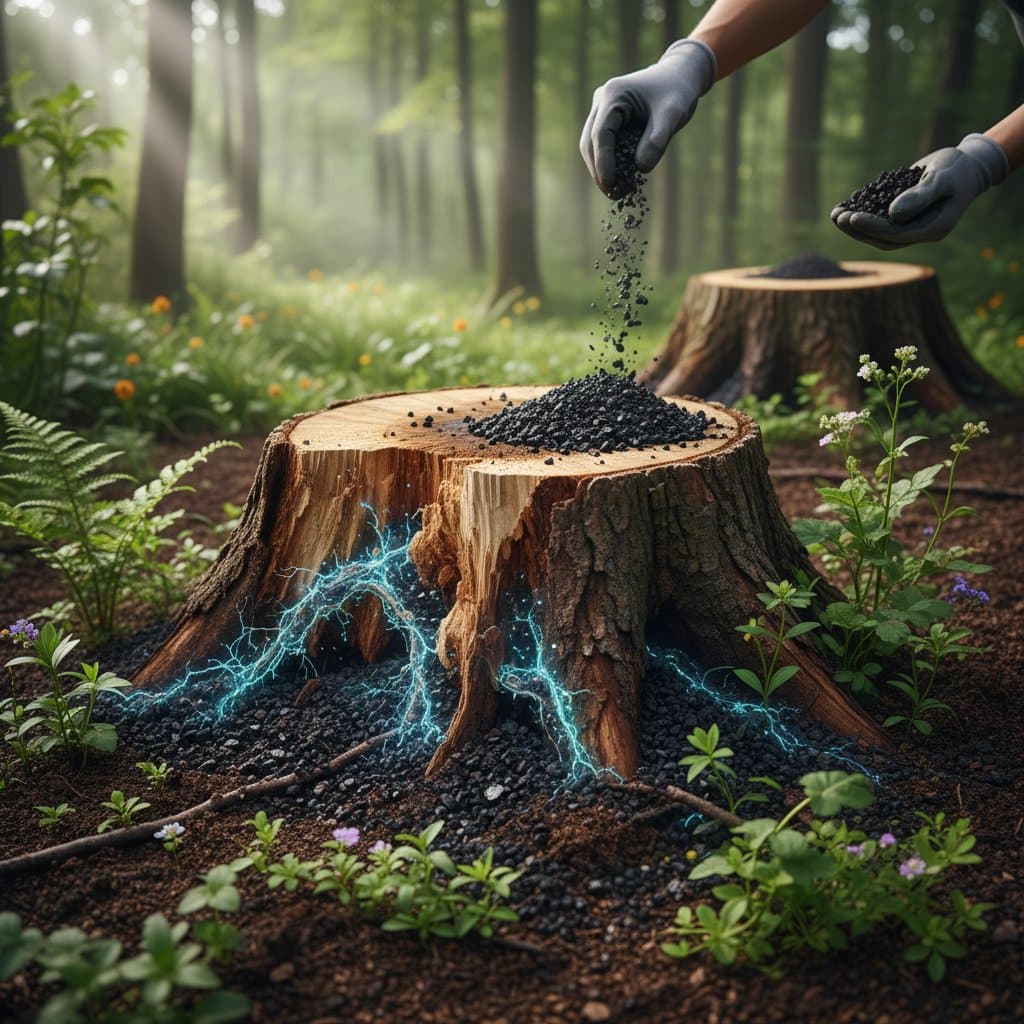
Accelerate Stump Decomposition and Enhance Soil Fertility with Biochar
Tree stumps present persistent challenges, decomposing slowly and detracting from landscape aesthetics. Conventional removal techniques frequently rely on aggressive chemicals or cumbersome equipment, which harm adjacent soil and vegetation. Biochar-assisted decomposition offers a sustainable solution that substantially shortens removal timelines while bolstering soil vitality. This guide details the mechanism of biochar in hastening stump breakdown, proper application methods, and the reasons it stands as a superior environmental choice.
Understanding Stump Removal Expenses
Average Costs Nationwide
Engaging professionals for stump removal generally incurs fees ranging from several hundred to over a thousand dollars, influenced by stump dimensions and site accessibility. Chemical applications or mechanical grinding contribute additional charges, with expansive stumps or extensive root systems demanding extended labor and specialized tools.
Expenses Based on Project Scale or Variety
- Compact stumps: Incur lower fees due to reduced grinding or manual effort requirements.
- Moderate to substantial stumps: Demand greater labor inputs and potential machinery deployment.
- Numerous stumps: Billed individually, though bundled projects often receive discounted rates.
Primary Expense Influences
- Stump girth and root penetration depth
- Tree variety and wood compactness
- Ground composition and hydration status
- Site position and ease of approach
- Workforce compensation and machinery leasing
- Regulatory permits or waste disposal surcharges in select regions
Biochar application diminishes these expenditures by expediting organic breakdown, thereby minimizing reliance on expert grinding or digging services.
Defining Biochar and Its Decomposition Mechanism
Biochar constitutes charcoal derived from organic materials, including wood fragments or agricultural remnants, produced through pyrolysis in oxygen-limited conditions. This yields a highly porous, carbon-dense substance that serves as a refuge for advantageous microorganisms. Upon integration into soil or direct stump application, it amplifies microbial proliferation and water retention, both critical for rapid decomposition.
Furthermore, biochar sequesters essential nutrients, averting their dissipation and fostering fungal development that metabolizes wood components. This establishes an autonomous biological network encircling the stump, dismantling cellulose and lignin at an accelerated rate relative to unaided natural processes.
Biochar Varieties Suitable for Stump Decomposition
Hardwood-Derived Biochar
Sourced from robust hardwoods such as oak or maple, this variant features enduring architecture and elevated carbon levels.
Advantages:
- Superior longevity and nutrient sequestration
- Robust microbial habitat provision
- Optimal for voluminous or compact stumps
Disadvantages:
- Marginally higher acquisition price
- Delayed onset of microbial establishment
Softwood-Derived Biochar
Generated from conifers like pine, spruce, or cedar, softwood biochar exhibits lighter weight and greater porosity.
Advantages:
- Quicker initiation of microbial engagement
- Simpler soil incorporation
- Suitable for diminutive or pre-decomposed stumps
Disadvantages:
- Accelerated material degradation
- Reduced capacity for nutrient retention
Hybrid Biomass Biochar
Formed from blended wood and vegetative feedstocks, this option harmonizes resilience with biotic vigor.
Advantages:
- Adaptable across stump configurations
- Balanced pricing and efficacy
- Promotes equilibrated soil microbial communities
Disadvantages:
- Variable consistency tied to feedstock origins
Self-Directed Application Versus Professional Services
Biochar utilization for stump decomposition suits independent efforts, provided meticulous execution and perseverance.
Independent Method:
- Benefits: Reduced financial outlay, material selection autonomy, and experiential education.
- Drawbacks: Necessitates precise blending proportions, vigilant hydration oversight, and iterative applications. Suboptimal conditions may prolong outcomes.
Professional Engagement:
- Benefits: Specialized insight into soil ecology and decay kinetics, streamlined implementation, and reliable yields. Certain arborists and pedologists provide biochar-centric interventions.
- Drawbacks: Elevated initial investment, with limited specialists in this domain.
For sizable stumps proximate to edifices, professional involvement ensures safety and efficiency. Isolated or minor stumps benefit from structured self-directed strategies.
Implementing Biochar for Expedited Stump Breakdown
1. Site Preparation
Remove surrounding litter, stones, and detached bark from the stump vicinity. Sever the stump flush with the terrain using a chainsaw or handsaw. Bore multiple apertures into the upper and lateral surfaces, each approximately one inch in diameter and four to six inches in depth, to facilitate microbial ingress.
2. Biochar Activation
In its pristine state, biochar remains biologically neutral until infused with nutrients and organisms. Combine it with compost extract, fluid nutrient solutions, or matured compost. Allow the blend to incubate for several days, enabling microbial vivification.
3. Mixture Deployment
Distribute the invigorated biochar liberally across the stump and within the bored openings. Extend coverage to adjacent soil to propagate microbial influence into the root expanse. A two- to three-inch stratum typically suffices.
4. Hydration and Insulation Maintenance
Sustain moderate moisture in the stump zone, avoiding saturation. Encase with organic mulch or a breathable cover to preserve humidity and thermal stability. Such environments optimize microbial function and decay velocity.
5. Periodic Replenishment
Inspect hydration every two to three weeks and supplement with additional activated biochar or compost as subsidence occurs. Over months, the stump softens and fragments. It then yields readily to chopping or soil integration.
Strategies for Effective Biochar Stump Decomposition
Select premium biochar manufactured under regulated thermal conditions to guarantee uniform pore structure. Integrate nitrogen-abundant substances, such as compost or manure, to offset carbon dominance and enhance breakdown pace. Preserve consistent moisture to nurture microbial persistence. Steer clear of synthetic removers, which eradicate helpful biota. Upon full decomposition, recycle the residue as a potent soil conditioner.
Common Inquiries
What Duration Does Biochar-Accelerated Stump Decomposition Require?
Under meticulous activation and hydration, biochar halves natural timelines. Compact stumps may disintegrate in months, whereas larger specimens vary by species and milieu.
Does Biochar Fully Supplant Chemical Removers?
Affirmative, for most cases. It harnesses biotic mechanisms over artificial agents, safeguarding ecosystems and flora.
Is Biochar Harmless to Animals and Fauna?
Biochar poses no toxicity risks post-organic activation. It emits no deleterious vapors or remnants, instead elevating soil integrity.
Can Individuals Produce Biochar for This Purpose?
Yes, via small-scale pyrolysis in a steel container or supervised fire enclosure. Oxygen restriction carbonizes without ashing. Verify compliance with local fire codes prior to proceeding.
How Does Soil Fare Post-Biochar Treatment?
Soil gains enhanced fertility and retention capabilities. Lingering microbes sustain benefits, aiding subsequent vegetation.
Advancing Your Landscape with Biochar
Biochar-facilitated stump removal delivers pragmatic sustainability, curtailing exertion, fortifying soil, and perpetuating microbial advantages beyond stump elimination. Procure dependable biochar from verified sources or seek counsel from regenerative soil experts. Implement these techniques to expedite stump clearance, avert chemical impairments, and cultivate resilient planting zones.