
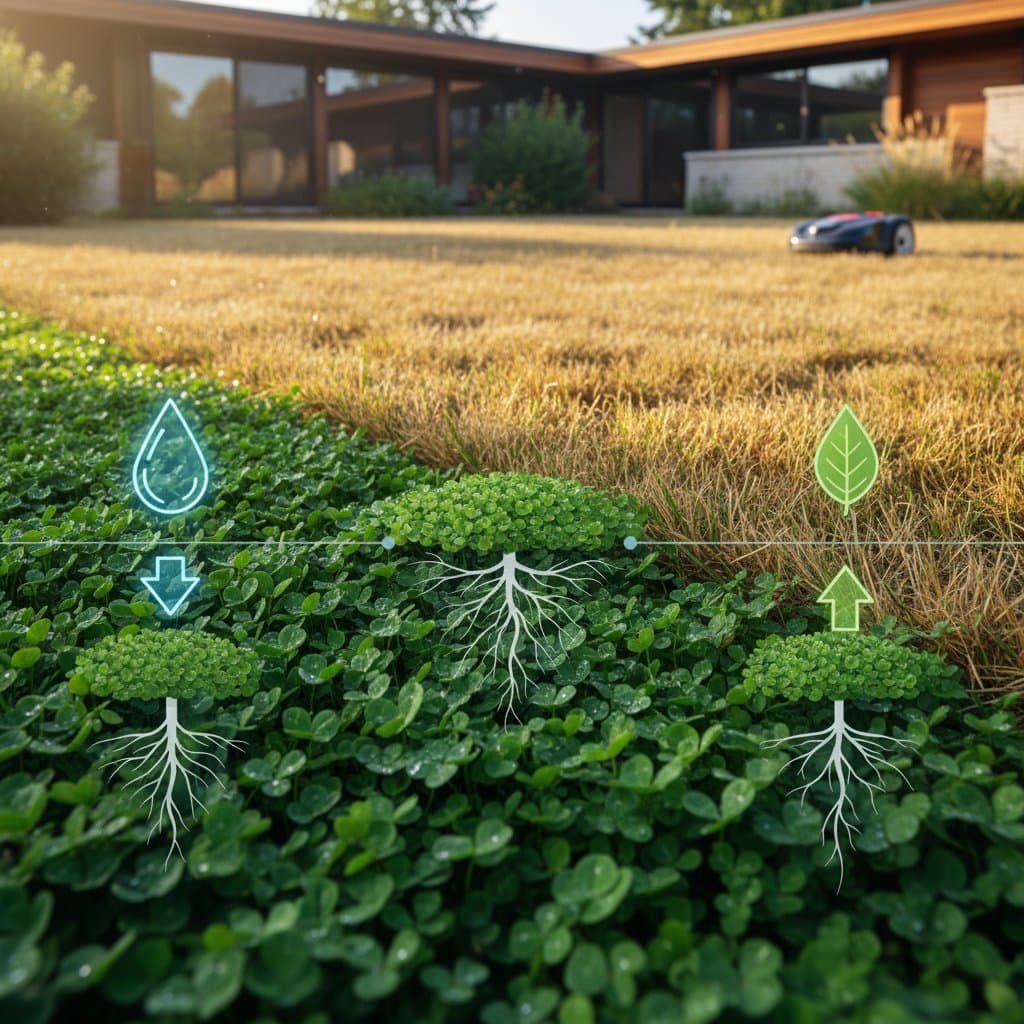
Why Micro-Clover Lawns Require 70 Percent Less Water Than Turf
A lush green lawn remains a common goal for homeowners. Traditional turf grass, however, demands frequent irrigation, regular mowing, and repeated fertilizer applications. Micro-clover lawns provide an effective alternative that maintains visual appeal while using substantially less water. This guide examines the biological reasons for reduced irrigation needs, compares micro-clover with standard turf, and outlines practical steps for installation and care.
Installation Costs
Micro-clover seed and planting typically require a larger initial outlay than conventional grass seed. Average expenses range from 0.50 dollars to 1.50 dollars per square foot when including materials and labor. Small yards up to 1,000 square feet generally cost between 500 dollars and 1,500 dollars. Medium yards between 1,000 and 5,000 square feet fall in the 1,000-dollar to 4,000-dollar range. Larger properties exceed 4,000 dollars. Seed quality, soil preparation, and regional climate influence final pricing. Long-term reductions in water, fertilizer, and mowing offset the upfront expense within a few seasons.
Biological Reasons for Lower Water Use
Micro-clover achieves water efficiency through several natural mechanisms that improve moisture retention and reduce external inputs.
Root Depth and Soil Access
Roots extend farther downward than those of most turf grasses. This depth allows the plant to reach moisture reserves below the surface during dry periods. The same root structure stabilizes soil and limits erosion.
Nitrogen Fixation
As a legume, micro-clover draws nitrogen from the atmosphere and converts it into a form usable by plants. This process supplies ongoing nutrition without synthetic fertilizers that can compact soil and increase water demand.
Canopy and Evaporation Control
Dense foliage creates a low canopy that shades the soil surface. Reduced sunlight exposure slows evaporation and maintains consistent soil moisture between watering cycles.
Progressive Soil Enhancement
Over successive seasons the plant adds organic material and improves soil structure. Improved soil texture increases water-holding capacity and decreases the frequency of irrigation required for healthy growth.
Available Lawn Configurations
Micro-clover appears in pure stands or combined with compatible grasses.
Pure Micro-Clover
A uniform planting produces fine-textured, dark green coverage.
-
Extremely tolerant of drought
-
Remains green through mild winters
-
Needs almost no supplemental fertilizer
-
Slippery surface when wet
-
Attracts pollinators during bloom periods
Mixed Plantings
Blends with fine fescue or perennial ryegrass yield a conventional appearance with improved resilience.
-
Withstands heavier foot traffic
-
Integrates with existing turf
-
Reduces patch formation
-
Slightly higher water requirement than pure stands
-
Needs periodic mowing for even height
Installation Choices
Homeowners may complete smaller projects themselves. Larger or uneven sites benefit from professional assistance. Do-it-yourself work lowers immediate cost and grants direct control over seed placement. Challenges include precise soil preparation and consistent moisture during germination. Professional crews deliver uniform coverage, appropriate seed density, and region-specific blend recommendations, especially on challenging soils.
Step-by-Step Establishment
- Clear existing vegetation and loosen the upper soil layer. Level the surface to promote even growth.
- Perform a soil test and adjust pH toward neutral or slightly acidic conditions with organic amendments.
- Distribute seed uniformly by hand or spreader, then lightly rake to ensure soil contact.
- Apply light daily moisture until seedlings develop. Transition to deeper, less frequent watering once established.
- Maintain a mowing height near three inches to support density and suppress weeds.
Ongoing Maintenance Practices
- Apply water deeply but infrequently to encourage deeper rooting.
- Omit chemical fertilizers because the plant generates its own nitrogen.
- Mow at a higher setting to preserve moisture and limit stress.
- Introduce additional seed annually to maintain coverage.
- Restrict heavy use during the first several weeks of establishment.
Common Questions
How often does micro-clover require mowing?
Mowing every two to three weeks maintains uniform height and controls flowering when a neat appearance is desired.
Does micro-clover remain green throughout the year?
The plant stays active in mild winters and resumes growth early in spring. Extreme cold induces dormancy followed by rapid recovery when temperatures rise.
Can micro-clover replace an entire existing lawn?
It functions effectively as a full replacement or as an overseeded addition. Full sun to partial shade and most soil types support successful growth.
Is micro-clover appropriate for households with children and pets?
The plant poses no toxicity risk to people or animals once established.
How long does full establishment take?
Visible coverage develops within three to four weeks under favorable moisture and temperature conditions. Complete root development requires one full growing season.
Long-Term Advantages
Micro-clover lawns deliver sustained color with minimal resource inputs. Reduced irrigation, lower fertilizer purchases, and fewer mowing sessions produce measurable savings while supporting soil health. Homeowners in drought-prone areas gain a reliable surface that maintains appearance when surrounding turf declines.