
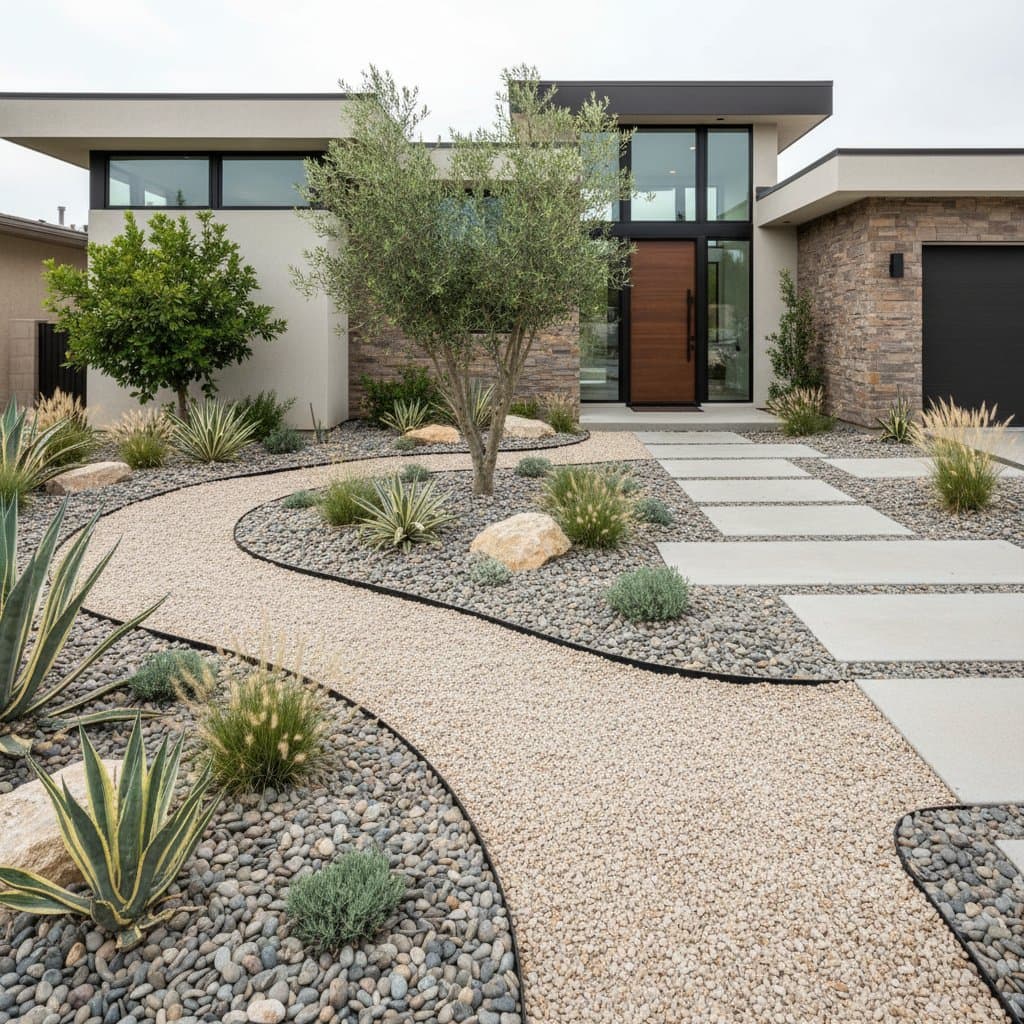
Why Gravel Outperforms Mulch Over Time
Homeowners nationwide increasingly replace traditional mulch with gravel for reasons that extend well beyond appearance. Gravel provides a contemporary, streamlined look while requiring substantially less ongoing care than organic mulch. As individuals seek durable, year-round yard solutions, gravel stands out as a practical and environmentally sound option.
This article details the advantages of gravel as a mulch substitute, examines cost differences, describes available varieties, and offers guidance on installation and upkeep for optimal outcomes.
Gravel Landscaping Expenses
Average Costs Across the United States
Gravel installations generally prove more economical in the long term compared to organic mulch. Initial expenses cover materials and setup, yet savings accumulate through minimal maintenance needs. Gravel remains intact without decomposition or regular renewal, eliminating repeated expenditures. National averages position gravel projects in a reasonable price bracket relative to alternative coverings.
Expenses Based on Project Scale and Variety
Projects involving compact garden beds or walkways incur lower costs, whereas comprehensive yard conversions demand greater upfront investment. Gravel selection plays a significant role in pricing. Options such as pea gravel and crushed stone remain budget-friendly, while premium choices like river rock or lava rock command higher rates. Total outlay hinges on coverage area, layer thickness, and the decision to engage professional services.
Primary Influences on Project Costs
Multiple elements determine the overall expense of a gravel endeavor:
- Material selections, including pea gravel, decomposed granite, or ornamental stones
- Layer depth, as greater thickness necessitates additional volume
- Professional labor for tasks like excavation and placement
- Ground preparation, encompassing weed barriers and surface leveling
- Transportation fees for substantial gravel quantities
Although mulch appears more affordable at the outset, gravel delivers superior value through extended durability and reduced upkeep demands.
Gravel Varieties for Landscape Applications
Various gravel types differ in texture, dimensions, and hues, each influencing both aesthetics and utility. Selection should align with intended use and stylistic preferences.
Pea Gravel
Pea gravel comprises diminutive, rounded pebbles that feel smooth beneathfoot and appear in earthy tones of beige, gray, and brown.
Advantages:
- Suitable for pedestrian pathways and patios due to comfort
- Simple to distribute and add to as needed
- Promotes effective water runoff
Disadvantages:
- Prone to displacement absent boundary restraints
- Less appropriate for inclined terrains
Crushed Stone
Crushed stone features irregular edges that interlock upon compaction, yielding a solid foundation for driveways or planting areas.
Advantages:
- Supports substantial weight without shifting
- Maintains position after proper settling
- Offered in diverse stone compositions
Disadvantages:
- Coarse surface discomforts bare skin
- Demands careful application for uniform coverage
Decomposed Granite
Decomposed granite disintegrates into subtle granules that solidify into a refined, organic surface.
Advantages:
- Fits seamlessly into trails and modern garden layouts
- Facilitates superior drainage
- Requires little ongoing attention
Disadvantages:
- Susceptible to erosion during intense downpours without stabilization
- Occasionally benefits from supplementary layers
River Rock
River rock consists of sizable, smoothed boulders that impart an elegant, accentuating effect near foliage or aquatic elements.
Advantages:
- Delivers eye-catching durability
- Counters soil erosion effectively
- Repels insects and vermin
Disadvantages:
- Challenging to maneuver and position due to weight
- Unsuitable for high-traffic walking surfaces
Lava Rock
Lava rock proves lightweight and absorbent, distinguished by vivid crimson or ebony shades that introduce bold landscape accents.
**Advantages:**n- Absorbs less thermal energy than solid rocks
- Endures without color loss
- Suits arid, water-efficient designs
Disadvantages:
- Abrasive surfaces risk harm to vegetation or footwear
- Hue restrictions may constrain creative options
Handling Installation: DIY or Professional Assistance
Small-scale gravel applications lend themselves to do-it-yourself efforts, particularly on even terrain. Basic equipment suffices for straightforward paths or borders, cutting labor expenses at the cost of personal time and exertion. Proper attention to water flow and containment proves essential in such undertakings.
Professional involvement secures meticulous site grading, barrier integration, and material dispersal. Specialists manage large deliveries and compression with precision. Properties featuring inclines, water management challenges, or mixed gravel elements particularly warrant expert execution to achieve resilience and visual harmony. Homeowners often opt for professionals on expansive or intricate sites, while tackling modest accents independently.
Step-by-Step Gravel Yard Installation
1. Design and Planning
Outline the target zone and select appropriate gravel. Define perimeters, routes, and highlights. Incorporate containment materials to secure the gravel.
2. Site Preparation
Remove existing plants, refuse, and prior mulch. Even out the terrain and verify drainage to avoid water accumulation post-precipitation.
3. Weed Barrier Placement
Position landscape cloth or robust fabric beneath the surface to minimize weed intrusion and sustain low-effort care.
4. Edging Installation
Set boundaries using metal, polymer, or lithic materials to delineate zones and restrict gravel migration.
5. Gravel Distribution
Disperse the material uniformly, aiming for a uniform depth of two to three inches. Employ a rake for even spreading.
6. Compaction and Final Touches
Apply gentle pressure with a tamper or roller for stability. For ornamental uses, wash the surface to eliminate residue and expose inherent tones.
Strategies for Effective Gravel Landscapes
- Implement edging throughout to confine gravel, particularly near paths and edges.
- Integrate indigenous flora for an equilibrated, water-thrifty composition.
- Address sparse areas biennially to preserve depth and vibrancy.
- Establish adequate runoff systems to mitigate stagnation or washout during storms.
- Routinely clear litter to sustain a pristine, uncluttered appearance.
Common Inquiries About Gravel Landscaping
Does gravel overheat under direct sunlight?
Gravel absorbs solar warmth, though lighter shades deflect rays more readily. Opt for subdued or neutral varieties to moderate surface temperatures.
Do weeds penetrate gravel layers?
Vegetation may emerge without underlying protection. High-quality fabric significantly curtails such occurrences.
Is gravel appropriate near trees and bushes?
Affirmative, provided clearance exists around stems to facilitate ventilation and avert dampness-related decay.
What is the lifespan of a gravel landscape?
Correct setup enables decades of service. Routine agitation and additions suffice for renewed aesthetics.
Does gravel pose risks to household pets?
Rounded varieties like pea gravel accommodate animals well. Steer clear of pointed alternatives that might wound feet.
How does gravel influence soil vitality?
Unlike organic mulch, gravel offers no nutrient addition, yet it enhances percolation and avoids soil packing. Such conditions benefit root development in aerated environments.
Embracing a Gravel-Enhanced Yard
Gravel landscapes furnish enduring elegance through effortless management. They withstand degradation, discourage infestations, and retain sharpness across seasons.
For yard refreshers this season, gravel presents a sensible, fashionable solution. Professional or selective self-directed approaches alike yield sustained benefits and contemporary allure.