
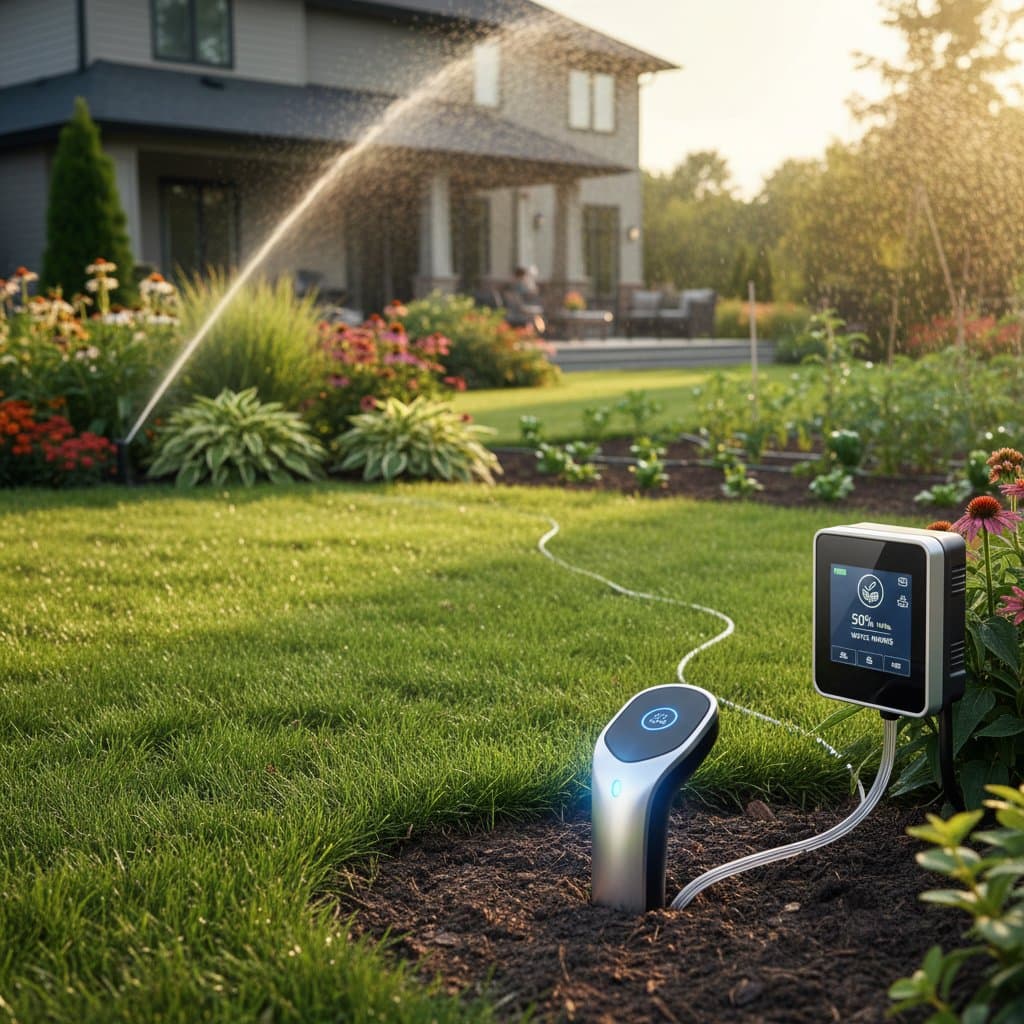
Varieties of Soil Moisture Sensors
Capacitive Sensors
Capacitive sensors employ electrical capacitance to assess soil water content. They deliver high accuracy, making them suitable for integration with automated irrigation networks.
Advantages:
- Consistent and dependable measurements
- Extended durability with limited calibration needs
- Broad compatibility with intelligent controllers
Disadvantages: - Elevated initial expense
- Potential interference from high soil salinity
Resistive Sensors
Resistive sensors gauge moisture through electrical resistance between probes inserted into the soil. Their simplicity and low price point appeal to basic applications.
Advantages:
- Economical acquisition
- Straightforward placement
- Appropriate for compact garden areas
Disadvantages: - Declining precision due to probe corrosion
- Necessity for frequent recalibration
Tensiometers
Tensiometers evaluate the force with which soil retains water, providing insight into plant-available moisture.
Advantages:
- Precise indication of accessible water
- Effective performance in sandy soil conditions
Disadvantages: - Demands regular upkeep and fluid replenishment
- Restricted integration with automated setups
Wireless Smart Sensors
Wireless sensors transmit real-time data via Wi-Fi or Bluetooth to controllers or mobile applications.
Advantages:
- Automatic modification of watering schedules
- Comprehensive data logging and remote oversight
- Ideal for expansive or intricate sites
Disadvantages: - Premium pricing
- Dependency on power sources or battery changes
Self-Installation Versus Professional Services
Soil sensor placement offers a feasible do-it-yourself endeavor, though complexity varies by system.
Benefits of Self-Installation:
- Reduced financial outlay
- Scheduling flexibility
- Valuable hands-on knowledge for property owners
Drawbacks of Self-Installation:
- Accurate positioning requires careful consideration
- Miscalibration compromises effectiveness
- Controller linkage may involve technical hurdles
Advantages of Professional Services:
- Strategic placement tailored to soil variations and vegetation
- Flawless synchronization with existing irrigation infrastructure
- Access to warranties and ongoing support
Self-installation suits modest gardens or single-zone arrangements. Professionals excel in multi-zone or networked systems, ensuring optimal coordination and data integrity.
Step-by-Step Installation Guide
-
Zone Planning and Mapping:
Delineate irrigation areas and cluster plants by comparable hydration requirements. Designate sensor positions that capture representative soil conditions. -
Sensor Selection:
Choose models aligned with soil composition, system design, and control mechanisms. -
Soil Preparation:
Aerate the ground to the probe's insertion depth. Steer clear of dense zones, root proximity, or sprinkler influence. -
Sensor Placement:
Embed sensors perpendicularly into the soil for complete encirclement. For wireless units, confirm robust signal reception. -
System Integration:
Link sensors to the irrigation controller or application, adhering to calibration protocols. -
Verification and Calibration:
Initiate a trial irrigation sequence to confirm responsiveness. Set moisture thresholds according to vegetation and soil properties. -
Ongoing Observation:
Examine data weekly initially. Refine configurations to align with site-specific hydration demands.
Strategies for Water Conservation and Sensor Upkeep
- Seasonal Recalibration: Adjust for shifts in climate and precipitation; perform checks several times annually to sustain precision.
- Optimal Depth Placement: Position sensors within the root zone, generally four to six inches, adjusted for plant species.
- Probe Maintenance: Gently cleanse accumulations with a soft implement to preserve measurement reliability.
- Power Management: Swap batteries in wireless models proactively to avoid disruptions.
- Data Utilization: Analyze trends to refine schedules, pinpoint inefficiencies, or address drainage concerns promptly.
Common Questions
Do soil sensors reduce water expenses effectively?
Yes. Integrated with automated irrigation, they diminish usage by up to 50 percent by irrigating solely during dry conditions, curbing excess application.
Are soil sensors compatible with all controllers?
Contemporary smart controllers readily incorporate sensor inputs. Legacy timers might need adapters or manual overrides.
What is the lifespan of soil moisture sensors?
Quality units endure three to five years, influenced by soil and care. Routine maintenance prolongs functionality.
How does rainfall impact sensor performance?
Precipitation alters readings briefly. Intelligent controllers combine sensor and weather data to postpone cycles post-rain.
What are ideal sensor locations?
Place in the root zones of typical plants per irrigation area. Exclude positions affected by direct sprinkler spray or atypical shading.
Implementing Efficient Irrigation
Adopting soil moisture sensors streamlines landscape hydration, yielding swift returns via reduced costs and enhanced vitality. Select appropriate technology, follow precise installation, and maintain diligently to maximize conservation benefits.