
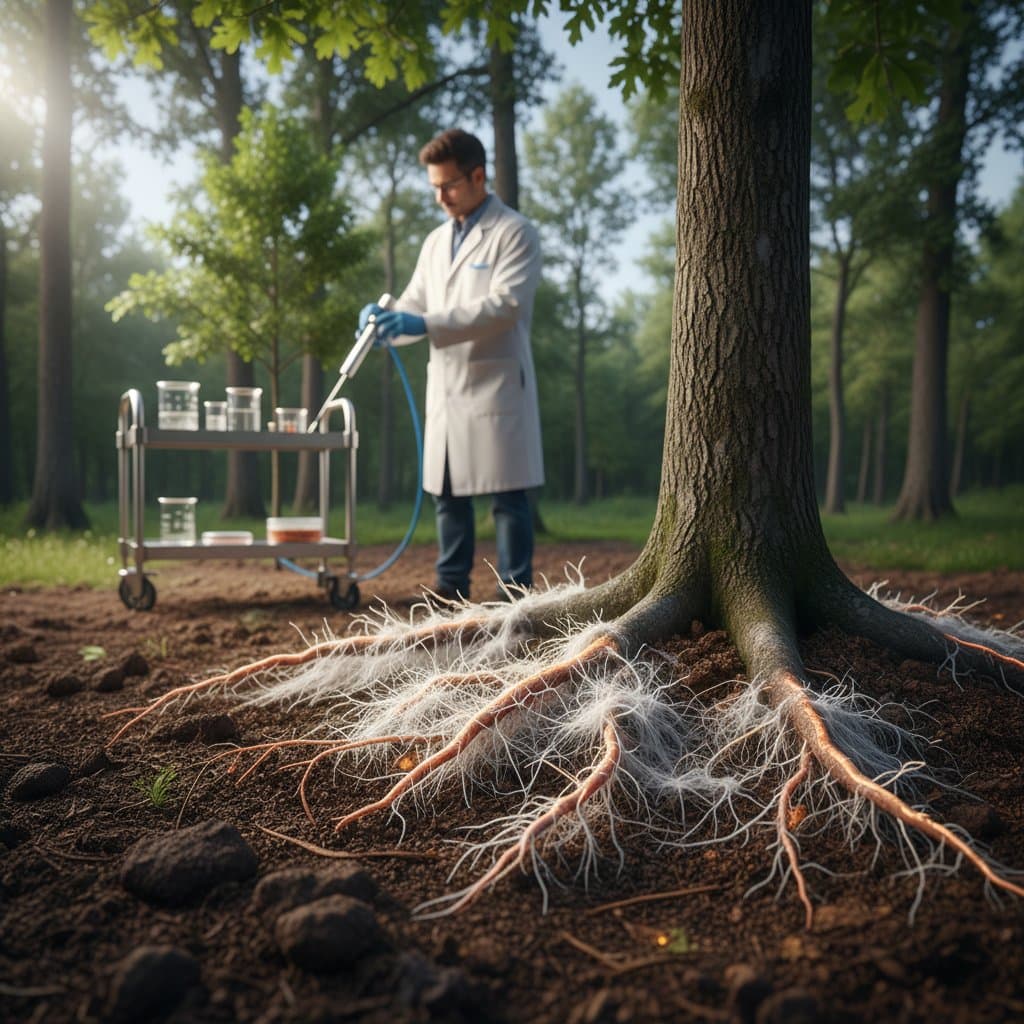
Why Arborists Charge 30% More for Mycorrhizal Treatments
Homeowners often notice a mycorrhizal treatment line on a tree service estimate and question the added expense. This service typically costs 30% more than standard fertilization, prompting concerns about its value. In reality, mycorrhizal treatments demand advanced scientific knowledge and careful execution, leading to superior long-term tree health.
Understanding Mycorrhizal Treatments
A mycorrhizal treatment involves applying beneficial fungi called mycorrhizae to a tree's root area. These fungi establish a mutual bond with the roots, expanding their access to water and nutrients while receiving sugarstree through photosynthesis. This collaboration bolsters the tree against environmental stresses like dry spells, pathogens, and dense soil.
Factors Driving the Higher Cost of Mycorrhizal Treatments
The elevated price stems from the specialized nature of the work, including expert assessment, premium materials, and targeted delivery. Standard fertilizers use straightforward chemical mixes, but mycorrhizal applications handle live organisms that require optimal conditions to thrive. Arborists conduct thorough evaluations to tailor the treatment effectively.
1. Requirement for Advanced Expertise
Certified arborists receive extensive education in soil biology and fungal dynamics. Incorrect application risks product failure or harm to roots, so professionals assess soil issues and select appropriate fungi strains based on tree species and site conditions. This level of precision justifies the premium fee.
2. Premium Quality of Biological Materials
Superior mycorrhizal inoculants feature diverse fungal strains suited to specific trees, such as oaks, maples, or pines. Production, storage, and distribution of these viable organisms increase costs significantly. Arborists prioritize reliable products to guarantee tangible improvements in tree vigor.
3. Demands on Time and Labor
Preparation for a mycorrhizal treatment exceeds that of basic feeding. Arborists test soil for pH balance, hydration levels, and density before proceeding. They then integrate the inoculant precisely, a process that extends labor hours and elevates overall charges.
4. Specialized Tools for Accurate Delivery
Effective application relies on tools like high-pressure injectors or root feeders to place fungi deep into active zones without disrupting soil integrity. Regular maintenance and calibration of this equipment add to operational expenses, ensuring treatments remain safe and productive.
5. Enduring Benefits That Offset Initial Outlay
Although the immediate cost exceeds fertilization, mycorrhizal enhancements build soil quality, lessen reliance on synthetic inputs, and promote vigorous root development. Treated trees display denser foliage, greater resistance to illnesses, and sustained strength, providing homeowners with ongoing value.
Steps in the Professional Mycorrhizal Application Process
Arborists adhere to a structured approach to maximize treatment success:
- Conduct Soil Analysis - Evaluate texture, water content, and nutrient profiles to pinpoint limitations.
- Map Root Distribution - Identify concentrations of fine, absorbing roots for targeted intervention.
- Select Appropriate Inoculants - Match fungal varieties and formulations to the tree's needs and environment.
- Execute the Application - Deliver the material via injection or incorporation around the root perimeter with dedicated tools.
- Provide Ongoing Support - Track establishment through moisture checks and advise on mulching or irrigation practices.
Deciding Between DIY Efforts and Professional Services
Opt for DIY When: Managing small landscape plants or shrubs with basic organic additions like compost suits simple maintenance. Such measures support general soil improvement without the complexity of fungal integration.
Choose a Professional When: Addressing established trees, hardened ground, or signs of decline demands expert intervention. Arborists ensure proper fungal-root connections and offer assessments to verify progress.
Selecting a Qualified Arborist for Root Zone Care
- Verify Certifications: Seek qualifications from established arborist associations to confirm competence.
- Inquire on Material Origins: Confirm use of tested, effective inoculants from trusted suppliers.
- Insist on Pre-Treatment Testing: Professionals should analyze soil prior to any recommendations.
- Review Comprehensive Estimates: Proposals must detail fungal types, delivery techniques, and anticipated outcomes.
- Assess Coverage and Track Record: Partner only with insured experts experienced in microbial soil treatments.
Investing in Resilient Roots for Lasting Tree Performance
Mycorrhizal treatments represent a strategic commitment to tree stability through biological enhancement. The associated costs cover the rigorous science and handling needed to integrate these organisms successfully. With professional guidance, expect fortified foundations, enriched earth, and enduring tree robustness.