
Fungal Networks Reveal Hidden Tree Health Secrets
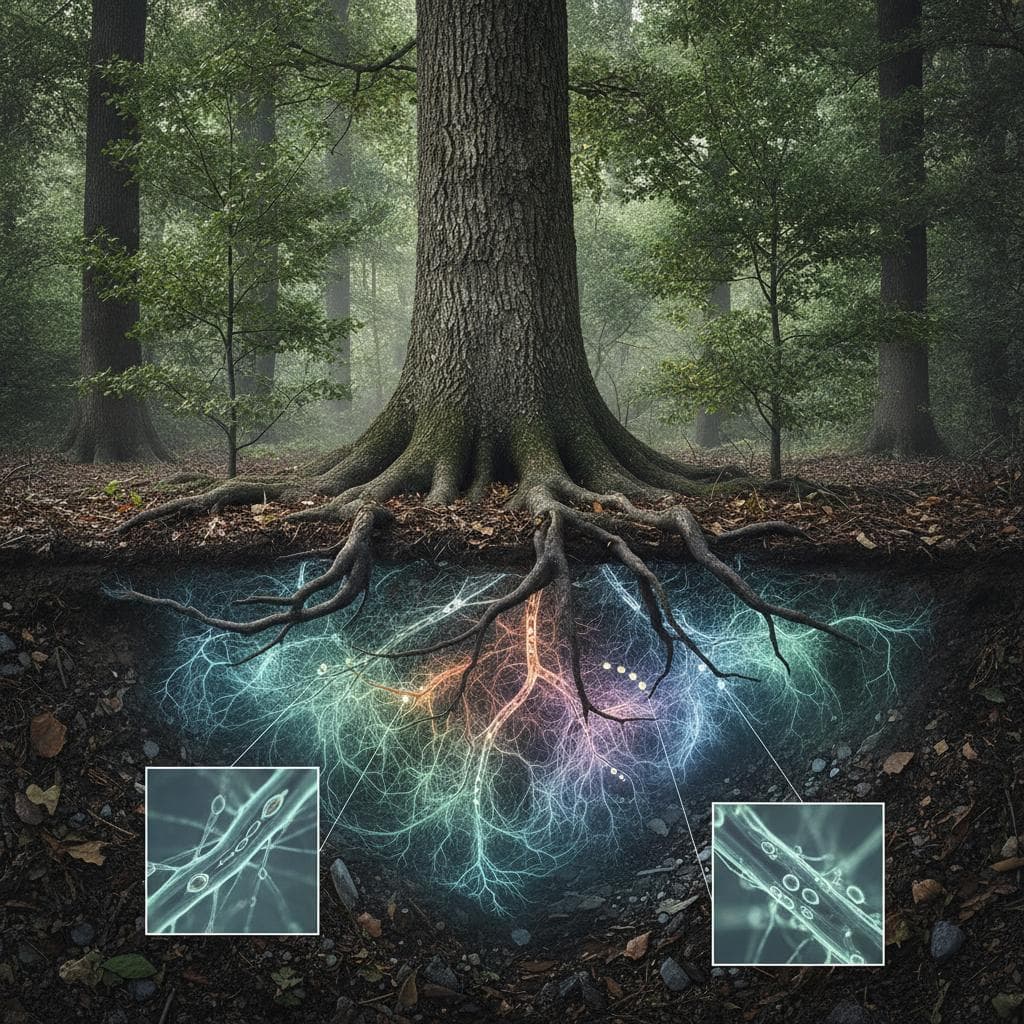
Healthy trees depend on more than roots and sunlight. Beneath the soil, a vast fungal network known as the mycorrhizal network connects trees. This system transfers nutrients, sends chemical signals, and warns neighbors of stress. These underground connections now help arborists and scientists detect early signs of disease, decay, and nutrient imbalance long before symptoms appear above ground.
By studying these fungal networks, homeowners and tree specialists gain a deeper understanding of what keeps trees thriving or struggling. The hidden communication system provides clues about soil health, root vitality, and potential threats. This information supports proactive tree care and maintenance.
Understanding Mycelium and Fungal Networks
The foundation of these underground systems is mycelium. This web of thread-like fungal structures spreads through the soil. Mycelium attaches to tree roots to form mycorrhizae and creates a symbiotic relationship where both tree and fungus benefit.
In this partnership, fungi help trees absorb water and nutrients such as phosphorus and nitrogen. In return, trees share sugars produced through photosynthesis. Over time, these connections link multiple trees together. The resulting mycelium network can extend across entire forests or landscapes.
These networks do more than share nutrients. They act as a communication system that allows trees to exchange chemical signals. When one tree experiences stress from drought, pests, or disease, neighboring trees may respond defensively through this underground connection. This phenomenon has earned the mycorrhizal network the nickname the wood wide web.
How Mycelium Networks Influence Tree Health
The health of a tree is deeply influenced by the quality and activity of its fungal partners. A robust mycelium network improves nutrient distribution, enhances drought tolerance, and strengthens root systems.
When soil becomes compacted, contaminated, or stripped of organic matter, fungal activity declines. Without these vital connections, trees struggle to absorb nutrients efficiently. The result includes slower growth, yellowing leaves, and increased vulnerability to pests and rot.
Healthy networks can even help trees recover from injury or pruning. By redirecting nutrients through fungal pathways, mycelium supports root regeneration and wound healing. For arborists, recognizing the condition of these networks provides valuable insight into a tree unseen health status.
Key Factors That Influence Fungal Network Health
Several environmental and management factors determine how well these networks function. Understanding them helps homeowners and professionals maintain optimal soil conditions for strong tree growth.
- Soil Composition: Fungi thrive in soils rich in organic matter. Mulching with composted leaves or wood chips encourages mycelium growth and keeps soil moisture balanced.
- Chemical Usage: Herbicides and synthetic fertilizers can harm beneficial fungi. Overuse may disrupt the natural balance of microbial life around roots.
- Moisture Levels: Mycelium needs consistent moisture but not waterlogging. Irrigation systems should maintain hydration without saturating the soil.
- Tree Diversity: A mix of species supports a more complex fungal network. Monoculture planting limits the variety of mycorrhizal relationships available.
- Root Disturbance: Construction, trenching, or heavy foot traffic can sever fungal threads. Protecting the root zone preserves both roots and fungi.
By monitoring and improving these conditions, property owners can promote stronger, more resilient fungal networks that support long-term tree vitality.
Signs That Indicate Fungal Network Disruption
A tree rarely shows immediate signs of fungal disruption, but certain warning signals can reveal underlying issues.
- Reduced Growth Rate: When nutrient transfer slows, trees may produce smaller leaves or shorter annual growth.
- Discolored or Sparse Foliage: Yellowing, thinning, or early leaf drop often points to nutrient deficiencies linked to poor fungal activity.
- Declining Soil Texture: Hard, compacted, or dry soil discourages mycelium development and limits oxygen flow to roots.
- Increased Pest Activity: Trees weakened by poor nutrient exchange are more susceptible to insects and fungal pathogens.
- Fungal Decay at the Base: Not all fungi are beneficial. If mushrooms appear at the trunk base or root flare, it may signal decay rather than healthy mycorrhizae.
Regular soil assessments and professional inspections can detect these conditions early and help prevent long-term damage.
The Role of Fungi Networks in Tree Health Monitoring
Modern arboriculture uses fungal networks to improve tree health monitoring strategies. By sampling soil and root systems, experts can evaluate the diversity and density of mycorrhizal fungi present. High diversity indicates a healthy ecosystem, while low diversity suggests stress or contamination.
Some advanced monitoring techniques include soil DNA testing to identify fungal species and assess their health, electrical conductivity sensors to measure nutrient transfer efficiency, and visual soil analysis to inspect texture, color, and organic content.
These methods help arborists create targeted treatment plans. For example, adding organic mulch, adjusting irrigation schedules, or reducing chemical exposure can restore balance to weakened fungal systems. Over time, improved fungal health leads to stronger trees and more stable landscapes.
DIY Observation vs. Professional Assessment
Homeowners can perform simple checks to gauge soil vitality, but only a professional arborist can accurately interpret the deeper interactions of fungal networks.
DIY steps include observing soil moisture and texture around root zones, looking for earthworms and organic decay which indicate biological activity, and avoiding unnecessary digging or compaction near tree bases.
Professional assessments go further. Certified arborists use specialized tools and lab analysis to evaluate root-fungal interactions. They can identify stress signs invisible to the naked eye and ensure that corrective actions rest on reliable data rather than guesswork.
How to Choose a Qualified Tree Specialist
When hiring someone to assess or improve your tree underground health, look for a certified arborist with proven experience in soil biology and fungal management.
Ask these questions before committing:
- Do you conduct soil or root zone testing?
- What methods do you use to evaluate fungal activity?
- Can you recommend organic amendments or soil treatments?
- How often should tree health be monitored?
- What preventive maintenance do you suggest for long-term soil health?
Qualified professionals will explain their process clearly and provide site-specific recommendations instead of generic solutions.
Frequently Asked Questions
Can trees really communicate through fungi networks?
Yes. Trees exchange chemical signals through fungal connections. When one tree faces drought or insect stress, nearby trees may receive signals that trigger protective responses such as closing stomata or producing defensive compounds.
Are all fungi beneficial for trees?
No. Mycorrhizal fungi are beneficial, but pathogenic fungi cause decay and disease. Professional analysis helps distinguish between helpful and harmful species in the soil.
How can I encourage healthy mycelium growth in my yard?
Maintain rich organic soil, avoid harsh chemicals, and keep the root zone undisturbed. Applying mulch and compost supports beneficial fungi and increases soil biodiversity.
Do fungal networks help newly planted trees?
Yes. When young trees connect to existing fungal networks, they gain faster access to nutrients and moisture. This connection improves establishment and survival rates.
Can removing a tree damage the network?
Yes. Tree removal can disrupt the fungal pathways connecting nearby trees. Stump grinding and soil restoration can help rebuild those pathways over time.
How often should fungal health be checked?
Most arborists recommend inspecting soil and root conditions every one to two seasons, especially after construction, drought, or disease outbreaks.
Does mycorrhizal inoculation really work?
Inoculation can help in soils with low fungal diversity. Results depend on matching the right fungal species to the tree type and site conditions. Professional testing confirms whether inoculation will provide measurable benefits.
Protecting Underground Networks for Healthier Trees
Understanding how fungal networks function transforms the way we care for trees. Beneath every healthy canopy lies an equally active underground world where roots and fungi cooperate to share nutrients and information.
Contact a trusted local arborist to learn how fungal networks can reveal the unseen story of your trees and help keep your landscape thriving.